

Did you know that Americans spend about $60 billion a year on wellness products? This huge market has many choices, but not all healthy living supplements are good for you.
Finding the right supplement can be tough. We think knowing the science behind dietary supplements is key to making better choices.
We aim to guide you past all the options to find what really helps. We give you the basics to create a routine that fits you.
Key Takeaways
- The U.S. wellness market reaches $60 billion in annual spending.
- Not all products on the market offer evidence-based health benefits.
- Careful research is essential before adding new items to your routine.
- We focus on helping you identify high-quality, effective options.
- Informed decisions lead to better long-term wellness outcomes.
What is a Healthy Living Supplement?
Exploring wellness often leads us to nutritional support products. In the United States, people spend about $60 billion a year on these items. This shows a growing interest in taking care of our health.
A healthy living supplement is meant to add nutrients missing from our diet.
Definition of Healthy Living Supplements
These products aim to add to our diet. They are not drugs, so they don’t go through the same FDA approval as medicines. Instead, they are dietary supplements, focusing on safety and accurate labeling.
It’s important to remember these products are meant to complement a balanced diet, not replace it. Whole foods are the best source of essential nutrients. Supplements help fill nutritional gaps.
Importance for Overall Wellness
For many, like seniors or those with health issues, getting enough nutrients is hard. As we age, our bodies absorb vitamins and minerals differently. A good healthy living supplement can help ensure our bodies get the support they need.
These products also support long-term health. By addressing deficiencies early, we can improve our quality of life and boost our immune systems. It’s important to use them consistently as part of our health plan.
Common Types Available
The market for dietary supplements is vast, offering solutions for many health needs. Knowing the different types helps us make better choices for our daily routine. Some common types include:
- Multivitamins: Provide a wide range of essential vitamins and minerals.
- Botanical Extracts: Come from plants to support functions like sleep or stress management.
- Probiotics: Help keep a healthy balance of gut bacteria for better digestion.
- Omega-3 Fatty Acids: Support heart and brain health.
Key Ingredients to Look For
Finding high-quality ingredients is key for long-term wellness. We should look beyond marketing and focus on what’s in the formula. Knowing these ingredients helps us make choices that support our health goals.
Essential Vitamins and Minerals
Our bodies need vitamins and minerals to work well. These tiny nutrients are crucial for energy and keeping us healthy.
Vitamin C is important for our skin and joints. Making sure we get enough of these vitamins and minerals helps keep our body strong.
“The doctor of the future will give no medicine, but will interest his patients in the care of the human frame, in diet and in the prevention of disease.”
Antioxidants and Their Benefits
Antioxidants are vital for protecting our cells. They fight off free radicals, which can harm us over time.
Choosing supplements with antioxidants helps shield our cells. This keeps us healthy and supports our energy for the long term.
Herbal Extracts and Support
Many people use natural remedies for health support. These extracts have been used for centuries to help balance and improve well-being.
When picking products with these ingredients, look for standardized extracts. This ensures they are effective. Here are some common types of support:
- Adaptogens: Herbs that help the body manage stress and maintain balance.
- Digestive Aids: Botanical extracts that help with gut health and nutrient absorption.
- Immune Boosters: Plant-based ingredients that protect us.
Benefits of Healthy Living Supplements
Looking into daily supplements shows how they can improve our health. They’re not a full meal replacement but help fill nutritional gaps. It’s crucial to remember that not all supplements are backed by the same amount of science.
Boosting Immunity
Having a strong immune system is a big goal for many. Quality supplements give us the vitamins and minerals we need for immune support all year.
“The foundation of health is built upon the small, consistent choices we make every single day to nourish our bodies.”
With enough Vitamin C, D, and Zinc, our bodies can fight off sickness better. Remember, these supplements work best with healthy habits like sleep and staying hydrated.
Enhancing Energy Levels
Many of us feel tired in the middle of the day. Supplements that boost energy focus on B-vitamins and iron. These help turn food into energy.
Choosing the right supplements can give us steady energy, not just quick highs and lows. Consistency is key when adding them to your morning routine.
Supporting Mental Clarity
Mental sharpness is as important as physical strength today. Adaptogens like Ashwagandha help us handle stress better.
These supplements help manage stress, leading to calmness and better thinking. Here’s how different supplements can change your day:
| Supplement Category | Primary Benefit | Key Target |
|---|---|---|
| Adaptogens | Stress Resilience | Mental Clarity |
| Vitamins | Nutrient Balance | Immune Support |
| Minerals | Energy Regulation | Physical Vitality |
The success of these wellness products depends on your needs and lifestyle. Always watch how your body reacts and talk to experts to make the best choices for your health.
How to Choose the Right Supplement
Choosing the right health products is key to your well-being. It’s important to pick items that really help you, not just follow trends.
Looking for organic supplements or specific vitamins? The process is the same. Focus on quality and clear information for the best health benefits.
Assessing Your Personal Health Goals
First, decide what you want to achieve. Do you need more nutrients, more energy, or support for a body function?
Knowing your goals helps you find the right products. Being clear is crucial when shopping for supplements.
Reading Labels and Ingredients
Always check the label for purity and strength. Since supplements aren’t FDA-approved, you must check them yourself.
Look for third-party certifications like NSF or USP. These show the product is tested and true to its label.
“The greatest wealth is health.”
Check the ingredients for unwanted additives. This helps avoid unnecessary substances in your organic supplements.
Consulting with Healthcare Professionals
Always talk to a doctor or dietitian before starting new supplements. This is crucial if you have health issues or take medicines.
A healthcare expert can ensure the supplement is safe for you. They help avoid harmful interactions and make sure your organic supplements fit your lifestyle.
Popular Healthy Living Supplements in the Market
Finding the right wellness products can be tough. A balanced diet is key, but many turn to healthy living supplements to fill nutritional gaps. It’s important to know the difference between trends and proven products for lasting health.
Multivitamins for All Ages
Multivitamins are a staple for many. They offer a wide range of vitamins and minerals to help meet daily needs. They’re great for anyone, from busy professionals to seniors, supporting health and immune function.
Omega-3 Fatty Acids
Omega-3s are crucial for heart and brain health. You can get them from fish oil or algae-based products. Adding them to your routine helps when you don’t eat enough fatty fish.
Probiotics for Digestive Health
A healthy gut is essential for well-being. Probiotics keep your gut balanced, affecting digestion and mood. For better digestion, look for specific strains that promote regularity.
Some people also take magnesium glycinate. This form of magnesium is easily absorbed and won’t upset your stomach. It’s a gentle choice for those who want to ease digestive issues while getting their vitamins and minerals.
| Supplement Type | Primary Benefit | Best For |
|---|---|---|
| Multivitamins | Nutritional Coverage | General Daily Support |
| Omega-3s | Heart & Brain Health | Inflammation Management |
| Probiotics | Gut Microbiome | Digestive Regularity |
| Magnesium Glycinate | Muscle & Nerve Function | Relaxation & Comfort |
Choosing a healthy living supplement should be personal. Always eat whole foods first. Use supplements to enhance your diet. Quality is key to meeting your body’s needs.
Timing and Dosage
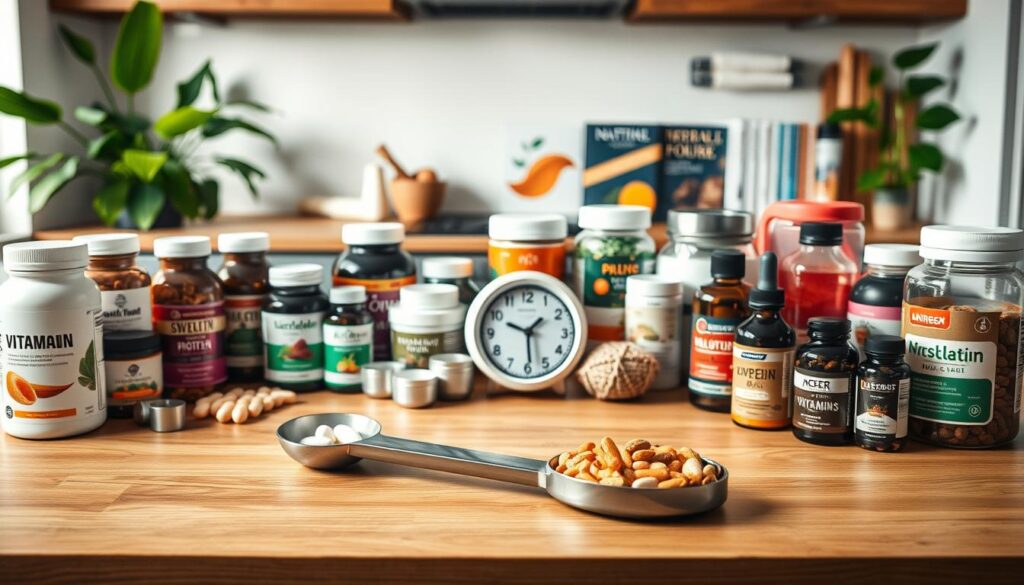
Getting the most from your wellness plan is not just about choosing the right products. It’s also about when and how much you take. Understanding the “when” and “how much” is as important as the quality of the ingredients.
Recommended Daily Intake
Every bottle has its own set of instructions. It’s essential to follow these to stay safe. The amounts are based on research to give you the best benefits without overdoing it.
Too much of a good thing can be bad. Taking more than suggested can stress your body. Always check the label to make sure you’re taking the right amount for your age and health.
Best Times to Take Supplements
When you take your supplements can affect how well your body absorbs them. For example, fat-soluble vitamins work better with healthy fats in your meal.
Research shows taking iron every other day can improve absorption. Spacing out your nutrition supplements helps your body process them better. Keep a log or use a phone alarm to stay on track.
Adjusting Dosage as Needed
Your health needs can change over time. This could be due to changes in your diet, activity, or stress levels. It’s key to watch how your body reacts to your routine.
If your nutrition supplements aren’t working as expected, or if you feel uncomfortable, it’s time to adjust. Always talk to a healthcare professional before changing your dosage. They can help make sure your supplements are safe and effective for your health goals.
Potential Side Effects to Consider
We all want to stay healthy, but it’s important to know how dietary supplements can affect us. Even natural products meant for immune support can cause unexpected reactions. It’s key to remember that more isn’t always better for our health.
Common Reactions from Supplements
Most people do well with high-quality supplements, but some might feel a bit off. You might get a bit of bloating or gas when you start something new. Some people even get headaches or skin rashes right after starting.
If you feel any of these, try taking less or with food. Consistency is good, but feeling okay is more important. It tells you if a product is right for you.
Interactions with Medications
Dietary supplements can also mess with your meds. Some herbal extracts can change how your body handles drugs, making them less effective. For instance, they might affect blood thinners or blood pressure meds.
Always talk to your doctor before trying new supplements. They can spot any issues with your current meds and immune support goals. Being open with your doctor keeps your health plan safe and working well.
When to Stop Taking a Supplement
Stop any supplement right away if you have a severe allergic reaction, like hives or trouble breathing. Also, be careful with ingredients like erythritol in protein powders. It might raise your risk of heart problems and blood clots.
If you feel really tired, dizzy, or have weird heart beats, stop taking it and get advice. Your body usually tells you when something isn’t right for you.
| Symptom Category | Potential Cause | Recommended Action |
|---|---|---|
| Digestive Issues | Sensitivity to ingredients | Take with food or reduce dose |
| Allergic Reaction | Immune system response | Stop use and consult a doctor |
| Cardiovascular Concern | Ingredients like erythritol | Discontinue use immediately |
| Medication Conflict | Drug-supplement interaction | Review with healthcare provider |
Combining Supplements with a Healthy Diet
Your wellness journey starts with what you eat. While nutrition supplements offer extra support, they shouldn’t replace whole foods. Eating a variety of foods is the best way to get the nutrients your body needs.

Importance of a Balanced Diet
The Harvard Healthy Eating Plate is a great guide for healthy meals. Fill half your plate with colorful veggies and fruits for fiber and antioxidants. This can reduce your need for organic supplements because your body absorbs nutrients better from natural sources.
Choosing whole foods helps your body work well. Lean proteins, whole grains, and healthy fats keep your energy up. This way, any supplements you take really help your health, not just fill gaps.
Foods That Complement Supplements
Some foods help your body use vitamins better. Eating healthy fats like avocado or olive oil with fat-soluble vitamins boosts their absorption. Nuts, seeds, and legumes give minerals that work well with nutrition supplements.
| Nutrient Source | Primary Benefit | Best Food Pairing |
|---|---|---|
| Leafy Greens | High Vitamin K | Healthy Fats (Olive Oil) |
| Citrus Fruits | Vitamin C | Iron-rich Beans |
| Whole Grains | Fiber/B-Vitamins | Lean Proteins |
Meal Planning Tips
Good meal planning means preparing fiber-rich foods and lean proteins ahead of time. Spend some time each week washing, chopping, and storing veggies for quick meals. This habit helps keep your diet healthy even when you’re busy.
Being consistent with organic supplements is important. Focus on whole, unprocessed foods to get the most from your supplements. Try adding one extra serving of veggies to your dinner tonight and see how you feel.
Embracing a Holistic Approach
True vitality comes from balancing nutrition, movement, and mindfulness. We see our bodies as complex systems. Every choice affects our holistic health. By focusing on comprehensive wellness, we get lasting results, not just quick fixes.
Integrating Exercise and Nutrition
Physical activity and good nutrition are key to a vibrant life. For example, Vitamin D is crucial. It helps with insulin resistance and mood. Combining natural remedies with regular exercise builds strong metabolic health.
Importance of Mental Health
Mental well-being is as important as physical fitness. Studies show how our environment affects our mind. You can learn more in this study on functional medicine. Managing stress helps us make healthy choices every day.
Sustainable Lifestyle Changes
Success comes from lasting habits, not quick fixes. We suggest making small, easy changes. The table below shows how different health areas support your journey to a better life.
| Pillar | Action Item | Expected Benefit |
|---|---|---|
| Nutrition | Whole food focus | Improved energy |
| Movement | Daily walking | Metabolic support |
| Mindset | Stress reduction | Mental clarity |
Customer Reviews and Experiences
Listening to others who’ve tried wellness products can be helpful. Yet, remember that personal stories are just a starting point. They’re not the final word on health. To learn more about our quality, check out our about us page.
Real-life Success Stories
Many people share good results from using certain supplements. For example, probiotics help the gut in various ways. One person might feel better in their stomach, while another might not notice much.
Common Questions from Users
People often ask which wellness products really work. It’s easy to get caught up in what’s trending online. Instead, think about what your body needs, not just what’s popular.
Learning from Customer Feedback
Looking at feedback helps us see how different products affect different people. But, don’t forget to get medical advice too. What works for someone else might not be right for you.
| Feedback Type | Reliability | Action Required |
|---|---|---|
| Personal Anecdote | Low | Consult a doctor |
| Clinical Study | High | Review methodology |
| Social Media Trend | Very Low | Verify with experts |
| Professional Advice | Highest | Follow guidance |
Your health journey is unique. By mixing user stories with expert advice, you can pick wellness products that fit your goals.
The Future of Healthy Living Supplements
The world of wellness is changing. It’s moving toward a more precise and data-driven approach. Now, we focus on personalized nutrition that fits our unique needs.
Emerging Trends in the Industry
Today, people want clear information and scientific proof for what they buy. The USDA’s FoodData Central gives us access to nutrient info for over 400,000 foods. This helps us make better choices about what we eat every day.
Innovations in Formulations
New ways to make supplements help them work better and target specific needs. Brands are moving from generic blends to tailored solutions. This change helps us reach our health goals more effectively.
The Role of Technology in Health Supplements
Wearable devices and apps track our activity and sleep in real time. They help us understand how our diet affects our body. By using these tools, we can improve our health journey. Embracing these advancements keeps our commitment to health strong and lasting.