
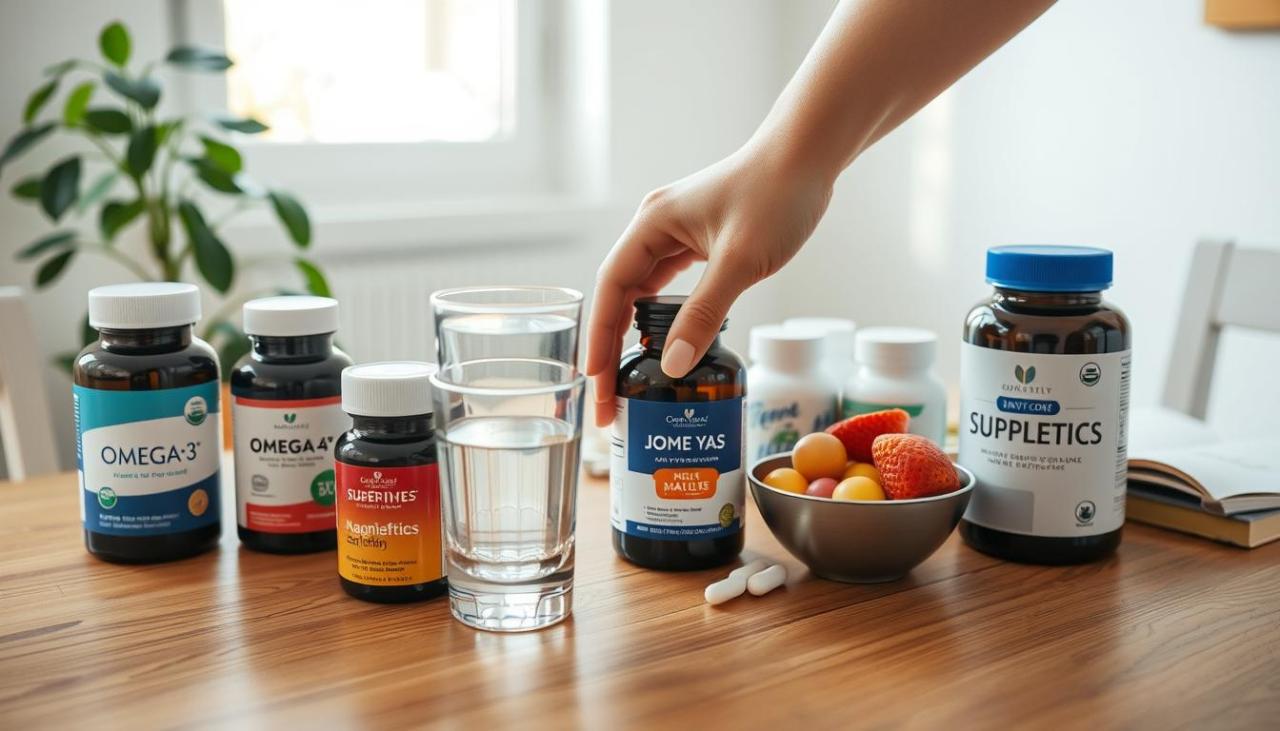
Did you know over 75% of American adults take supplements for wellness? Many of us find it hard to make these choices into a plan. Creating a daily supplement routine is more than just taking pills. It’s about making a plan that fits our unique needs.
Choosing vitamins, minerals, and herbal extracts can be tough. We often wonder which ones really help. By understanding these products, we can make informed choices that boost our health.
We aim to make this easier so we can feel great every day. A structured daily supplement routine helps us support our bodies well. Let’s find out how to start a health journey that improves our well-being.
Key Takeaways
- Understand the importance of personalizing your intake based on specific health goals.
- Learn to distinguish between high-quality nutrients and unnecessary additives.
- Discover how consistency plays a vital role in achieving long-term wellness results.
- Identify the best times of day to take specific vitamins for maximum absorption.
- Gain clarity on how to safely integrate new products into your existing lifestyle.
Understanding the Importance of a Supplement Routine
Getting a clear view on the importance of daily supplements is the first step to better health. We often look for ways to improve our wellness. These products can be helpful tools in our journey. But, they are not a substitute for a healthy lifestyle.
Why Supplements Matter for Your Health
Supplements can help when our diets lack essential nutrients. For many, the importance of daily supplements is in addressing specific deficiencies or health goals. It’s crucial to learn how to use them correctly to benefit our bodies.
It’s important to note that dietary supplements are not FDA-approved like prescription drugs. Their safety and effectiveness are different. So, we must be cautious and do our research.
The Role of Nutrition in Supplementation
Whole foods are the base of a healthy body. Supplements are meant to complement, not replace, the nutrients we get from food. Understanding the importance of daily supplements means knowing they work best with nutrient-rich meals.
The table below shows the differences between whole foods and supplements for nutrition.
| Feature | Whole Foods | Supplements |
|---|---|---|
| Nutrient Synergy | High (natural balance) | Low (isolated compounds) |
| Bioavailability | Generally high | Varies by formulation |
| Regulatory Status | Food safety standards | Not FDA-approved |
| Primary Purpose | Daily sustenance | Targeted support |
By focusing on whole foods, we get a wide range of nutrients that pills can’t match. When we do supplement, it’s as a secondary measure. Keeping this balance is crucial for long-term health.
Assessing Your Nutritional Needs
Finding out what nutrients we lack is the first step to a better health plan. By checking what we eat, we move from guessing to a scientific approach. This is crucial for anyone looking to make a daily supplement routine that really helps.
How to Identify Your Dietary Gaps
Many of us think we eat well, but the facts often differ. For example, only 5-9% of Americans get enough fiber. This shows we might be missing key nutrients for good digestion and heart health.
To find out what you’re missing, try keeping a food diary for a week. This helps spot patterns where we don’t meet daily needs. This info is key for creating a personalized daily supplement plan that fills our gaps.
Key Factors Influencing Supplement Choice
Our needs change over time due to age, gender, and how active we are. For instance, athletes need more electrolytes and protein, while older adults need more calcium and Vitamin D for bones.
The table below shows how different life stages and habits affect our nutritional needs:
| Factor | Primary Concern | Common Supplement Need |
|---|---|---|
| Age (50+) | Bone and Joint Health | Calcium, Vitamin D, B12 |
| High Activity | Muscle Recovery | Magnesium, Protein, Iron |
| Gender (Women) | Hormonal/Blood Health | Iron, Folate, Omega-3 |
| Low Fiber Diet | Digestive Regularity | Psyllium Husk, Fiber Blends |
By looking at these factors, we can make smart health choices. Consistency is important. Knowing these details helps us choose supplements that really help us every day.
Popular Supplements and Their Benefits
Choosing the best daily supplements means understanding how they work in our bodies. Knowing the roles of different nutrients helps us make choices that support our health.
The benefits of a daily supplement regimen come from picking high-quality ingredients. We look for options backed by science to support our daily needs.
Vitamins: A to Zinc
Vitamins are important compounds our bodies need in small amounts. For example, Vitamin D is crucial for strong bones and a healthy immune system.
Vitamin D is stored in fatty tissue and the liver because it’s fat-soluble. Keeping enough of this vitamin is key, which is why it’s often part of wellness plans, even for those who don’t get much sun.
Minerals You Might Be Lacking
Minerals come from the soil and water. Many struggle to get enough magnesium, iron, or calcium from food alone.
These minerals are essential for muscle function, nerve signals, and energy. Knowing if you’re missing out can help you decide if you need a mineral supplement.
Herbal Supplements Worth Considering
Herbal supplements use plant-based compounds to help balance the body. Many people use adaptogens, herbs that help manage stress.
Choosing standardized extracts is important to ensure quality. Always look for products that have been tested by third parties to confirm their purity and strength.
| Supplement Category | Primary Benefit | Key Example |
|---|---|---|
| Vitamins | Immune and Bone Support | Vitamin D |
| Minerals | Muscle and Nerve Function | Magnesium |
| Herbal | Stress Management | Ashwagandha |
The best daily supplements enhance a healthy lifestyle. Understanding the benefits of a daily supplement regimen helps us stay proactive about our health and well-being.
Consulting with Healthcare Professionals
Creating a daily supplement plan is a journey best done with your healthcare team. The FDA doesn’t approve supplements like prescription drugs. So, we must be careful and get professional advice. Professional guidance ensures our supplements fit our health history.
When to See a Doctor or Dietitian
If you manage chronic conditions or take prescription drugs, see a doctor. Supplements can interact with medications in ways we don’t expect. It’s also good to talk to a healthcare professional if you have unexplained symptoms or plan big diet changes.
A dietitian or doctor can help us understand lab results and find real nutrient gaps. Guesswork can lead to taking supplements that don’t help. We should aim for a data-driven approach to wellness.
Questions to Ask Your Healthcare Provider
When you meet with your provider, have a list of questions ready. This makes your appointment more valuable and helps you feel sure about your choices. Here are some questions to ask:
- Are there any known interactions between this supplement and my current medications?
- What is the recommended dosage for my specific health goals?
- Are there specific brands or third-party certifications I should look for to ensure quality?
- How long should I take this supplement before we re-evaluate its effectiveness?
| Scenario | Action Required | Primary Goal |
|---|---|---|
| Starting new vitamins | Consult a doctor | Safety check |
| Managing chronic illness | Consult a specialist | Avoid interactions |
| General wellness goals | Consult a dietitian | Optimize nutrition |
By asking these questions, we make sure our supplements are safe and effective. This is key for creating a personalized daily supplement plan that supports our health in the long run.
Creating Your Supplement Schedule
Timing is key when setting up a daily supplement routine. It’s easy to forget to take our vitamins. But, organizing our intake helps our bodies use these nutrients better. By managing a daily supplement schedule well, we make sure our health routine fits smoothly into our day.
Morning, Noon, or Night: When to Take Your Supplements
The best time to take supplements depends on the nutrients. For example, fat-soluble vitamins like A, D, E, and K work best with healthy fats. Some minerals need special timing, changing how we approach our supplements.
Research shows taking iron supplements every other day might boost absorption more than daily doses. This is because our body produces a hormone that blocks iron uptake when levels are too high. Spacing out our supplements lets our body recover and get the most from our daily supplement routine.
Tips for Staying Consistent
To make daily supplements a habit, place your pill organizer in a daily routine spot. Try putting it next to your coffee maker or toothbrush. This visual reminder helps us stay on track without relying on memory.
Being consistent is crucial for a good health plan. If we miss a dose, don’t double up the next day unless a doctor says it’s okay. Instead, just go back to our usual schedule to keep our nutrient levels steady.
| Supplement Type | Best Time to Take | Pairing Suggestion |
|---|---|---|
| Multivitamins | Morning | With breakfast |
| Iron | Every other day | With Vitamin C |
| Magnesium | Evening | Before bed |
| Fat-Soluble Vitamins | With a meal | Healthy fats |
Safety and Dosage Considerations
We need to be careful when choosing supplements for our health goals. Taking too much can cause side effects. Prioritizing safety keeps our wellness journey safe and effective.

Understanding Recommended Daily Allowances
More isn’t always better for our health. The recommended daily supplement intake helps us avoid too much. Always check the labels of your daily vitamins.
For example, the FDA advises not to take more than 2 grams of EPA and DHA from fish oil daily. Taking too much can upset our body’s balance. Always check the serving size on the bottle to stay safe.
Potential Interactions with Medications
We also need to think about how supplements affect our medications. Some herbs and minerals can change how our body absorbs or breaks down drugs. Consulting with a healthcare professional is the best way to avoid problems.
When managing a daily supplement schedule, keep a list of all your medications and supplements. Share this with your doctor. This helps spot risks early and keeps you healthy in the long run.
Tracking Your Progress
How do we know if our daily habits are working? Without a way to measure, it’s easy to lose sight of our goals. By documenting our journey, we gain clarity on how nutrients affect our bodies.
Benefits of Keeping a Supplement Journal
Keeping a journal helps us notice patterns we might miss. By tracking our recommended daily supplement intake, we see how nutrients impact our energy, digestion, and mental clarity.
Here are the main benefits of tracking your routine:
- Identifying trends: Seeing how your body reacts to vitamins over weeks.
- Improving consistency: Having a visual reminder to stay on track.
- Data-driven insights: Getting solid info to share with healthcare providers.
“What gets measured gets managed.”
Adjusting Your Routine Based on Results
With enough data, we can make smart health choices. If a supplement doesn’t give the expected benefits of a daily supplement regimen, we can change or stop it.
Always be careful when making changes. If our journal shows a supplement isn’t working, it’s time to talk to a professional. This way, we only use products that support our health goals.
Overcoming Common Challenges
Starting a new health habit is exciting at first. But, the excitement can fade over time. When you add daily supplements to your routine, you might feel tired or bored. This happens when it feels like a task rather than a way to improve your health.

Dealing with Supplement Fatigue
Feeling uncomfortable can make you want to stop. For example, adding fiber might cause gas or bloating. Start with a half portion of fiber to ease your body into it.
Remember, overcoming challenges to healthy eating and supplements takes time. Listen to your body to keep your daily supplement routine easy and consistent. Small changes are better than big ones.
“Success is the sum of small efforts, repeated day in and day out.”
Tips for Remembering to Take Your Supplements
Forgetting to take your supplements is common. But, simple tricks can help. Try linking your supplement time to daily habits like brushing your teeth or eating breakfast. A pill organizer is also a great tool to track your supplements.
| Strategy | Benefit | Ease of Use |
|---|---|---|
| Pill Organizer | Visual tracking | High |
| Habit Stacking | Natural integration | Medium |
| Phone Alarms | Active reminders | High |
Making daily supplements a part of your routine should feel good. If it’s hard, simplify it. Being consistent is more important than taking a lot of pills at once.
Supplement Myths Debunked
Exploring wellness means looking beyond marketing tricks and focusing on science. We often see claims of quick health fixes, but these are often not backed by solid research. By staying informed, we can choose the best daily supplements that really meet our needs.
Separating Fact from Fiction
One big myth is taking huge amounts of Vitamin C to avoid colds. Many think it boosts immunity, but studies don’t fully support this. Excessive doses often just get thrown out, as our bodies can’t use it all.
We should trust science over stories in ads. When picking the best daily supplements, look for studies, not just packaging. This way, we make sure our health choices are worth it.
Common Misconceptions About Health Supplements
Many think supplements can replace a healthy diet. But they’re meant to fill gaps, not be our main food source. To find the best daily supplements, first check if you’re getting enough from your diet.
Another myth is that natural stuff is always safe. But some natural items can harm us if taken wrong. Always talk to a doctor to make sure what you’re taking is safe and works.
| Common Myth | Scientific Reality | Actionable Advice |
|---|---|---|
| Mega-doses prevent colds | Evidence is inconclusive | Focus on balanced nutrition |
| Supplements replace food | They are only additives | Prioritize whole foods first |
| Natural means safe | Potency can be dangerous | Check for potential interactions |
| More is always better | Risk of toxicity exists | Follow recommended dosages |
Maintaining a Holistic Approach to Health
Building a healthy life means more than just taking pills. It’s about the habits that keep us going. Daily supplements are helpful but not the main source of energy.
Prioritizing Whole Food Nutrition
Eating a diet rich in fruits, veggies, beans, nuts, seeds, and lean proteins is key. These foods give our bodies what they need. Often, they can fill our nutritional gaps without supplements.
We suggest seeing your plate as your first defense against nutrient gaps.
Integrating Movement and Lifestyle
Exercise and sleep are crucial for how our bodies use nutrients. Regular workouts boost our health and energy. Combining these habits with supplements leads to lasting wellness.
Your health journey is a personal promise to stay consistent and mindful.