
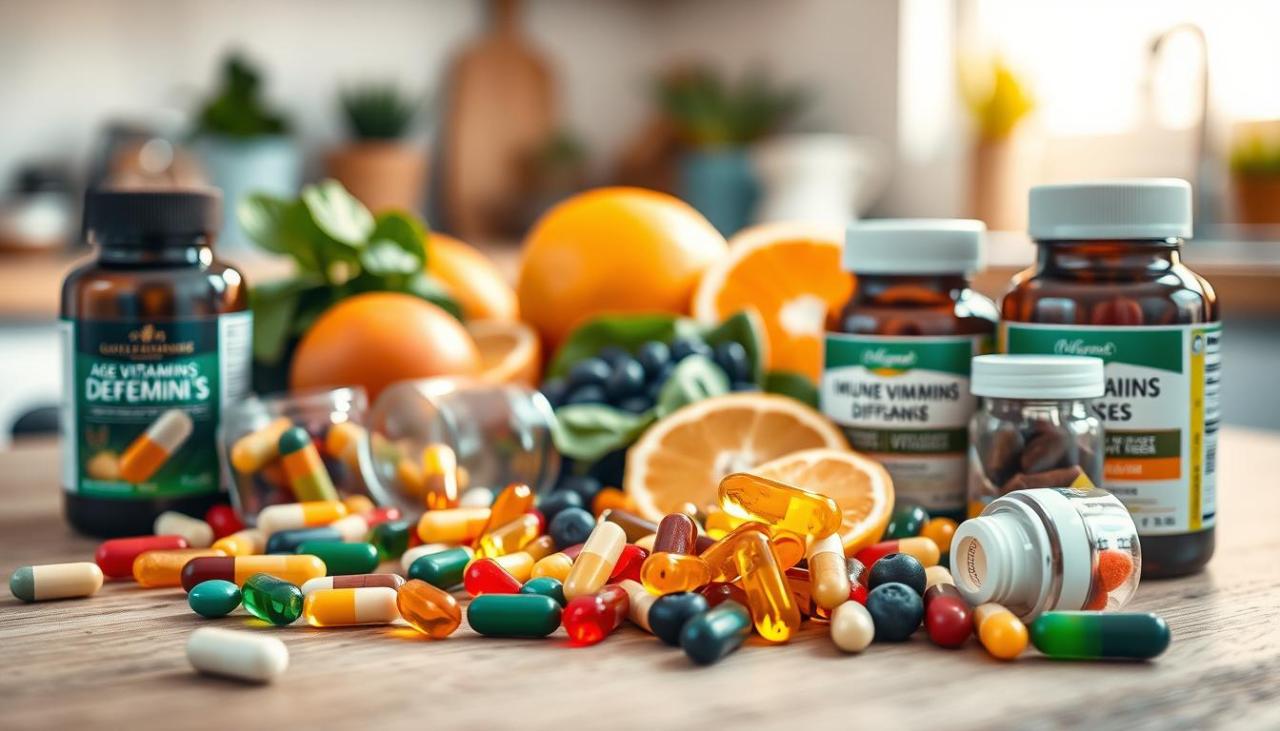
Did you know your body has trillions of microorganisms? Yet, you stay healthy thanks to a silent network working all the time. This network includes your skin, digestive tract, and organs, blocking harmful invaders. It’s important to know that certain nutrients help your body function normally, not magically boost it.
By picking the best immune support supplements, you give your body what it needs to stay balanced. We’ll show how these immune strength vitamins work with your daily habits to keep you feeling great. Our guide covers whole foods and smart lifestyle choices for your long-term health.
If you’re curious about daily routines or need a 10 daily vitamin guide, we offer practical, science-backed advice. Let us guide you through the world of wellness with confidence and clarity.
Key Takeaways
- Nutrients support normal biological function rather than acting as a miracle cure.
- Your skin and digestive tract serve as the first lines of defense against germs.
- A balanced diet remains the most effective way to acquire necessary health-boosting compounds.
- Lifestyle habits like sleep and exercise are just as important as any supplement.
- Always prioritize safety and quality when selecting products for your daily routine.
Understanding Immune Strength Vitamins
Keeping our immune system strong is key. We need to know what nutrients help our bodies fight off sickness. Immune strength vitamins are crucial for staying healthy.
What Are Immune Strength Vitamins?
Essential nutrients for immune strength help our body’s defenses work right. They build a strong immune system. This lets our body fight off sicknesses well.
These vitamins don’t make us invincible to all sicknesses. They help our body’s natural defenses work better. Eating enough of these vitamins every day keeps our body healthy.
Why Are They Important for Your Health?
These nutrients keep us from getting sick by preventing deficiencies. Taking too many supplements won’t make us super immune. Just eating enough is what we need.
Eating a variety of foods is the best way to get what we need. Foods full of vitamins, minerals, and antioxidants help keep us healthy. This way, we get all the nutrients our body needs.
| Nutrient Source | Primary Benefit | Consistency |
|---|---|---|
| Whole Foods | High Bioavailability | Daily Requirement |
| Fortified Foods | Targeted Support | Occasional Use |
| Supplements | Corrects Deficiency | As Directed |
By eating a balanced diet, we give our body what it needs for long-term health. Using essential nutrients for immune strength from natural sources is the best way to support our health.
Key Vitamins for Immune Support
Our bodies need a mix of nutrients to stay healthy. By picking the right vitamins to boost immunity, we give our bodies what they need to fight off sickness. Knowing how these nutrients work helps us make smart choices for our health.
https://www.youtube.com/watch?v=-WdTAk9QMGI
Vitamin C: The Immune Booster
Vitamin C is famous for boosting health. It’s a strong antioxidant that guards our cells. Regular intake can help shorten colds, making it a key vitamin for many.
Vitamin D: The Sunshine Vitamin
We get vitamin D from sunlight, but many don’t get enough. It’s crucial for keeping our immune system strong. If you’re low, talk to your doctor about supplements.
Vitamin E: The Antioxidant Powerhouse
Vitamin E is a strong antioxidant that helps our cells work right. While it’s good for us, its exact benefits for breathing issues are still being studied. Remember, immune defense vitamins like E aren’t magic solutions. They work best in the right amounts.
| Vitamin | Primary Role | Key Benefit |
|---|---|---|
| Vitamin C | Antioxidant | Shortens cold duration |
| Vitamin D | Immune Regulation | Supports low-level deficiency |
| Vitamin E | Cell Protection | General antioxidant support |
To stay healthy, it’s all about balance. We suggest looking for quality sources over just high doses.
Essential Minerals for Immune Function
Vitamins get a lot of attention, but essential nutrients for immune strength are just as important. These minerals are the base for many processes that keep us strong against threats.
Zinc: A Vital Mineral for Immunity
Zinc is key for a healthy immune system. It helps with wound healing, making proteins, and copying DNA. This ensures our cells can fix and grow well.
“The body does not store zinc, so we must consume it daily to maintain our defenses.”
But, too much zinc is bad. Taking too much can cause a copper deficiency. This can weaken your immune system over time.
Selenium: Protecting Your Cells
Selenium is a strong antioxidant that protects our cells from damage. It fights off free radicals, keeping our cells safe and our immune system strong.
But, too much selenium is harmful. It can cause hair loss and stomach problems. It’s best to get these essential nutrients for immune strength from a balanced diet, not just supplements.
Natural Sources of Immune Strength Vitamins
We often search for complex health solutions, but nature offers simple, effective options. Eating whole, unprocessed foods gives us the nutrients we need for a strong immune system. These foods make our meals delicious and support our health over time.

Fruits Rich in Vitamin C
Vitamin C is a nutrient our bodies can’t store, so we need it every day. Oranges, grapefruits, and lemons are known for their vitamin C, but there are other options too. Bell peppers, like the red ones, actually have more vitamin C than many citrus fruits.
Berries and cruciferous vegetables are also great sources. Strawberries, blueberries, and raspberries add sweetness, while broccoli and Brussels sprouts offer a savory option. These foods are easy to add to any meal.
Nuts and Seeds for Vitamin E
Vitamin E is an antioxidant that protects our cells. To get enough, we should eat plant-based sources of healthy fats. Almonds, sunflower seeds, and hazelnuts are great snacks for vitamin E.
We can also get vitamin E from cooking oils and leafy greens. Using sunflower or safflower oil in dressings and sautéing spinach or kale boosts nutrition. These simple steps help keep our levels of this important antioxidant steady.
Sunlight for Vitamin D
Our bodies can make vitamin D when sunlight hits our skin. This process creates the hormone we need. But, our ability to make it depends on where we live, the season, and our skin tone.
In winter or in northern places, we might not get enough from the sun. In these cases, we should eat foods like fatty fish, egg yolks, and fortified dairy. Combining sun exposure with a diet rich in nutrients is key to keeping our immune system strong.
| Nutrient | Primary Food Source | Key Benefit |
|---|---|---|
| Vitamin C | Red Bell Peppers | Supports cellular function |
| Vitamin E | Sunflower Seeds | Provides antioxidant protection |
| Vitamin D | Salmon | Regulates immune response |
The Role of a Balanced Diet in Immunity
Your immune system needs fuel to work well. Eating a variety of whole foods gives your body what it needs to stay strong. This keeps your body ready to fight off sickness.
How a Healthy Diet Boosts Immunity
Eating a wide range of foods helps get all the vitamins to boost immunity you need. Choosing whole foods over processed ones helps avoid harmful additives. These can slow down your body’s healing.
Remember, consistency is key. You don’t need to spend a lot on special products. Good nutrition is available at your local grocery store. Even frozen fruits and veggies are full of nutrients, making them a great choice for busy days.
Foods to Include for Optimal Defense
To get essential nutrients for immune strength, eat foods that are full of color. A varied diet protects your cells. Here are some foods to add to your meals:
- Colorful produce: Berries, leafy greens, and citrus fruits are packed with antioxidants.
- Plant-based proteins: Beans and lentils are good for your gut health.
- Healthy fats: Nuts, seeds, and avocados keep your cells strong.
- Lean proteins: Chicken, fish, and tofu help make immune cells.
Also, watch how much alcohol and processed snacks you eat. Cutting down on these lets your body focus on staying healthy. Eating whole, unprocessed foods is the best way to keep your body strong over time.
Supplements: Do You Need Them?
Many people use pills and powders to fill nutritional gaps. But are they really needed by everyone? Whole foods are the best source of nutrition. Yet, there are times when best immune support supplements can be helpful. We think supplements should help, not replace, a healthy lifestyle.
When to Consider Immune Supplements
Think about adding powerful immune-boosting supplements if a doctor finds a nutrient gap. Blood tests can show if you’re low on Vitamin D or Zinc. In these cases, supplements can quickly fix the issue.
“The goal of any supplement regimen should be to support the body’s natural processes, not to override them with excessive intake.”
Stress, illness recovery, or special diets might increase your need for certain nutrients. If you’re on a strict diet, you might not get enough vitamins from food. Always talk to your doctor before starting any supplements to make sure they’re right for you.
Choosing the Right Immune Strength Vitamins
Finding the right supplements can be tricky, with so many choices out there. Look for clear labels and ingredients backed by science. Make sure to check for third-party testing to confirm the product’s quality.
Here’s a checklist to help you choose:
- Meaningful amounts: Make sure the dose is effective and safe.
- Dietary suitability: Check for allergens or non-vegan ingredients if needed.
- Medication safety: Make sure the supplement won’t interact with your meds.
Be wary of brands that promise guaranteed protection against viruses or illnesses. Stay away from products with huge doses of anything. Also, avoid iron supplements unless a doctor says you need them, as too much iron can be dangerous.
The Impact of Lifestyle on Immune Strength
Looking at natural remedies for immune system health, our daily lifestyle is key. Nutrients are important, but our habits also play a big role. Moving and staying mentally sharp helps our immune system work better.
The Importance of Regular Exercise
Exercise is a top way to keep our health strong. We suggest regular, moderate workouts over intense training. Activities like walking, swimming, or yoga boost circulation and help immune cells move.
Studies show that staying active is crucial for a healthy immune system. It’s vital to pick activities we can keep up with for a long time. Being consistent is more important than how hard we exercise.
Managing Stress for Better Immunity
Chronic stress weakens our health. It makes our bodies produce hormones that harm our immune system. Relaxation techniques like deep breathing or meditation can help us stay balanced.
“The greatest weapon against stress is our ability to choose one thought over another.”
Getting enough sleep and having strong social ties are also key. Healthy routines that include sleep and connections with others are powerful. These natural remedies for immune system are simple but effective.
| Lifestyle Habit | Primary Benefit | Recommended Frequency |
|---|---|---|
| Moderate Exercise | Improved Circulation | 3-5 times per week |
| Stress Management | Lower Cortisol Levels | Daily practice |
| Quality Sleep | Cellular Repair | 7-9 hours nightly |
Age-Related Considerations for Immune Health
Our nutritional needs change as we age. What’s good for a growing child might not be enough for an adult or senior. Understanding these changes helps us use immune defense vitamins to stay healthy at every stage.

Immune Needs for Different Age Groups
Each life stage has its own challenges for our bodies. Infants and kids need certain nutrients for growth. Teenagers need more zinc for their fast growth.
Adults focus on keeping their cells healthy. Older adults have trouble getting some nutrients. We need to watch out for:
- Zinc: Key for cell growth and immune function, important at all ages.
- Selenium: Helps fight oxidative stress, more important as we get older.
- Vitamin D: Crucial for bones and immune health at any age.
“Nutrition is not a one-size-fits-all solution; it is a dynamic process that must adapt to the biological clock of the individual.”
Adjusting Vitamin Intake as You Age
As we age, our vitamin needs change. Our appetite, medications, and health conditions affect how we use nutrients. Our bodies might not absorb them as well, so we need to check our diet often.
Here are some reasons we might need to adjust:
- Medication Interactions: Some drugs can lower vitamin levels, so we might need to take supplements.
- Absorption Issues: Older adults might not get as much from food due to digestive changes.
- Dietary Restrictions: Our choices or health needs might limit our food options.
Remember, these tips are general. Always talk to a doctor before changing your supplements. They can give you a plan that fits your health needs and immune defense vitamins needs.
Myths and Misconceptions About Immune Vitamins
The idea that we can supercharge our immune system with a single pill is a myth. Many people look for powerful immune-boosting supplements to get perfect health quickly. But, our bodies need a mix of systems, not just one nutrient.
Common Misunderstandings Debunked
Some think extra vitamins will keep them from getting sick. While vitamins help our defenses, they don’t protect us from all germs. We also need sleep, water, and a healthy diet.
“Nutrition is not a magic bullet, but rather the fuel that allows our biological systems to function at their best.”
Powerful immune-boosting supplements help fill nutritional gaps, not replace good habits. Thinking a supplement can fix bad lifestyle choices is risky. True health comes from a whole approach, not just a quick solution.
The Truth Behind High-Dose Vitamins
Some believe more vitamins are always better. But, too much can be harmful. For example, too much fat-soluble vitamins can be toxic because our bodies store them.
When using powerful immune-boosting supplements, follow the label. High doses of Vitamin C or D might seem good, but they can harm. Always talk to a doctor before taking more of any vitamin.
For immune support, moderation and balance are key. By sticking to evidence-based practices, we can stay healthy without falling for false promises. Listen to your body and seek professional advice over unproven claims.
Tips for Maximizing Immune Strength
Small, intentional changes in your daily habits can lead to better results from supplements. By optimizing how and when you take your nutrients, you ensure your body gets the most from top immune health products.
Best Practices for Vitamin Absorption
To get the most out of your regimen, understand how your body processes nutrients. Fat-soluble vitamins, like Vitamin D and Vitamin E, need dietary fats for absorption. Take these with a meal that has healthy fats, like avocado, nuts, or olive oil.
When taking zinc, it’s best to take it with a small amount of food. This helps reduce the risk of nausea or stomach discomfort. Always read product labels carefully. Look for dosage instructions, potential allergens, and any additives that might not fit your health goals.
Integrating Vitamins into Your Daily Routine
Consistency is key when using top immune health products. Link your supplement intake to an existing habit, like brushing your teeth or eating breakfast. This makes it easier to remember without needing a complex schedule.
Supplements work best when they support a healthy lifestyle. Pair your daily intake with regular movement, enough sleep, and time outdoors to naturally boost your defense. By combining these habits with a varied, nutrient-dense diet, you build a strong foundation for long-term wellness.
Conclusion: Strengthening Your Immune Defense
Getting to optimal health takes dedication to good habits that help our bodies work right. Immune defense vitamins are great when we don’t get enough nutrients from food.
The Role of Informed Choices
Supplements help fill nutritional gaps, not cure sickness. No single pill can keep the cold or flu away. But, using good immune vitamins with a diet of whole foods is key.
Commitment to Sustainable Habits
Our long-term health is about good nutrition and lifestyle choices. Focus on getting enough sleep, exercising regularly, and managing stress. These habits help our bodies stay strong.
Talk to a healthcare expert before starting supplements. Nature Made and Thorne are good brands for wellness support. By choosing smart strategies, we keep our immune system strong at all ages.