
Did you know your body sheds roughly 40,000 dead cells every minute? This constant renewal depends on nutrients you consume each day. Choosing the right foods gives your body building blocks for a strong, protective outer barrier.
We believe a radiant complexion begins within. Focusing on specific vitamins for clear skin supports natural hydration and collagen production. This process goes beyond looks; it fuels biological systems so they can work well.
This guide explains how targeted nutrition supports a healthy, vibrant appearance. We examine how vitamins for glowing skin work with proper hydration and topical care. We cover food sources, supplements, and habits that can help you reach your goals.
Key Takeaways
- Nutrition acts as the foundation for a strong, protective dermal barrier.
- Consistent intake of essential nutrients supports natural collagen maintenance.
- Hydration levels directly influence the texture and brightness of your complexion.
- A balanced diet provides the most bioavailable forms of necessary compounds.
- Strategic supplementation can fill gaps in your daily wellness routine.
Understanding the Role of Vitamins in Skin Health
Our skin acts as a mirror to our internal health, reflecting the quality of nutrients we provide daily. To maintain a vibrant complexion, look beyond surface treatments and consider biological processes beneath the surface. Essential vitamins for skin are building blocks for collagen production, cell turnover, and natural repair, helping our face look youthful.
How Vitamins Impact Skin Appearance
When we provide our bodies with the best vitamins for skin, we fuel defense systems against environmental stress. These nutrients help maintain the skin barrier, which locks in moisture and helps prevent dryness. By supporting healthy cell regeneration, these compounds help skin resist pollutants and UV damage.
Without enough of these nutrients, skin may look dull, tired, or prone to early aging. Skin-friendly vitamins work together to neutralize free radicals, unstable molecules that can damage skin cells over time. This protection inside the body matters as much as sunscreen or daily moisturizer.
The Importance of a Balanced Diet
Although pills may seem easy, a balanced diet remains the best way to give skin needed nutrients. Whole foods offer proteins, healthy fats, and antioxidants that work together to improve absorption. One isolated supplement may miss nature’s synergy, so experts suggest learning more about how to approach supplements for your skin through a professional lens.
A varied diet gives you a broad range of essential vitamins for skin and macronutrients that support structural integrity. Healthy fats help absorb fat-soluble vitamins, while proteins provide amino acids for collagen production. By choosing nutrient-dense foods, you build a strong base for lasting skin health and a natural glow.
Vitamin A: The Skin’s Best Friend
Vitamin A often leads the list of nutrients that support a radiant look. It is one of the most effective vitamins for clear skin, helping manage breakouts and visible aging. This nutrient supports natural body processes and helps keep the complexion smooth and youthful.
Benefits of Vitamin A for Skin Clarity
Vitamin A regulates skin-cell turnover, which helps prevent clogged pores. When skin sheds dead cells well, acne becomes less likely, making it a top choice among clear skin vitamins. It also supports collagen production, which firms skin and reduces fine lines.
Distinguish between dietary intake and topical applications. Eating foods rich in vitamin A supports overall health, while topical retinoids—a vitamin A derivative—target specific concerns. Both methods support a healthier, stronger skin barrier.
Sources of Vitamin A
Boost your intake by adding nutrient-dense foods to daily meals. Animal-based products provide preformed vitamin A, while colorful fruits and vegetables offer beta-carotene. The body converts beta-carotene into active vitamin A, and a balanced diet supports skin benefits.
| Source Type | Food Examples | Primary Skin Benefit |
|---|---|---|
| Leafy Greens | Spinach, Kale | Antioxidant protection |
| Orange Produce | Mango, Carrots | Supports cell turnover |
| Animal Products | Eggs, Dairy | Maintains skin elasticity |
| Seafood | Salmon, Mackerel | Promotes hydration |
Vitamin C: The Antioxidant Powerhouse
Few ingredients support skin health as well as the powerful antioxidant Vitamin C. It supports skin structure and shields it from environmental stressors. Choosing the right vitamins for glowing skin can support the body’s natural repair process.
Brightening Effects of Vitamin C
Vitamin C can create a brighter, more even-looking complexion. It blocks the enzyme tyrosinase, helping prevent dark spots and hyperpigmentation. Consistency is key when you want visible improvements in your skin tone.
Vitamin C also helps the body build collagen. Collagen keeps skin firm and elastic. Natural collagen production slows with age, making Vitamin C more vital for maintaining a youthful appearance.
How to Incorporate Vitamin C into Your Routine
You can get this antioxidant through food and topical products. Citrus fruits, bell peppers, and strawberries provide a natural internal boost. A well-formulated topical serum delivers Vitamin C directly to the skin’s surface.
Start a new topical routine slowly to help prevent redness or irritation. Apply a low-concentration serum every other day and watch your skin’s response. Always use broad-spectrum sunscreen because active ingredients can increase sun sensitivity.
| Source Type | Primary Benefit | Recommended Frequency |
|---|---|---|
| Citrus Fruits | High Vitamin C Content | Daily Consumption |
| Topical Serums | Targeted Brightening | Morning Application |
| Leafy Greens | Collagen Support | Daily Consumption |
Balance nutrient-dense foods with a gentle skincare routine to maximize these vitamins for glowing skin. Stay patient because major changes often appear after several weeks of dedicated use.
Vitamin E: Protecting Your Skin
Your skin needs a strong defense, and Vitamin E helps provide it. Daily pollution and UV rays can harm skin, but this nutrient acts as a powerful shield. Adding vitamins for healthy skin to your routine can support a firm, glowing complexion.
Role of Vitamin E in Skin Healing
Vitamin E acts as an antioxidant that neutralizes free radicals before they cause cellular damage. By strengthening the cell-wall structure, it helps skin stay firm and resist premature aging. This process also protects the natural moisture barrier.
When minor irritation or environmental stress affects skin, Vitamin E can speed recovery. It often works with Vitamin C to stabilize and enhance protection on the skin’s surface. This teamwork supports long-term skin vitality and better texture.
Food Sources Rich in Vitamin E
Getting this nutrient through food can support skin health. Choose whole foods rich in this fat-soluble vitamin. Adding them to meals supports people seeking vitamins for healthy skin.
- Sunflower seeds and almonds are among the most concentrated plant-based sources.
- Vegetable oils, such as wheat germ or sunflower oil, provide a significant boost when used in cooking or dressings.
- Hazelnuts and peanuts offer a convenient snack option that supports skin moisture retention.
These nutrient-dense foods give your body building blocks for repair when eaten regularly. A balanced diet helps keep skin hydrated, protected, and healthy from the inside out.
B Vitamins: The Vital Skin Supporters
Skin relies on a complex nutrient network, and B vitamins help maintain its structure. These water-soluble nutrients support the skin barrier, manage inflammation, and promote healthy cell function. Adding these vitamins for healthy skin to your lifestyle helps your body maintain clear, strong skin.
Key B Vitamins for Skin Health
Niacinamide, or vitamin B3, helps the skin hold moisture. It strengthens the skin barrier, limits water loss, and shields skin from environmental stressors. Consistent use may also even skin tone and reduce redness.
Other B vitamins, including pantothenic acid (B5) and biotin (B7), also support skin health. Vitamin B5 draws moisture into the skin, keeping it soft and supple.
Biotin supports fatty acid production, which helps skin cells stay healthy. Together, these vitamins for healthy skin help keep your complexion hydrated and vibrant.
Dietary Sources of B Vitamins
You can get these essential nutrients from a varied, balanced diet. Whole grains, lean meats, eggs, and dairy products are excellent B-complex sources. Leafy green vegetables and legumes also provide significant amounts, supporting skin wellness.
Supplements are available, but they should not replace a healthy diet without professional guidance. Whole foods offer a mix of nutrients that work better together than isolated pills. Nutrient-dense meals help your body receive the full range of vitamins for healthy skin in their most bioavailable form.
Omega Fatty Acids: Essential for Hydration
Besides essential vitamins for skin, fatty acids help maintain a radiant complexion. These healthy fats support skin-cell structure and help the barrier resist environmental stressors.
True beauty starts from within, and the right lipids in your daily diet support long-term skin health. They give your body tools to lock in moisture and maintain a youthful appearance.
How Omega-3 and Omega-6 Benefit Your Skin
Omega-3 and omega-6 fatty acids are essential for maintaining cell-wall integrity. They help build a flexible lipid barrier that prevents water loss, keeping skin hydrated and plump throughout the day.
Beyond hydration, these fats help with regulating inflammation. By calming skin from the inside out, they can help reduce redness and support a more even tone. They are a good partner to the essential vitamins for skin that you may already consume.
“Healthy skin is a reflection of overall wellness, and the fats we consume are the building blocks of our protective barrier.”
Best Food Sources of Omega Fatty Acids
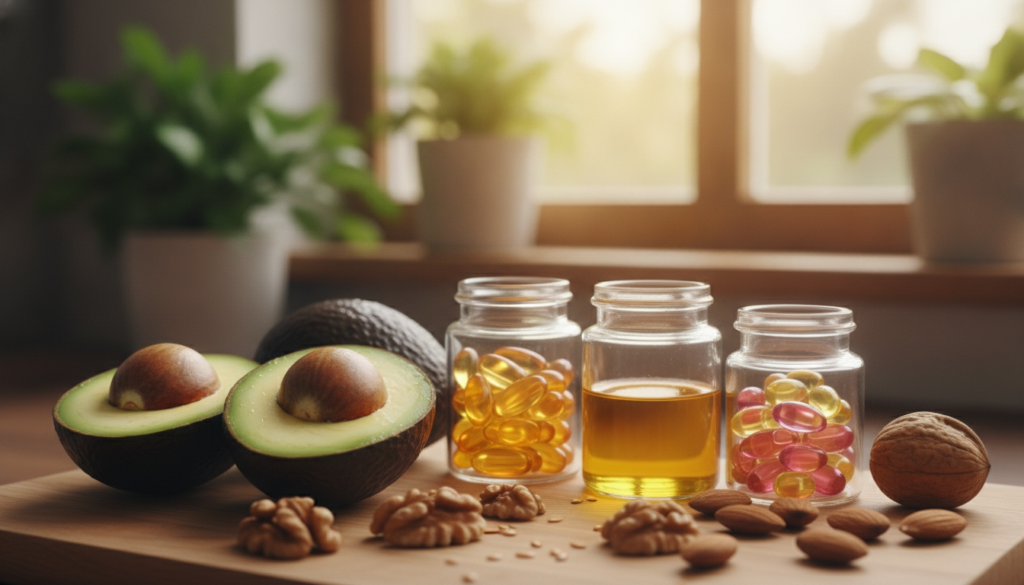
To gain these benefits, choose whole-food sources of high-quality unsaturated fats. Fatty fish like salmon, mackerel, and sardines are excellent choices to boost your omega-3 intake.
Plant-based eaters can find these nutrients in the following foods:
- Flaxseeds and chia seeds for a concentrated dose of alpha-linolenic acid.
- Walnuts, which offer a convenient and heart-healthy snack.
- Avocados, providing both healthy fats and skin-loving nutrients.
- Extra virgin olive oil for your daily cooking needs.
A varied diet with these ingredients gives your skin support to stay soft and supple. Consistency matters when you add these fats alongside other essential vitamins for skin.
Zinc: A Mineral Essential for Clear Skin
When we discuss skin-clearing nutrients, zinc stands out as a key part of a healthy complexion. Many people focus only on vitamins, but this essential mineral helps maintain the skin’s structure. It also supports our broader plan for a radiant look.
Zinc’s Role in Reducing Acne
Zinc supports cell development and tissue repair. By stabilizing the skin barrier, it helps protect against external irritants that trigger breakouts. Many people find that this mineral helps manage acne-related inflammation.
Zinc is not a miracle cure for everyone. It supports healing as part of a broader approach to clear skin vitamins. If persistent skin issues resemble eczema, consult a healthcare professional instead of self-treating indefinitely.
Foods High in Zinc
Choose the right whole foods to increase your intake of these skin-clearing nutrients. Eating various foods daily helps provide adequate levels of this vital mineral. Focus on nutrient-dense options that offer health benefits beyond skin support.
| Food Source | Serving Size | Primary Benefit |
|---|---|---|
| Oysters | 3 oz | Highest natural concentration |
| Pumpkin Seeds | 1/4 cup | Plant-based mineral boost |
| Lean Beef | 3 oz | High bioavailability |
| Lentils | 1 cup | Fiber and mineral support |
These foods give your body tools to maintain a healthy, resilient skin barrier. Consistency matters when using clear skin vitamins and minerals to improve your overall appearance.
Antioxidants: The Skin’s Defense Mechanism
Antioxidants guard our skin by neutralizing damage before it becomes visible. Environmental stressors create free radicals, which can break down collagen and cause premature aging. Adding skin-friendly vitamins to daily habits gives cells tools to repair and thrive.
How Antioxidants Fight Aging
Free radicals are unstable molecules that steal electrons from healthy skin cells, causing oxidative stress. This stress can cause fine lines, wrinkles, and lost elasticity. Eating skin-clearing nutrients donates electrons to these molecules, stopping cellular damage from spreading.
Internal nutrition works best with external protection. These compounds strengthen skin from within, but they do not replace daily sunscreen or proven sun-protection habits. Minerals like selenium work with vitamins to strengthen natural defenses against environmental pollutants.
Top Antioxidant-Rich Foods
A vibrant, colorful diet is the most effective way to supply needed protection. Fill your plates with whole foods for a broad range of protective benefits. This table lists top sources for your weekly meal plan.
| Food Category | Key Nutrient | Primary Skin Benefit |
|---|---|---|
| Leafy Greens | Vitamin C & E | Collagen support |
| Fatty Fish | Omega-3 & Selenium | Reduces inflammation |
| Avocados & Olive Oil | Healthy Fats | Deep hydration |
| Eggs | Selenium & Biotin | Cellular repair |
These nutrient-dense foods help skin resist the effects of time. Consistency matters when using these skin-clearing nutrients to maintain a healthy, radiant glow. Always choose varied foods daily to get a wide range of skin-friendly vitamins.
How to Choose the Right Supplements
Choosing skin health supplements can feel hard without clear guidance. A balanced diet remains the main way to nourish your skin, but some situations need extra support. You can eat your way to glowing skin, but knowing when to supplement supports your wellness journey.
Signs You Might Need Vitamin Supplements
Consider extra nutrients if you follow veganism or keto, because these diets may limit essential fats or minerals. Persistent skin issues that resist topical treatments may signal a nutritional gap. Always consult with a healthcare provider before starting a new regimen, so medical conditions are not missed.
Dullness, excessive dryness, or slow healing may point to a lack of specific micronutrients. A professional blood test can identify these deficiencies accurately. Using data instead of guesses helps show whether the best vitamins for skin fit your biological needs.
Tips for Selecting High-Quality Products
When shopping for supplements, choose brands that value clear ingredients and third-party testing. Labels should state each nutrient’s dosage and source. Avoid products built on marketing claims without scientific support, because they may lack enough strength to help.
Keep these safety guidelines in mind when building your routine:
- Check for interactions: High doses of zinc can interfere with copper absorption, and certain fish oils may interact with blood-thinning medications.
- Verify quality: Look for seals from independent organizations like USP or NSF, which verify that the product contains what the label claims.
- Start slow: Introduce one supplement at a time to monitor how your body and skin react to the change.
The goal is to support your body’s natural processes. With a doctor’s help, you can safely add skin health supplements and the best vitamins for skin daily. Remember, consistency and quality matter more than many unverified products.
Creating a Skincare Routine with Vitamins
Radiant skin needs steady care from good nutrition and daily topical products. Start with a simple plan that combines your diet, topical products, and skin health supplements.
Synergistic Vitamin Combinations
Pairing vitamins A, C, and E helps defend skin against environmental stressors. Introduce one new product at a time so you can watch how your skin reacts. This careful method prevents irritation as you seek vitamins for glowing skin.
Simple Homemade Skincare Solutions
Make gentle masks with fresh ingredients, such as raw honey or mashed avocado, to boost hydration. Always patch-test your inner arm before applying any mixture to your face. These remedies supplement your routine, not replace professional sunscreen or dermatologist-approved treatments.
Consistency matters most when you work toward better skin. Track your progress and adjust your habits based on how your complexion feels. Your path to lasting beauty starts with small, intentional choices every day.