
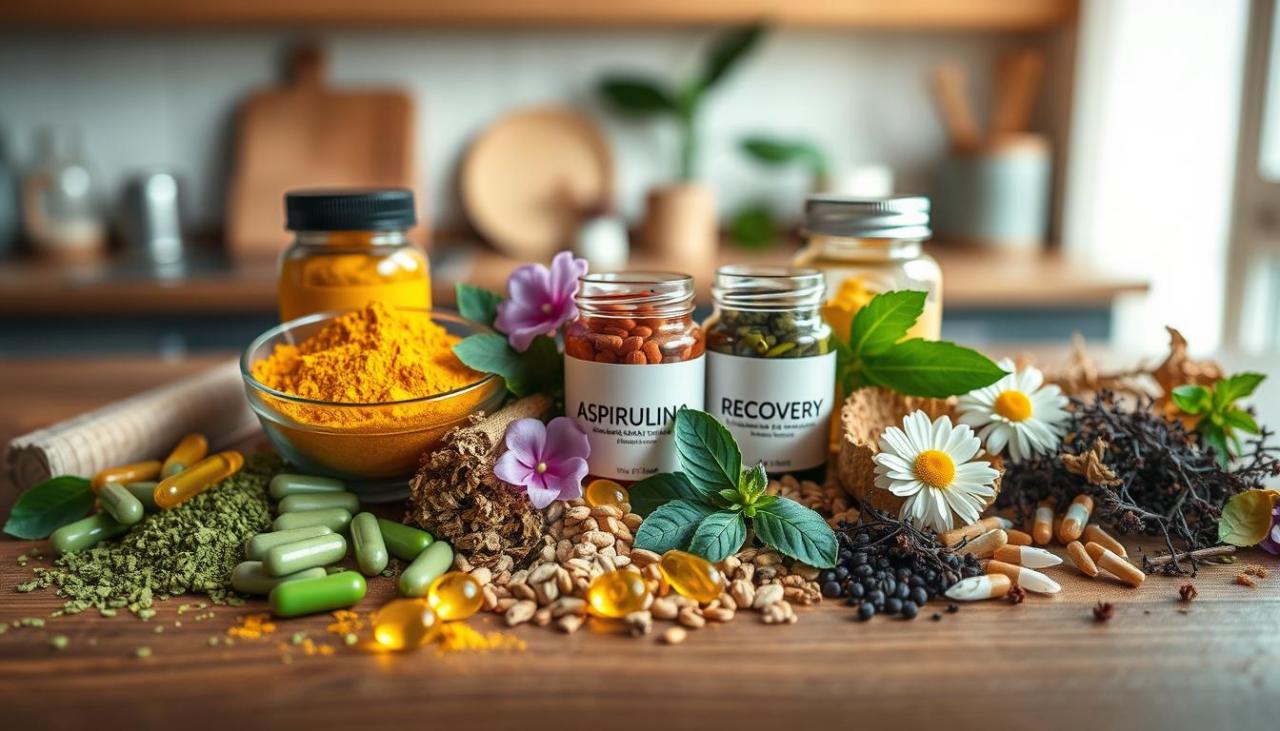
Did you know your body needs over 40 nutrients to fix damaged tissue after an injury? It’s like a big construction project inside you. Your body needs the right materials and energy to rebuild.
When you get hurt or have surgery, your body needs more nutrients. The right food gives your repair teams the tools they need to get the job done.
We think medical care is better with a strong nutritional base. By picking the best recovery vitamins, you help your own health journey.
Adding recovery vitamins to your daily life can fill the gap between regular eating and the high needs of healing. Using recovery vitamins for faster healing helps your body recover stronger than before.
Key Takeaways
- Healing is like a complex construction project needing specific nutrients.
- Getting hurt or having surgery makes your body need more nutrients.
- A good diet makes medical treatments work better.
- Special supplements help during stressful times.
- Good nutrition lets you control your health.
Understanding Recovery Vitamins
Your body can heal itself, but it needs the right help from recovery vitamins. These vitamins are key for your body’s repair work. By focusing on good nutrition and supplements, you help your body stay healthy for a long time.
What Are Recovery Vitamins?
Recovery vitamins are tiny, important nutrients your body needs. They don’t give you energy but help your cells fix damage. Without them, your body can’t keep itself together when it’s stressed or hurt.
Importance of Vitamins in Recovery
Healing is a long journey with many steps. Each step needs the right nutrients to succeed:
- Hemostasis: The first step to stop bleeding and stabilize the area.
- Inflammation: A response to protect and prevent infection.
- Proliferation: Where new tissue is built to replace old cells.
- Remodeling: The last step where new tissue gets stronger.
Having enough recovery vitamins helps each step go smoothly. Without them, your body might heal slower or have trouble fighting off sickness.
How Recovery Vitamins Work
These nutrients act as cofactors in many body processes. For example, they help make collagen, which is key for skin and tissue repair. They also help your immune system, keeping you safe while you heal.
Knowing how these nutrients work helps you see why you need them all the time. When you give your body the right tools, it can fix itself better. Consistency is the key to keeping your body balanced during recovery.
Key Vitamins for Optimal Recovery
When we push our bodies hard, we need special nutrients to help them recover. Adding recovery vitamins for athletes to our daily routine is key. It gives our bodies the tools to fix damaged tissues and stay healthy.
Vitamin C: The Immune Booster
Vitamin C is crucial for fixing tissues because it helps make collagen. It keeps tendons, ligaments, and skin strong, even when we’re pushing ourselves hard. It also boosts our immune system, helping us keep training without getting sick too often.
Vitamin D: Bone and Muscle Support
Vitamin D is important for recovery vitamins for workout routines. It helps our immune system and prevents chronic inflammation. It also helps our body absorb calcium, keeping our bones and muscles strong.
B Vitamins: Energy and Recovery Allies
The B-complex vitamins are vital for recovery vitamins for energy. They help turn the food we eat into energy for our cells. Research shows they’re key for keeping our cells active while they’re repairing.
Consistency is key when taking these vitamins. It helps keep our bodies in a state of repair. Here’s how these vitamins help with recovery and health.
| Vitamin | Primary Benefit | Recovery Impact |
|---|---|---|
| Vitamin C | Collagen Synthesis | Tissue Repair |
| Vitamin D | Bone Density | Immune Regulation |
| B Vitamins | Energy Metabolism | Cellular Restoration |
Minerals that Aid Recovery
Minerals are often overlooked, but they are crucial for recovery. They work with vitamins to keep your body running smoothly. For athletes, adding specific minerals to your routine is key to better health.
Magnesium: Muscle Relaxation and Repair
Magnesium is vital for those who are tired. It relaxes muscles, easing tension after hard workouts. It also stops cramps by controlling muscle and nerve signals.
Also, magnesium helps your body use stored energy. Without enough, your body can’t use nutrients well. This is why it’s important for muscle recovery.
“The body is a complex machine that requires the right balance of minerals to maintain its structural integrity and repair itself after stress.”
Zinc: Essential for Healing
Zinc is key for fixing damaged cells. It helps make new skin and muscle cells. When you’re active, your body needs zinc to heal.
Zinc also boosts your immune system when you’re pushing hard. It keeps your body’s repair work going strong. Here’s how these minerals help you recover:
| Mineral | Primary Benefit | Recovery Impact |
|---|---|---|
| Magnesium | Muscle Relaxation | Reduces cramping and tension |
| Zinc | Cellular Repair | Accelerates tissue healing |
| Combined | Systemic Balance | Improves overall recovery speed |
Adding these minerals to your routine helps your body recover faster. Whether you’re a pro or just active on weekends, these minerals are crucial for success.
The Role of Antioxidants in Recovery
Antioxidants are often overlooked when we talk about recovery. They act as a shield for our cells during intense healing stress. Adding them to your daily routine with top recovery vitamins helps your body repair and stay vital.

How Antioxidants Protect Cells
When we exercise or get injured, our bodies make unstable molecules called free radicals. If not stopped, these molecules harm healthy cells and slow healing. Antioxidants neutralize these harmful molecules, protecting our cells.
This protection is key for maintaining recovery vitamins for energy during healing. Antioxidants prevent cell damage, letting your immune system focus on repair. This makes your body recover faster and stronger.
Top Sources of Antioxidants
You don’t need a pill for protection. Many foods are full of natural antioxidants that work with top recovery vitamins. Eating a colorful, varied diet gives you a wide range of these protective compounds.
Adding these nutrient-rich foods to your meals can boost your recovery vitamins for energy:
- Berries: Blueberries, strawberries, and raspberries are full of anthocyanins.
- Nuts and Seeds: Walnuts, almonds, and sunflower seeds are rich in vitamin E.
- Dark Leafy Greens: Spinach and kale have powerful phytonutrients.
- Dark Chocolate: A little high-cocoa chocolate has lots of antioxidants.
Choosing these foods regularly helps build a strong health foundation. This supports your body’s natural defenses. It keeps your cells strong, making you feel more energized as you recover.
Protein and Recovery: The Dynamic Duo
Protein is key for fixing your body’s tissues and keeping muscles strong. It’s as important as taking recovery vitamins for workout to get the best results.
Your immune system works harder when you’re healing. You need more amino acids to help your body and muscles fix themselves. Mixing these nutrients helps your body get back in shape faster.
Importance of Protein in Muscle Repair
Hard workouts cause tiny tears in your muscles. Protein gives your body the amino acids to mend these tears. This makes your muscles stronger and more durable.
If you don’t get enough protein, fixing these tears can take longer. This is why athletes often take recovery vitamins for workout too. These vitamins help your body use amino acids better.
Best Protein Sources for Recovery
Choosing the right protein is crucial for meeting your needs. Look for sources with all the amino acids your body needs. Here are some top picks to add to your diet:
- Whey Protein: Fast-digesting, perfect for right after working out.
- Chicken Breast: Lean and full of animal protein.
- Greek Yogurt: Offers protein and probiotics for your gut.
- Lentils and Beans: Great plant-based options with fiber and minerals.
- Salmon: High in protein and omega-3s to fight inflammation.
Herbal Supplements to Enhance Recovery
Nature has powerful herbal allies to speed up recovery. These natural recovery vitamins and herbal extracts offer unique compounds. They help the body manage stress. Adding these plants to your daily routine can enhance your healing journey.

Turmeric: The Anti-Inflammatory Powerhouse
Turmeric has a potent compound called curcumin. It’s known for fighting systemic inflammation, a common issue after hard workouts. Turmeric reduces inflammation markers, helping your body balance faster.
Pairing turmeric with black pepper extract boosts absorption. This combo ensures your body uses the benefits well. Regular use makes turmeric a top choice for muscle soreness relief.
Ginger: Reducing Soreness and Pain
Ginger is great for physical comfort. It calms the digestive system and offers natural pain relief. Many find ginger tea or extracts help right after a workout.
Combining ginger with other nutrients strengthens your defense against soreness. Start with small doses to gauge your body’s response. We think mixing these natural options with your regular diet is key to success.
| Herbal Supplement | Primary Benefit | Best Use Case |
|---|---|---|
| Turmeric | Reduces Inflammation | Chronic muscle stiffness |
| Ginger | Pain Management | Acute post-workout soreness |
| Green Tea Extract | Antioxidant Support | General cellular repair |
Timing Your Vitamin Intake
Getting the most out of your recovery depends on when you take your vitamins. Choosing top-notch recovery vitamins is just the start. How you time them is key to how your body uses them. Being consistent is crucial for long-term health and repair.
When to Take Recovery Vitamins
Many people start their day with supplements. This helps keep your body fueled for the day ahead. Others prefer to take them throughout the day for steady levels.
For sleep or muscle support, evening might be best. Consistency is the ultimate key to recovery success. Find a routine that works for you so you never skip a dose.
Best Practices for Absorption
How your body absorbs nutrients matters. Some minerals might compete for absorption, which can lower their effectiveness. It’s smart to take them at different times to boost absorption.
“The timing of nutrient intake is not merely a suggestion; it is a fundamental pillar of metabolic optimization and cellular repair.”
One top tip is to take your daily vitamins with food. This helps your body absorb fat-soluble vitamins better. By doing this, your recovery vitamins will work as hard as you do.
- Take fat-soluble vitamins with a meal containing healthy fats.
- Space out minerals like zinc and magnesium if you experience digestive sensitivity.
- Use a pill organizer to maintain a consistent daily schedule.
Nutrition and Recovery: A Holistic Approach
We believe that the best way to wellness is to mix high-quality nutrients with your daily supplements. While pills and powders help, they work best with a diet full of whole foods. Seeing your diet as the main healer helps your natural recovery vitamins work better.
Combining Nutrition with Vitamins
Food and supplements work together for better absorption. Many vitamins need healthy fats to work well in your body. Adding foods like avocado, nuts, or olive oil to your natural recovery vitamins boosts their use.
“Let food be thy medicine and medicine be thy food.”
Think of supplements as the last touch on a solid foundation. You can’t build a strong structure with supplements alone. You need proteins, complex carbs, and healthy fats from food. This holistic strategy keeps your body energized for repair all day.
Creating a Balanced Recovery Meal Plan
Creating a meal plan when you’re healing can be tough, if you don’t feel like eating. Focus on meals that are full of nutrients but easy to digest. They should be high in calories but small in size. Adding natural recovery vitamins to a diet rich in protein is key for muscle repair.
The table below shows how to mix food groups for better recovery:
| Nutrient Goal | Food Source | Recovery Benefit |
|---|---|---|
| Muscle Repair | Lean Chicken or Tofu | Provides essential amino acids |
| Inflammation Control | Wild-Caught Salmon | Rich in Omega-3 fatty acids |
| Energy Restoration | Sweet Potatoes | Complex carbs for sustained fuel |
| Immune Support | Berries and Citrus | High antioxidant concentration |
If you have no appetite, try smoothies or bone broth. They offer critical hydration and protein without hard digestion. Eating at regular times helps your body stay strong.
Potential Side Effects of Recovery Vitamins
Supplements are often seen as safe, but using recovery vitamins for faster healing needs care. Taking too much won’t always speed up healing. Your body has limits, and going past them can harm your health.
Overconsumption Risks
Remember, more is not always better with vitamins. Vitamins A, D, E, and K can build up and become toxic if taken too much. This can actually slow down your healing instead of helping it.
Too much of some minerals can upset your stomach or block other nutrients. Relying too much on supplements can hide real nutritional needs. Always follow the daily amounts your doctor suggests.
Signs You Might Need to Adjust Your Intake
Your body gives hints when supplements aren’t working right. Feeling sick, having headaches, or constant tiredness could mean you’re taking too much. These signs show your body is trying to tell you something.
Talking to your doctor is key to keeping your supplements safe. If you start feeling bad, stop taking them and get advice. Here’s a table of signs you might need to change your recovery vitamins for faster healing intake.
| Supplement Type | Potential Risk | Common Warning Sign |
|---|---|---|
| Fat-Soluble Vitamins | Toxicity buildup | Persistent nausea or dizziness |
| High-Dose Minerals | Digestive imbalance | Stomach cramps or diarrhea |
| Water-Soluble Vitamins | Kidney strain | Frequent, unusual thirst |
| Herbal Extracts | Allergic sensitivity | Skin rashes or hives |
By paying attention and listening to your body, you can use recovery vitamins for faster healing safely. Supplements should help, not replace, a healthy diet and lifestyle.
Choosing the Right Recovery Vitamin Supplements
Finding the right products means looking closely at what you put in your body. It’s important to choose products that are transparent and safe. This helps support your wellness journey.
Reading Labels and Certifications
When you shop, check for third-party testing seals like USP or NSF. These seals mean the product matches what’s on the label. Look for brands that list all ingredients clearly, without hidden stuff or artificial additives.
Trusted Brands for Your Needs
Brands like Thorne, Garden of Life, and Pure Encapsulations are known for quality. They set high standards for purity. Always talk to your doctor before adding new supplements to your routine.
Your doctor can help pick the best recovery vitamins for you. This ensures you’re getting products that really help you heal. Start your journey to better health with supplements that are backed by science and integrity.