

Did you know Americans spend about $60 billion a year on wellness products? This shows how much we want to improve our health and live longer. But, finding the right dietary supplements can be tricky. We need to look for science-backed options.
We think these supplements should help fill nutritional gaps, not replace a healthy diet. Some products are really helpful, but many claims aren’t supported by solid science. Our aim is to guide you to choose wisely, avoiding unnecessary costs.
By focusing on whole foods and regular health checks, we can create a strong wellness base. Using dietary supplements for health wisely means picking quality over quantity. It’s also important to know what your body needs.
Key Takeaways
- Americans spend approximately $60 billion annually on wellness products.
- These items are intended to complement, not replace, a healthy diet.
- Always prioritize evidence-based products over exaggerated marketing claims.
- Consult with a healthcare professional before starting any new regimen.
- Focus on whole foods as your primary source of essential nutrients.
What Are Dietary Supplements?
Understanding health products starts with knowing what they are. Simply put, dietary supplements add nutrients to your diet. They don’t replace meals or approved medicines.
Definition and Overview
These products give you nutrients you might miss in your diet. They are not drugs, so they don’t go through the same tests as medicines. It’s essential to see them as a health support, not a cure-all.
Types of Dietary Supplements
There are many types of these products to fit your lifestyle. You can find them in tablets, capsules, powders, gummies, liquids, and bars. The right one for you depends on what you find convenient and how your body absorbs nutrients.
These products fall into several main categories:
- Vitamins: Essential compounds like those in a daily vitamin.
- Minerals: Elements like calcium, magnesium, or iron.
- Botanicals: Plant-based substances for health.
- Amino Acids: The building blocks of proteins.
- Probiotics: Good bacteria for gut health.
Common Ingredients and Their Benefits
Many people choose natural dietary supplements because they seem safer. But, “natural” doesn’t mean they’re safe or effective for everyone. Even natural substances can have strong effects or interact with other medicines.
Always look for transparency and quality in your products. Knowing what’s in them and what they do helps you choose wisely. This way, you can meet your health goals.
The Importance of Dietary Supplements
Modern diets often lack essential nutrients our bodies need. While whole foods are key, dietary supplements benefits are clear when we find gaps in our diet.
Filling Nutritional Gaps
Many struggle to get enough vitamins and minerals from food alone. Busy lives or certain diets can make it hard. For example, calcium and vitamin D are crucial for strong bones, but many adults don’t get enough.
Fiber is also vital for a healthy gut, but many don’t meet daily needs. Vitamin B12 is important for blood and nerves, more so for those eating mostly plants.
Supporting Specific Health Goals
Looking at dietary supplements for health, it’s key to separate real needs from marketing. Many seek dietary supplements for energy to fight daily tiredness.
“Supplements should be viewed as a bridge to fill nutritional voids, not as a replacement for a balanced diet or a magic cure for lifestyle-related exhaustion.” — Nutrition Science Advisory
Vitamin B12 boosts energy only if you’re deficient. If your levels are good, extra supplements won’t give you more energy.
Enhancing Overall Well-Being
Adding the right nutrients can keep us healthy long-term and prevent problems. Fixing deficiencies early helps our body’s natural functions and strengthen our systems.
| Supplement Type | Primary Benefit | Target Audience |
|---|---|---|
| Calcium & Vitamin D | Bone Health | Aging Adults |
| Fiber Supplements | Digestive Regularity | Low-Fiber Diets |
| Vitamin B12 | Nervous System | Vegans/Vegetarians |
| Omega-3 Fatty Acids | Heart & Brain | General Wellness |
Our goal is to use supplements wisely to enhance our habits. With clarity and purpose, we can live more vibrant lives.
Who Should Consider Taking Supplements?
Finding the right people for supplements is key to filling diet gaps. A balanced diet is still the best, but some life stages and choices can make it hard. Dietary supplements for health can help fill these nutritional gaps.
Individuals with Dietary Restrictions
Those on strict plant-based diets often miss out on nutrients found in animal products. Vegans and vegetarians might not get enough vitamin B12, iron, and omega-3s. Targeted supplementation helps keep their energy up and health strong.
People with absorption issues, like celiac disease, also face challenges. Doctors might suggest specific vitamins to avoid deficiencies. It’s crucial to talk to a doctor about which nutrients are needed.
Age-Specific Considerations
As we get older, our bodies change how we absorb vitamins. Older adults often have less stomach acid, making it harder to get vitamin B12. They also get less vitamin D from the sun, which is important for bones.
“Nutrition is the foundation of longevity, but as the body changes, so must our approach to maintaining internal balance.”
Athletes and Active Lifestyles
Athletes and very active people need more nutrients because of their high metabolism. While protein powders help with muscle recovery, they can’t replace whole foods. We should be careful with dietary supplements for weight loss, as they’re not a healthy substitute for good eating and exercise.
No supplement can match the mix of nutrients in a healthy diet. Before adding supplements, think about:
- Your current activity level and intensity.
- Any existing medical conditions or absorption issues.
- The specific goals you hope to achieve through supplementation.
How to Choose the Right Dietary Supplements
Finding the best dietary supplements starts with knowing your health needs. It’s not about picking products randomly. We need to match our supplements to our body’s needs for safety and effectiveness.
Assessing Your Nutritional Needs
Before buying supplements, look at your diet, symptoms, and lab results. Check if you have health issues or take medications that could interact with supplements. Tracking your energy and health helps find the right dietary supplements for you.
Reading Labels and Ingredients
Learning to read “Supplement Facts” labels is key. Look at serving size, active ingredients, and warnings. Be wary of proprietary blends as they can hide ingredient amounts, making it hard to know if you’re getting enough.
“The most effective health strategy is one built on transparency and evidence, ensuring that every supplement serves a clear, identified purpose in your daily regimen.”
Consulting with Healthcare Professionals
Talk to a doctor or dietitian before starting supplements. They can guide you based on your health data and goals. Choose products with NSF or USP seals to ensure they match what’s on the label.
| Feature | Quality Indicator | Why It Matters |
|---|---|---|
| Third-Party Testing | NSF or USP Seal | Ensures purity and potency |
| Label Transparency | Clear Ingredient List | Prevents hidden fillers |
| Dosage Clarity | Defined Serving Size | Avoids accidental overdose |
Safety and Regulation of Dietary Supplements
Many people wonder how the government keeps our food safe. It’s key to know that dietary supplements have a different rulebook than medicines.
The Role of the FDA
The Food and Drug Administration (FDA) doesn’t check these products before they hit the shelves. Thanks to the 1994 Dietary Supplement Health and Education Act, makers must make sure their products are safe first.
Even though the FDA doesn’t okay these items before sale, they keep an eye on things. They watch for bad reactions and can check where these products are made to make sure they follow the rules.
Understanding Quality and Safety Standards
Companies must follow Good Manufacturing Practices. This means they have to make sure their products are pure and of good quality. This rule applies to natural dietary supplements too, to avoid any mix-ups or contamination.
If the FDA finds a product that’s not safe, they can pull it from stores. This way, they can deal with safety issues as they come up, not before a product is even sold.
It’s smart to do your homework on the brands you buy. Choosing well-known companies that are open about their products and test them independently can give you peace of mind. This way, you can trust the dietary supplements you use for your health.
Popular Dietary Supplements and Their Uses
Looking at wellness, some products really stand out as the best dietary supplements for daily use. The market has many options, but focusing on a few key areas helps us stay healthy. Knowing what each product does is key to a good health routine.
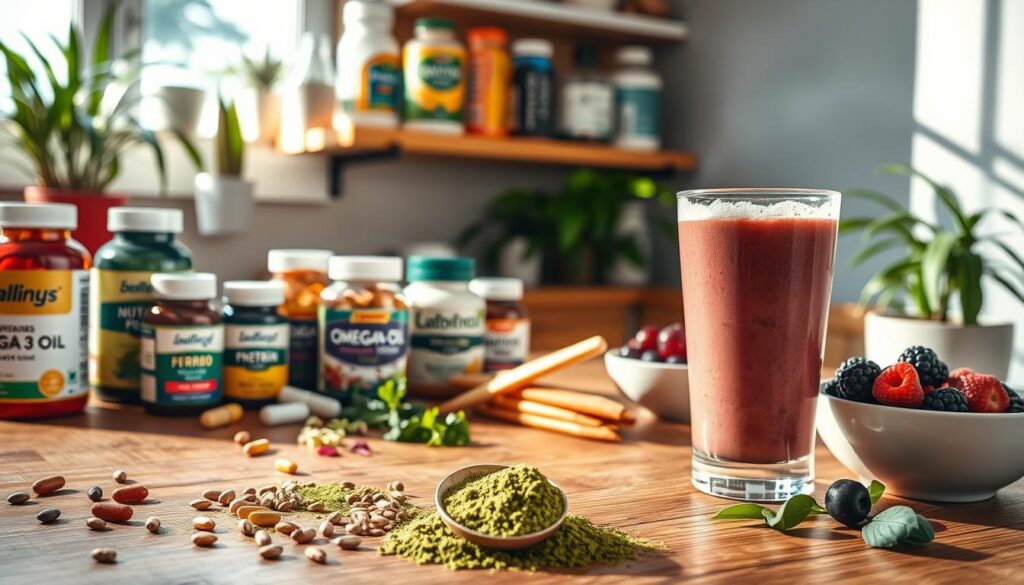
Multivitamins
Multivitamins are a handy backup for those who don’t get all nutrients from food. These top dietary supplements give a wide range of vitamins and minerals in one dose. They’re great for people on special diets or who find it hard to eat balanced meals.
Omega-3 Fatty Acids
Omega-3s are crucial for heart and brain health, but many don’t eat enough fatty fish. Fish oil is a top pick because it’s rich in EPA and DHA. For vegans, algae-based supplements are a highly effective vegan alternative that gives the same DHA benefits.
“The greatest wealth is health.”
Probiotics
Probiotics are known for boosting digestive health and immune function. It’s important to choose a product with the right bacterial strain for your needs. Not all probiotics are the same, so do your research to find the best one for you.
| Supplement Type | Primary Benefit | Best For |
|---|---|---|
| Multivitamins | Nutrient Gap Filling | General Wellness |
| Omega-3s | Heart & Brain Support | Inflammation Control |
| Probiotics | Gut Microbiome Balance | Digestive Health |
The best dietary supplements are those that fit your body’s needs and lifestyle. By choosing from these top dietary supplements wisely, we can support our health goals better. Always choose high-quality products and talk to a health expert to make sure they’re right for you.
Potential Side Effects and Risks
Exploring wellness means knowing the risks of supplements. Many are safe, but not all are risk-free. Awareness helps keep you healthy.
Common Side Effects
Natural ingredients can still cause surprises. Some people get bloating, gas, or nausea when starting new supplements. This is usually because their body is adjusting to the new vitamins or minerals.
Allergic reactions are a worry, too. If you’re allergic to certain ingredients, you could have a bad reaction. Also, taking too much of fat-soluble vitamins can be toxic. Always follow the recommended dose to avoid problems.
Interactions with Medications
Supplements can also mess with your meds. They might change how your body processes your medication, making it less effective. Some ingredients can also mess with lab tests, leading to wrong diagnoses.
Be extra careful with dietary supplements for weight loss and dietary supplements for energy. They often have stimulants that can be bad for your heart if you’re already on medication. Also, tell your surgeon about any supplements you’re taking, as they can increase bleeding risks or affect anesthesia.
“The assumption that ‘natural’ equates to ‘safe’ is a dangerous misconception that can lead to serious health complications if not managed with professional guidance.”
When to Seek Medical Advice
If you think a supplement is harming you, stop using it right away. Look out for signs like skin rashes, trouble breathing, or dizziness. These need quick medical help.
Report any serious side effects to the right agencies. Keeping a log of your supplements can help your doctor find problems fast. Your health is important, and talking to your doctor is key.
| Risk Category | Potential Impact | Action Required |
|---|---|---|
| Digestive Issues | Nausea, bloating, or diarrhea | Reduce dose or discontinue |
| Drug Interactions | Reduced medication efficacy | Consult your physician |
| Allergic Reactions | Hives, swelling, or itching | Seek emergency care |
| Stimulant Overload | Rapid heart rate or anxiety | Stop use immediately |
The Role of Dietary Supplements in Disease Prevention
Looking into how nutrition affects our health shows both good and bad sides. Many people take dietary supplements benefits to avoid getting sick. But, it’s key to know what science really backs up. We need to see the difference between getting the right nutrients and thinking there’s a single cure-all for staying healthy.

Chronic Diseases and Supplementation
Studies on preventing long-term illnesses show how complex our bodies are. Big studies haven’t found that antioxidant supplements stop heart disease or cancer. Still, eating whole foods is the best way to stay healthy. Supplements can help if you have a known nutrient gap.
Immune Support and Supplements
Keeping our immune system strong is a big goal for many. Nutrients like Vitamin D are key for our body’s defense. For example, Vitamin D helps our bones absorb calcium, which is good for our bones and overall health. You can find more about this in research on nutrition and health.
Heart Health Considerations
Talking about dietary supplements for health, heart health is often a big topic. Fish oil is known to lower triglycerides, which is good for the heart. But, its effect on cholesterol levels is not clear-cut. It’s important to watch your LDL levels if you take these supplements.
| Supplement Type | Primary Health Focus | Scientific Evidence Level |
|---|---|---|
| Vitamin D | Bone & Immune Health | Strong |
| Fish Oil | Triglyceride Management | Moderate |
| Antioxidants | Disease Prevention | Limited/Mixed |
The best dietary supplements benefits come from using them to enhance a healthy lifestyle, not replace it. Always talk to a healthcare expert to make sure your supplements are right for you.
Incorporating Supplements into Your Diet
Success with wellness products often depends on how we use them. Creating a routine that works for you helps you stay on track. It also supports your long-term health goals.
Best Practices for Supplement Intake
Being consistent is key when starting dietary supplements. Place your bottles where you see them every day, like next to your coffee or toothbrush. This helps you remember to take them.
Always follow the label’s instructions. Never take more than the recommended amount without a doctor’s say-so. Keeping a log or using a pill organizer can help you stay on track and never miss a dose.
Timing and Dosage Recommendations
When you take your supplements can affect how well your body absorbs them. For example, fat-soluble vitamins like Vitamin D, A, E, and K work best with healthy fats. This means taking them with foods like avocado or nuts.
When adding fiber supplements, start with small amounts. This helps your body adjust and avoids discomfort. Here are some tips for your daily routine:
- Morning: Multivitamins are best with breakfast to boost energy.
- With Meals: Take fat-soluble nutrients with your biggest meal.
- Evening: Some minerals, like magnesium, may be taken before bed for relaxation.
Combining Supplements with Whole Foods
Dietary supplements for health are meant to enhance, not replace, a balanced diet. The best results come from eating whole foods, exercising regularly, and following medical advice.
Think of supplements as a bridge to fill nutritional gaps, not a food substitute. Eating a variety of vegetables, fruits, and lean proteins gives your body what it needs to use dietary supplements well. Always check with your doctor before adding new supplements to avoid any issues with medications or health conditions.
Myths and Misconceptions About Dietary Supplements
It’s time to clear up common myths about supplements. The wellness world is full of marketing tricks that can confuse us. By knowing the truth, we can keep our health and money safe.
Misunderstanding the Benefits
Labels often claim “anti-aging” or “antioxidant-rich” effects. But these terms are often marketing tricks, not real science. Even “clinically proven” can be misleading if the study was small or biased.
We should be wary of products that promise too much without explaining how. True health is rarely found in a single pill. Supplements are meant to help, not replace, a healthy diet.
Misconceptions About Safety
Many think natural dietary supplements are safer than synthetic ones. But “natural” doesn’t mean safe. Many natural substances can harm us, interact with medicines, or worsen health conditions.
“The safety of a supplement is not guaranteed by its origin, but by the rigor of its manufacturing and the transparency of its ingredients.”
The FDA has had to step in because of safety issues. Over 140 products have been pulled from the market for hidden pharmaceutical ingredients. These hidden additives can be very dangerous for those who think they’re getting a safe product.
Debunking Popular Myths
Many believe taking more of a supplement will help more. But our bodies often get rid of extra vitamins, or worse, reach toxic levels. More is not always better with vitamins.
People often trust testimonials over scientific proof. While a friend’s success story is encouraging, it’s not as reliable as real studies. This is true for dietary supplements for weight loss, which often have exaggerated claims without solid science.
- Myth: If it is sold in a store, it is perfectly safe.
- Myth: Natural ingredients cannot cause harm.
- Myth: Testimonials are as reliable as scientific studies.
By staying informed, we can avoid these common pitfalls. Always choose health products based on solid evidence, not just ads.
Future Trends in Dietary Supplements
The world of wellness is always changing. Technology is now a big part of how we keep healthy. We’re moving towards smarter ways to stay fit, thanks to science.
Innovations in Supplement Formulations
New ways like liposomal encapsulation help our bodies take in nutrients better. These new methods make sure supplements work well for us every day.
The Rise of Personalized Nutrition
Now, we can plan our health based on our genes and gut health. This means supplements can really meet our personal needs.
Sustainability in Supplement Production
Companies like Thorne and Ritual focus on being green and fair. They care about the planet as much as your health. Let’s support them.
Make sure to choose supplements based on solid medical research. Eat well, get advice from experts, and aim for achievable goals. This will help you get the most out of your health journey.