
Did you know your body produces and uses its own weight in ATP each day? This constant cycle powers every heartbeat, thought, and movement. Energy metabolism relies on cellular energy to maintain balance and support life at a microscopic level.
To understand this process, we study bioenergetics, the flow of power through living systems. This field shows how bodies change nutrients such as carbohydrates and fats into usable fuel.
Metabolic processes build complex molecules and break others down to release stored power. These pathways show how cells support growth and complete essential work. This foundation helps explain the mechanics of human health.
Key Takeaways
- Bioenergetics tracks how living systems manage and transform power.
- Cells use specific pathways to convert nutrients into immediate fuel.
- Catabolic reactions break down molecules to release stored power.
- Anabolic reactions consume power to build necessary biological structures.
- ATP serves as the primary currency for all immediate cellular tasks.
How energy metabolism powers cellular work
Every action, from blinking to running, depends on the complex dance of energy metabolism inside our cells. This system acts like a high-efficiency power plant, turning nutrients into fuel for life. Through a series of enzyme-catalyzed reactions, our bodies release and use energy when and where it is needed.
These activities fall into two main groups: catabolism and anabolism. Catabolism breaks down complex molecules and releases stored energy. Anabolism uses that energy to build structures for growth and repair, while this cycle maintains internal stability.
Cellular respiration lies at the heart of this process and helps cells draw energy from food. This pathway connects directly to ATP production, which stores and carries chemical energy through the body. Without these systems, cells could not power muscle contraction, active transport across membranes, or complex signaling.
The table below shows the key differences between these two parts of our metabolic engine:
| Feature | Catabolism | Anabolism |
|---|---|---|
| Primary Goal | Energy Release | Energy Consumption |
| Process Type | Breakdown of molecules | Synthesis of molecules |
| Energy Outcome | Produces ATP | Uses ATP |
| Biological Role | Fueling cellular work | Building cellular structures |
By balancing these processes, our bodies maintain equilibrium. At rest or during intense activity, these enzyme-catalyzed reactions adjust to meet immediate demands. This regulation keeps our ATP production steady, supporting cellular maintenance and the complex movements of humans.
Why ATP is the cell’s usable energy currency
If we view the cell as a busy factory, ATP is the energy currency that keeps its lines moving. Our bodies use many nutrients, but cells cannot use them to power machinery directly. Cells convert food energy into cellular energy, a form they can spend.
ATP production captures energy from chemical bonds and stores it in a portable package. Cells use ATP for work, including muscle contraction and protein synthesis. Hydrolysis breaks down ATP and releases energy for these demanding biological tasks.
ATP is not a long-term storage solution; it acts more like cash in your wallet. Glycogen and triglycerides serve as fuel savings accounts for the body. Limited cell space requires constant ATP renewal through metabolic pathways, which proper vitamin intake can support.
The following table shows differences between immediate energy and long-term storage in our bodies:
| Energy Type | Primary Function | Storage Duration | Accessibility |
|---|---|---|---|
| ATP | Immediate Work | Seconds | Very High |
| Glycogen | Short-term Reserve | Hours to Days | Moderate |
| Triglycerides | Long-term Storage | Weeks to Months | Low |
This balance helps our bodies keep the vital resources needed to function. Without turning nutrients into usable energy currency, cells would quickly lose the power needed to sustain life.
How glucose enters the energy-making process
Before our cells can harness the energy within glucose, they must break it down through a precise metabolic pathway. This essential process of glucose metabolism allows us to extract chemical energy from the carbohydrates we consume. By dismantling these sugar molecules, our cells gain the fuel necessary to sustain life.
Glycolysis splits glucose into smaller molecules
The first stage of this journey is known as glycolysis, which takes place entirely within the cytoplasm of the cell. During this phase, a single molecule of glucose is systematically split into two smaller units. This reaction does not require oxygen, making it a highly versatile way for cells to generate energy quickly.
As glucose breaks apart, the cell captures usable energy as ATP. The final product of this cytoplasmic breakdown is the three-carbon compound called pyruvate. While this initial ATP yield is modest, it provides a vital foundation for more intensive energy production later on.
Pyruvate links glycolysis to mitochondrial energy production
Once pyruvate is formed, it must transition from the cytoplasm into the mitochondria to continue the energy-making process. This step is critical because the mitochondria serve as the primary powerhouses of the cell. To enter this environment, the molecule undergoes a transformation mediated by the enzyme complex known as pyruvate dehydrogenase.
This enzyme removes a carbon atom and attaches a coenzyme, converting the molecule into acetyl-CoA. Creating acetyl-CoA bridges simple sugar breakdown with mitochondrial machinery. This conversion ensures that the energy stored in pyruvate can be fully harvested to meet our body’s high demands.
How mitochondria extract energy from pyruvate
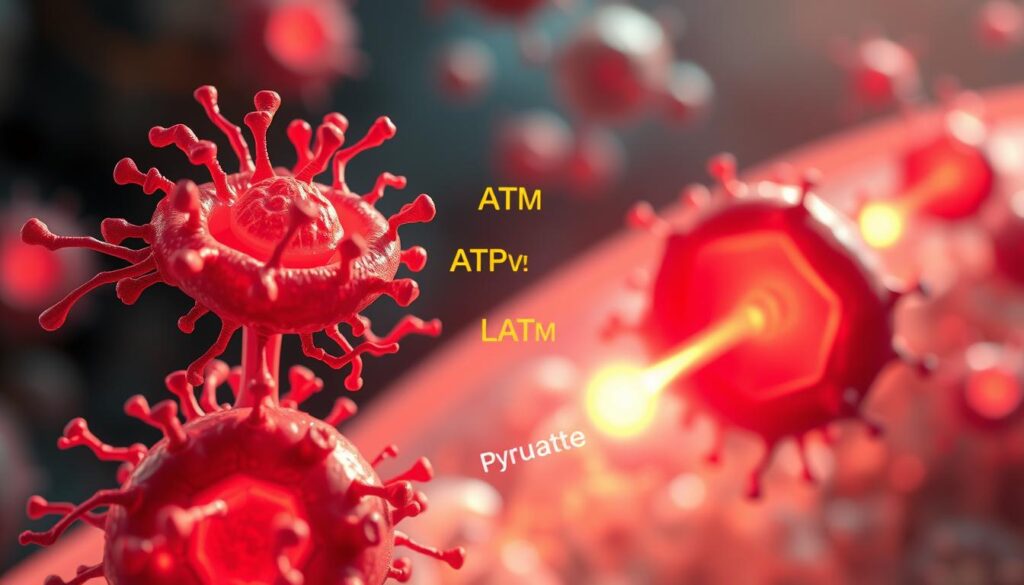
Our cells use a complex series of reactions to unlock energy stored in pyruvate. After pyruvate enters the mitochondrial matrix, it changes into acetyl-CoA. This step lets mitochondrial function manage much of the cell’s energy metabolism.
The citric acid cycle loads energy onto carrier molecules
The citric acid cycle breaks down acetyl-CoA in a series of reactions. Instead of making much energy itself, it collects high-energy electrons. These electrons move to carrier molecules, mainly NADH and FADH2.
These carriers act like rechargeable batteries that store energy for later use. The cycle removes electrons from carbon-based molecules in a careful sequence. This process helps cells capture as much energy as possible and maintain the chemical balance needed for life.
The electron transport chain produces most ATP
The final stage, oxidative phosphorylation, occurs across the inner mitochondrial membrane. Here, the electron transport chain uses electrons from NADH to pump protons across the membrane. This creates an electrochemical gradient, like water held behind a dam.
When protons flow back through ATP synthase, their energy drives ATP production. This highly efficient process supplies most of the energy our bodies need to function. You can learn more about these pathways in this detailed study on cellular metabolism.
| Process Stage | Primary Output | Location |
|---|---|---|
| Glycolysis | Pyruvate | Cytoplasm |
| Citric acid cycle | NADH & FADH2 | Mitochondrial Matrix |
| Oxidative phosphorylation | High ATP yield | Inner Membrane |
Why oxygen makes energy production more efficient
Our cells use a skilled process to turn fuel into energy, and oxygen unlocks its full power. Through oxygen metabolism, cells draw much more energy from food than they could otherwise. This dependence defines aerobic cellular respiration, which supports tissues needing the most energy.
This efficiency centers on oxidative phosphorylation. It happens in the inner membrane of cells, where mitochondrial function reaches its highest level. Oxygen accepts the final electrons in the respiratory chain, so electrons keep moving through the system.
This steady electron flow maintains the proton gradient that drives ATP synthesis. Without oxygen, electrons build up, and the chain stops, causing energy output to drop sharply. As the final acceptor, oxygen helps cells keep a high-yield energy supply.
In contrast, anaerobic metabolism depends on glycolysis when oxygen is scarce. This pathway works fast but produces much less energy and creates lactate as a byproduct. Using only this method would limit sustained physical work.
Overall, adding oxygen to metabolic pathways gives complex life a massive advantage. It helps cells turn glucose and other fuels into ATP with great precision. This efficiency powers our muscles, brains, and organs throughout the day.
How cells make energy from dietary fat
Dietary fat gives cells a concentrated energy reserve. When we eat fat, our bodies begin macronutrient oxidation to release energy from these molecules. This efficient form of lipid metabolism supplies fuel when glucose levels fall.
Triglycerides break down into glycerol and fatty acids. These molecules travel through the bloodstream to cells that need energy. Inside cells, they follow separate paths and add to our total energy supply.
Fatty acids undergo a specialized process called beta-oxidation. During fatty acid oxidation, long carbon chains split into smaller, two-carbon units called acetyl-CoA. These units enter the citric acid cycle and produce high-energy electron carriers.
The glycerol backbone does not go to waste. It changes into intermediates that enter the glycolysis pathway. This links metabolic routes and helps cells adjust their lipid metabolism as energy needs change throughout the day.
How amino acids contribute to energy metabolism
Amino acids do more than build muscle; they also provide flexible fuel for the body’s metabolic processes. We often use carbohydrates and fats first, but amino acid metabolism matters when cells need another energy source. Through macronutrient oxidation, cells break protein carbon skeletons down and keep internal systems working.
To use amino acids for energy, cells first remove the nitrogen-containing amino group through deamination. Afterward, the carbon skeleton becomes intermediates that enter the citric acid cycle directly. These glucogenic amino acids help maintain energy production when glucose is limited.
“The metabolic versatility of the cell is truly remarkable, as it can pivot between different fuel sources to ensure survival and function under varying conditions.”
Among amino acids, glutamine metabolism plays a special role in cellular health. It fuels many rapidly dividing cells, including immune cells and the intestinal lining. Glutamine supplies carbon and nitrogen, supports mitochondrial energy production, and provides materials for essential cell compounds.
Amino acids support our energy needs through three key functions:
- Energy Substrate: Providing carbon skeletons that enter the citric acid cycle to generate ATP.
- Gluconeogenesis: Acting as precursors for glucose production in the liver during fasting.
- Biosynthetic Support: Supplying nitrogen and carbon for the synthesis of nucleotides and other vital molecules.
Together, these pathways keep the body from relying on one fuel source. This metabolic flexibility supports biological resilience and helps the body adapt to changing food intake and energy demands all day.
How cells adjust energy production to meet demand
Cells can change their energy output to meet immediate body needs. Instead of keeping ATP production at one fixed rate, tissues adjust processes as nutrient supplies change. This metabolic flexibility provides power for daily activity and saves resources during rest.
Our bodies use complex communication networks to coordinate these changes across organs. By sensing their surroundings, cells choose to store fuel or quickly make energy for vital functions.
Insulin and glucagon respond to available fuel
Hormones serve as messengers that tell cells when to store or burn energy. When we eat, insulin signaling tells cells to absorb glucose from the bloodstream and store energy for later. This lowers blood sugar and supplies materials for future energy needs.
During fasting, the pancreas releases glucagon. It tells the liver and other tissues to break down stored glycogen and fats, providing steady fuel for energy metabolism. Together, these hormones maintain homeostasis, or balance, throughout the body.
AMP and other signals respond to cellular energy needs
Individual cells also have sensors that track their energy status. When a cell uses ATP faster than it can make it, AMP levels rise sharply. This rise activates AMPK, a master regulator that acts like a cellular fuel gauge.
After activation, AMPK restores energy balance by turning on pathways that make more ATP. It also improves mitochondrial function, helping cells process fatty acids and glucose more efficiently. This feedback loop helps cells survive during high physical demand.
| Regulatory Mechanism | Primary Signal | Main Effect |
|---|---|---|
| Hormonal Control | Insulin | Promotes fuel storage |
| Hormonal Control | Glucagon | Promotes fuel mobilization |
| Cellular Sensing | AMP/AMPK | Increases ATP production |
How energy metabolism changes during exercise and fasting
Our bodies use metabolic flexibility to balance energy in changing conditions. This trait lets us switch between fuel sources, including carbohydrates and fats, based on availability and cell needs. By changing internal chemistry, we give tissues steady power at any activity level.
During intense exercise, muscles need energy much faster. To meet this demand, the body speeds cellular respiration by increasing glycolysis, which quickly breaks down glucose. This process supplies immediate ATP for muscle contraction, even when oxygen levels temporarily reach their limits.
As movement continues, mitochondria sustain longer efforts. They use the citric acid cycle to process fuel intermediates, which feed into oxidative phosphorylation and produce large amounts of ATP. This shift lets us perform without using limited glucose stores too soon.
When food is unavailable, cells change their metabolic priorities. They favor macronutrient oxidation of stored fats, preserving glucose for vital organs such as the brain. This shift helps conserve energy while keeping essential life functions running during nutrient scarcity.
Ultimately, shifting between these pathways keeps us resilient. Whether fueling a high-intensity workout or navigating a fast, our cells remain highly adaptable. This fine-tuning of metabolic machinery supports physical endurance and overall health.
Conclusion
Understanding the complex machinery inside our cells gives us a new view of human vitality. Our health depends on efficient Energy metabolism at every level. This knowledge helps us make better choices about nutrition and physical activity.
Building metabolic flexibility helps our bodies switch between fuel sources with ease. This adaptability supports long-term wellness and helps our systems run smoothly. We can support it by choosing whole foods and staying active throughout the day.
Prioritizing cellular energy helps us keep focus and physical strength as we age. Small daily changes can greatly affect our mitochondria, so observe how your body responds to different fuels and movement patterns. We invite you to use these insights to fuel your life with purpose; better health starts with choices for your cells.