
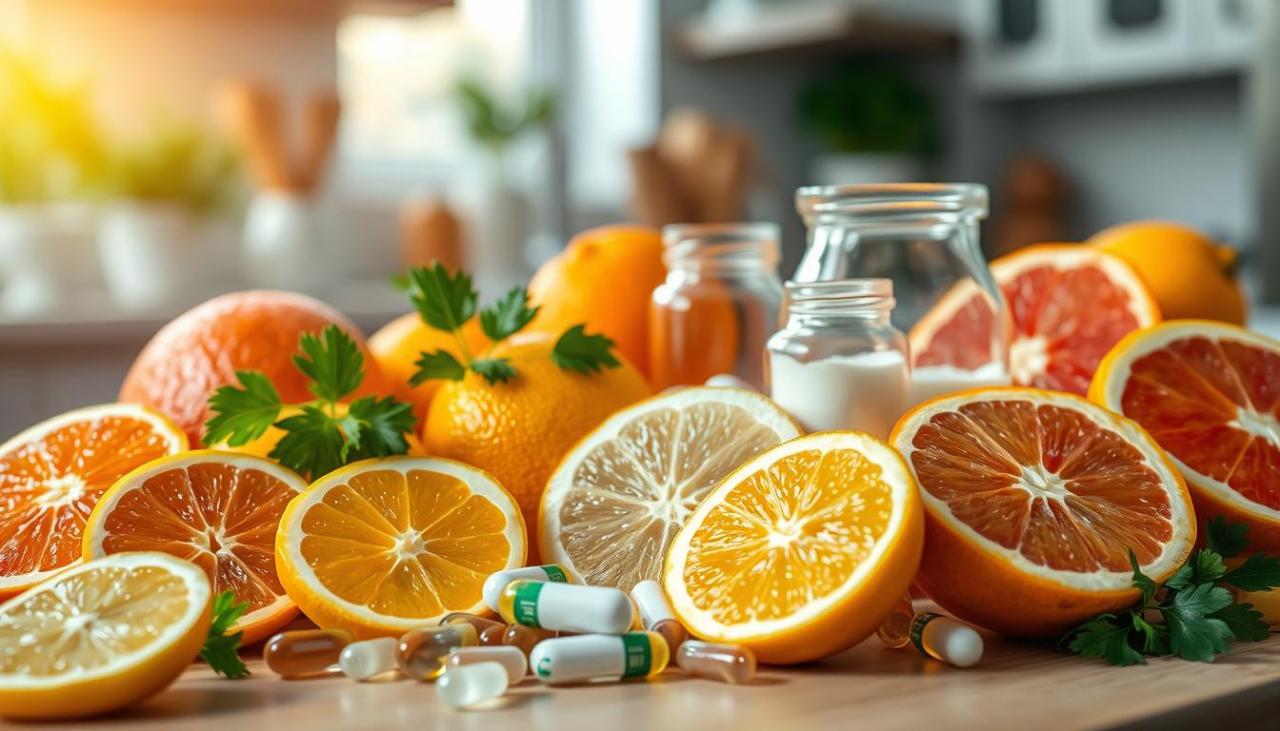
Humans are among the few mammals that cannot make this essential nutrient. Because the body cannot store vitamin C, we must replace it through regular consumption. Your recommended daily vitamin C dose depends on age, sex, and overall health.
Many people ask how much vitamin C per day they need for good health. Healthy adults often get enough from fruits and vegetables. Others may seek higher amounts through supplements, so we explain these choices and the risks of excess.
Key Takeaways
- The human body cannot synthesize or store this nutrient, requiring regular intake.
- Individual requirements fluctuate based on age, gender, and lifestyle factors.
- Most healthy adults obtain sufficient amounts through a balanced, whole-food diet.
- High-dose supplementation is distinct from standard nutritional requirements.
- Excessive consumption can lead to digestive discomfort and other health issues.
Understanding Vitamin C and Its Importance
Vitamin C is a key nutrient for human health. It supports many body processes that help us feel well each day.
What is Vitamin C?
Vitamin C is a water-soluble nutrient that our bodies cannot make. Because it dissolves in water, we must replace it often through food. Learn more about how this nutrient works in the Linus Pauling Institute guide on vitamin.
Vitamin C acts as an antioxidant that helps protect cells from free radical damage. It also helps make collagen, which keeps skin, bones, and blood vessels strong. The importance of vitamin C includes tissue repair and better iron absorption from plant foods.
Benefits of Vitamin C
The vitamin C benefits include support for a healthy immune system. It cannot cure every illness, but it helps the body maintain natural defenses against daily stress. It also supports healthy gums and faster healing of minor wounds.
“The discovery of vitamins changed the course of medical history, and vitamin C remains one of the most studied and essential components of human nutrition.”
Sources of Vitamin C
Nature offers many ways to meet our daily needs. The best vitamin C sources include fresh fruits and vegetables, which also provide fiber and phytonutrients.
To get enough vitamin C, add these foods to your meals:
- Citrus fruits like oranges, lemons, and grapefruits.
- Bell peppers, which are surprisingly high in nutrient density.
- Cruciferous vegetables such as broccoli and Brussels sprouts.
- Strawberries and kiwi for a sweet, nutrient-packed snack.
A varied diet can provide the best vitamin C sources needed for long-term health. Whole foods provide the full range of vitamin C benefits and fiber that supports digestion.
Recommended Daily Intake for Different Age Groups
Nutritional needs change as we grow from infancy to adulthood. A one-size-fits-all plan does not determine your daily vitamin C intake. Health organizations offer guidelines for each life stage and its unique needs.
Infants
During the first year, infants usually get nutrients from breast milk or specialized formula. These sources are carefully balanced to provide the recommended daily vitamin C dose needed for early development. Parents should avoid supplements unless a pediatrician recommends them, because extra intake may not help developing systems.
Children
As children grow, their bodies need more nutrients for physical development and immune function. Their vitamin C needs rise gradually throughout childhood. Whole foods, such as citrus fruits and bell peppers, can help meet these needs naturally.
Adults
For adults, guidance on how much vitamin C per day is more standard. Healthy women should aim for 75 milligrams, while healthy men should target 90 milligrams. These are baseline recommendations, so check current national health standards or your clinical needs.
Optimal health is not about consuming the highest possible amount of a nutrient, but rather finding the precise balance that supports your body’s unique biological functions.
Meeting these targets helps, but adults must also know the upper limit. Most experts suggest staying below 2,000 milligrams per day to prevent digestive discomfort. Use the table below for a quick summary of general intake guidelines.
| Age Group | Recommended Daily Intake | Upper Limit |
|---|---|---|
| Infants (0-12 months) | 40-50 mg | Not established |
| Children (1-13 years) | 15-45 mg | 400-1,200 mg |
| Adult Women | 75 mg | 2,000 mg |
| Adult Men | 90 mg | 2,000 mg |
Factors Influencing Vitamin C Requirements
Your body’s needs are not always simple because they can change with personal factors. General guidelines exist, but your daily vitamin C intake should match your biology and current life circumstances.
Age and Gender
Biological differences affect how people process nutrients. Men generally need slightly more than women because body mass and metabolic rates differ.
As we age, our ability to absorb some vitamins can change. Individualized evaluation works better than assuming one standard dose fits every life stage.
Lifestyle Choices
Daily habits strongly affect nutritional status. People who smoke or face secondhand smoke experience higher oxidative stress, which depletes vitamin C faster.
Excessive alcohol use, poor diet, and chronic stress can increase the body’s need for this essential nutrient. If these stressors affect your lifestyle, your daily vitamin C intake may need adjustment to maintain healthy levels.
Health Conditions
Some medical conditions can interfere with how your body absorbs or uses nutrients. Malabsorption syndromes and chronic inflammatory diseases often require a more tailored supplementation plan.
Consider these health factors before increasing your intake. It is crucial to consult with a healthcare professional instead of raising supplements automatically. A professional can assess your specific health history and provide personalized guidance.
Dietary Sources of Vitamin C
Whole foods offer the best vitamin C sources for health. They also provide fiber, essential minerals, and other vitamins. Together, these nutrients support well-being.
Fruits High in Vitamin C
Many fruits provide this vital nutrient and add flavor to meals. Guava stands out because it often has more vitamin C than citrus fruits. Other excellent choices include:
- Strawberries: Perfect for snacks or smoothies.
- Kiwi: A small fruit with a massive nutrient profile.
- Papaya: A tropical delight that supports digestion.
- Oranges: The classic choice for a quick boost.
Vegetables Rich in Vitamin C
Vegetables include some of the best vitamin C sources, especially when prepared well. Red bell peppers provide a high amount in every crunchy bite. Add these choices to your weekly menu:
- Kale: A versatile leafy green for salads or sautéing.
- Broccoli: A reliable staple that pairs well with almost any dish.
- Potatoes: A surprising but effective source when consumed regularly.
Eat these vegetables raw when possible to get the most vitamin C. If you cook them, use little water or steam them lightly. Vitamin C dissolves in water and can leach out.
Fortified Foods and Supplements
Busy lifestyles can make it hard to get enough nutrients from fresh produce alone. Fortified foods, including some breakfast cereals and fruit juices, can help fill this gap. They are convenient, but they should support a whole-food diet, not replace it.
| Food Item | Serving Size | Vitamin C Content |
|---|---|---|
| Red Bell Pepper | 1/2 cup, raw | High |
| Guava | 1 medium | Very High |
| Broccoli | 1/2 cup, cooked | Moderate |
| Strawberries | 1 cup, sliced | Moderate |
Choosing the best vitamin C sources can support your long-term health. Eat many colorful fruits and vegetables so your body gets the support it needs each day.
Vitamin C Supplements
Some people may not get enough of this essential nutrient from diet alone. Whole foods remain the gold standard, but vitamin C supplements can help fill gaps.
When to Consider Supplements
Consider a supplement if a restricted diet limits your access to fresh fruits and vegetables. People with health conditions that impair nutrient absorption may also need professional guidance.
If a healthcare provider documents a deficiency, they may suggest a targeted plan to restore your levels. It is essential to remember that supplements should complement, not replace, a balanced diet.
Types of Vitamin C Supplements
The market offers many forms for different needs and preferences. Many people start with a standard multivitamin, which provides essential nutrients alongside vitamin C.
For a more focused approach, single-ingredient products come as tablets, capsules, or powders. If you have a sensitive stomach, you might prefer buffered forms, such as calcium ascorbate or sodium ascorbate. These options are often gentler on the digestive tract than traditional ascorbic acid.
Dosage Recommendations
For vitamin C dosage recommendations, more is not always better. Most healthy adults can meet daily needs through a well-rounded diet. High-dose supplements are unnecessary for the general population.
Excessive intake can cause digestive discomfort or other unwanted side effects. Consult a doctor or registered dietitian before starting a new regimen. They can help set an amount based on your health history, current medications, and total daily intake from all sources.
Signs of Vitamin C Deficiency
Although rare in developed nations, vitamin C deficiency symptoms can affect daily life. Many people get enough nutrients through a balanced diet, but our bodies still signal nutritional gaps. If you suspect low intake, learn more about vitamin C deficiency and its clinical effects.

Early Symptoms
At first, the body may provide subtle clues that vitamin C levels are falling. We might experience persistent fatigue or weakness that does not improve with rest. You may notice minor cuts or scrapes heal slowly because the body needs this nutrient for collagen production.
People often overlook these signs or blame stress. If these issues continue, consult a healthcare professional instead of self-diagnosing. Early detection can prevent more serious health problems.
Severe Deficiency
Without this essential nutrient for a long time, the condition can become severe. Historically known as scurvy, this stage causes more alarming physical changes. We may see frequent bruising, unexpected bleeding, and loose teeth from weakened connective tissues.
“Nutritional health is the foundation of our physical resilience; when we ignore the body’s signals, we risk long-term systemic damage that could have been easily avoided.”
Anemia is another common complication of prolonged low intake. It is vital to separate these serious signs from temporary dietary changes. The following table shows symptom progression and when professional care may be needed.
| Symptom Category | Early Indicators | Severe Indicators |
|---|---|---|
| Energy Levels | Mild fatigue | Chronic exhaustion |
| Skin Health | Slow wound healing | Easy bruising/bleeding |
| Oral Health | Gum sensitivity | Loose teeth/receding gums |
| Blood Health | None observed | Anemia |
Recognizing vitamin C deficiency symptoms means listening to your body. If health changes continue, seek a medical evaluation so your body gets the support it needs.
Excessive Vitamin C: Risks and Considerations
Many people think water-soluble vitamin C has no limit or harmful effects. But the body removes extra vitamin C in urine, and very high doses of vitamin C supplements may still cause side effects.
Symptoms of Overconsumption
Taking more vitamin C than your body can process may cause serious digestive trouble. Common symptoms include stomach pain, diarrhea, flatulence, nausea, and heartburn.
Some people notice these symptoms at about 1,000 milligrams per day. However, most adults have a tolerable upper intake level of 2,000 milligrams daily. Stay within a safe daily vitamin dosage to help avoid these unpleasant gastrointestinal issues.
Who Should Be Cautious?
Certain groups should use extra care with vitamin C supplements. If you have pre-existing medical conditions, such as kidney stones or iron overload disorders, high doses may worsen these health concerns.
If you currently take specific medications, speak with a healthcare professional before starting a high-dose regimen. People who use unusually high amounts of vitamin C supplements should also seek medical guidance. This helps keep intake within a healthy range for their specific needs.
Special Considerations for Pregnant and Nursing Women
We often receive questions about adjusting vitamin intake during pregnancy and nursing. These periods bring major body changes and increase the need for essential nutrients. Focus on balance instead of relying on high-dose supplements.
Recommended Dosage
For vitamin C dosage recommendations, a food-first approach is usually safest and most effective. Your needs may be slightly higher than an average adult’s, but avoid choosing high-dose supplements yourself. Too much may disrupt the balance of other nutrients your body needs.
Always consult with your obstetrician, primary-care physician, or pediatrician before adding new supplements to your daily routine. These professionals can offer guidance based on your health history and blood work. They can match your vitamin C dosage recommendations to your prenatal or postnatal care plan.
Foods to Include
Eating varied whole foods can meet your needs and provide other key vitamins and minerals. Vitamin C is especially crucial for enhancing iron absorption, a common concern during pregnancy. Pair iron-rich foods, such as spinach or beans, with vitamin C sources to help your body use these nutrients.
Add these nutrient-dense options to your daily meals:
| Food Item | Primary Benefit | Serving Suggestion |
|---|---|---|
| Red Bell Peppers | High Vitamin C Content | Sliced in salads |
| Strawberries | Antioxidant Support | Fresh as a snack |
| Kiwi | Digestive Health | Sliced in yogurt |
| Broccoli | Fiber and Vitamins | Steamed as a side |
These foods support your health without the risks linked to concentrated pills. Fresh, colorful produce supports your immune system and your baby’s development. Your specific vitamin C dosage recommendations still need review by your healthcare provider.
Vitamin C and Immune Health
We often hear about the importance of vitamin C for staying healthy. Its role is more nuanced than a simple cure-all. Many people take supplements when sniffles start, but vitamin C supports health rather than blocking every illness.

Role in Immune Function
Our immune system relies on a complex network of cells and proteins to protect us from pathogens. Vitamin C contributes to this defense by supporting cellular functions in both innate and adaptive immune systems. It helps maintain our skin and mucosal barriers, the first line of defense against invaders.
Furthermore, the vitamin C benefits include this nutrient’s accumulation in phagocytes, such as neutrophils. These cells ingest and kill pathogens, and they require high levels of the vitamin to function at their peak. By maintaining adequate levels, we ensure our bodies are prepared to respond effectively to environmental stressors.
“Optimal nutrition is a cornerstone of a robust immune response, yet no single nutrient can replace the necessity of a balanced lifestyle and medical care.”
Studies Supporting Vitamin C
Research shows what this nutrient can and cannot do: it does not reliably prevent or cure the common cold. Some studies suggest consistent, high-dose use may shorten cold symptoms by about one day. Adequate levels are also often linked to fewer complications during respiratory illnesses.
Observational findings do not prove direct causation. For instance, some observational data suggests a 42% lower stroke risk among people with high blood levels of the nutrient. We must view these findings as part of a broader picture of health, not proof that supplements alone prevent disease.
| Claim | Scientific Reality | Evidence Level |
|---|---|---|
| Cures the common cold | No evidence of a cure | Low |
| Shortens cold duration | Possible, by about one day | Moderate |
| Prevents all infections | Not supported by data | Low |
| Supports immune cells | Well-documented function | High |
Ultimately, the importance of vitamin C lies in its role as a foundational nutrient. By focusing on consistent intake through a healthy diet, we can maximize the vitamin C benefits for long-term immune health.
Absorption and Efficacy of Vitamin C
Achieving optimal vitamin C absorption takes more than taking a supplement at random times. We must understand how our bodies process this water-soluble nutrient to gain its full health benefits. Understanding the biological pathways involved helps us make smarter choices about food and supplements.
Factors Affecting Absorption
How we prepare food affects nutrient retention. Because heat and water can reduce vitamin C, use minimal-water cooking methods like steaming or quick stir-frying. Boiling vegetables often leaches the nutrient into the water, reducing the amount we eat.
Pairing vitamin C-rich foods with other nutrients can improve their benefits. For instance, eating this vitamin with iron-rich plant foods greatly improves non-heme iron absorption. This synergistic effect offers a simple, powerful way to boost your nutritional status without extra pills.
Timing and Forms
Many people think massive supplement doses will automatically improve efficacy, but that is not always true. Our bodies can absorb only a limited amount of vitamin C at one time. Excess amounts usually leave the body, so consistency throughout the day matters more than one large dose.
When choosing supplements, such as ascorbic acid or mineral ascorbates, choose the form your digestive system tolerates best. Consistency is the key to maintaining stable blood levels. Spreading intake across meals supports steady vitamin C absorption and helps the body use this nutrient effectively.
Combining Vitamin C with Other Nutrients
Individual vitamins matter, but nutrients also work together to support overall health. Choosing smart food pairings helps your body use essential minerals more effectively. This approach makes daily meals a stronger engine for wellness.
Vitamin C and Iron
One well-known partnership is vitamin C and iron absorption. Plant-based iron, called non-heme iron, can be hard for your body to absorb fully. Adding vitamin C creates a chemical bridge that helps your body use this mineral.
Pair iron-rich foods with vitamin C sources to increase your intake. For example, add sliced bell peppers to spinach salad or squeeze fresh lemon juice over cooked lentils. These combinations are highly beneficial for healthy levels, but cannot replace medical treatment for diagnosed anemia.
Vitamin C and Calcium
Beyond iron, vitamin C helps your body maintain its structure. It supports collagen production, which forms the foundation of your bones, cartilage, and teeth. Enough vitamin C with calcium-rich foods supports the long-term strength of your skeletal system.
Get these nutrients through a varied, balanced diet instead of relying only on pills. Colorful vegetables, dairy, and fortified plant alternatives provide many vitamins and minerals. Consistency in your dietary patterns offers the most reliable way to keep bones and tissues healthy over time.
Conclusion: Finding Your Ideal Vitamin C Dose
Meeting health goals starts with understanding your body’s unique nutritional needs. Choose whole foods, such as oranges, bell peppers, and strawberries, as your main nutrient sources. They help meet daily needs without risks linked to excessive supplementation.
Personalizing Your Intake
Consider your age, sex, overall health, and how much vitamin C per day you consume in a food diary. The Recommended daily vitamin C dose offers a baseline, but needs may change during pregnancy or high physical stress. Keep total intake below the 2,000 milligram upper limit to avoid digestive discomfort.
Consulting Health Professionals
Speak with a doctor or registered dietitian before starting any new supplement regimen. These experts provide personalized vitamin C dosage recommendations based on your blood work and medical history. Professional guidance can address deficiencies safely and effectively; ask your primary care provider for a long-term wellness plan.