
Did you know over 70% of people unknowingly damage their hair with the wrong tool every morning? Choosing the right tool is essential for keeping your hair healthy and looking great.
We dive into the key Hair Brush Specifications you should check before buying. This guide gives you a detailed look at grooming tools to help you choose wisely.
We want to make picking the right tool easier for you. By focusing on the technical details, you’ll find quality items that keep your hair looking its best.
Key Takeaways
- Identify the right materials for your specific texture.
- Learn how tool design impacts daily styling health.
- Avoid common mistakes that lead to breakage.
- Prioritize quality over aesthetic appeal.
- Simplify your routine with the correct equipment.
Understanding Hair Brush Types
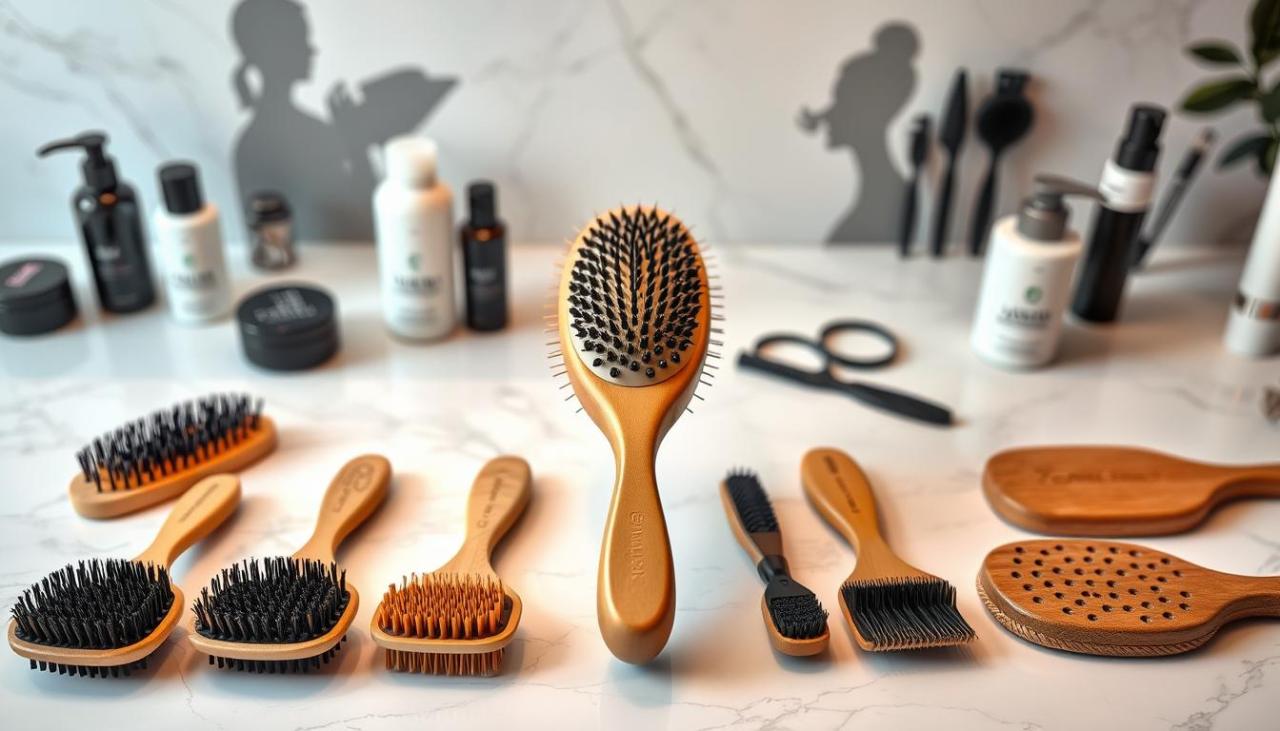
Learning about hair brushes is key to a good hair care routine. Each brush has a special job that affects your hair’s health and look. Choosing the right one helps smooth your hair from root to tip.
Paddle Brushes
The paddle brush is great for smoothness and detangling. Its wide base covers a lot of hair, perfect for daily use. It’s best for those who want to reduce frizz and keep hair sleek.
Round Brushes
Round brushes are perfect for adding volume or getting a salon-style blowout. They help generate tension when blow-drying. This lets you shape and add volume to your hair easily.
Vent Brushes
Vent brushes have holes that let air through, speeding up drying. They’re great for quick drying without losing control. They’re perfect when you’re in a hurry.
Wet Brushes
Wet brushes are made for hair that’s wet. They have flexible, soft bristles that gently untangle hair. They help keep your hair healthy while detangling after a shower.
Essential Material Specifications
Your hair care routine’s success depends on the brush materials. The quality of your tools affects how your hair looks and feels. Choosing the right bristle type is key to a salon-quality look at home.
Bristle Types: Natural vs. Synthetic
Natural boar bristles spread scalp oils, adding natural shine and reducing frizz. Synthetic nylon pins are stiffer, great for detangling thick or wet hair without breakage.
Many brushes mix both materials for the best results. These hybrid brushes offer nylon’s detangling power and boar hair’s smoothing benefits. The right bristle type keeps your hair healthy and easy to manage.
Handle Materials: Wood vs. Plastic
The handle material impacts the brush’s weight and comfort. Wooden handles offer a premium grip and are often more sustainable. They also add a classic look.
Plastic handles are light and moisture-resistant, perfect for the shower. Choose a handle that feels balanced to avoid hand fatigue during styling.
Construction Durability
Durability is crucial for hair care tools. Quality construction prevents bristle shedding and keeps the handle sturdy. Even with care, replace your brush every 6 to 12 months due to wear and tear.
“A tool is only as good as the materials from which it is crafted; quality construction is the foundation of effective hair maintenance.”
To choose the right features, compare common materials. Knowing these differences helps maintain your styling tools’ durability.
| Material Feature | Natural Bristles | Synthetic Pins | Wooden Handle |
|---|---|---|---|
| Best For | Smoothing/Shine | Detangling | Comfort/Grip |
| Durability | Moderate | High | High |
| Moisture Resistance | Low | High | Moderate |
Size Matters: Choosing the Right Brush Size
Getting salon-quality hair at home starts with the right tool size for your hair length. It’s not just about the bristles. The barrel size and handle weight matter for comfort. The right fit helps you style faster and with more control.
Small Brushes for Short Hair
Short hair or a pixie cut? Go for a small barrel brush. It’s tight enough to grab short strands, perfect for defined curls or root lift. Plus, it’s light, so your wrists won’t get tired.
Medium Brushes for Versatility
Shoulder-length hair? A medium brush is your go-to. It’s great for soft waves or smoothing hair without too much volume. Its balanced weight makes it easy to handle, even around the back of your head.
Large Brushes for Long Hair
Long hair needs a large barrel brush. It covers more area, drying your hair faster and leaving it smooth. Look for a hollow core model to keep it light, making styling comfortable.
| Brush Category | Ideal Hair Length | Primary Benefit | Recommended Weight |
|---|---|---|---|
| Small | Short / Pixie | Maximum Control | Lightweight |
| Medium | Shoulder Length | Versatile Styling | Balanced |
| Large | Long / Thick | Faster Drying | Ergonomic |
Bristle Characteristics and Their Benefits
Finding the perfect hairstyle often starts with the right bristle type. The way these fibers are arranged affects how well a tool works. It can detangle, smooth, or even stimulate your scalp. Knowing this helps match tools to your hair needs.
Soft vs. Firm Bristles
Choosing between soft and firm bristles depends on your hair and scalp. Soft bristles are great for fine or thinning hair. They’re gentle and won’t cause breakage. On the other hand, firm bristles are better for thick or coarse hair. They provide the needed tension.
Boar bristle brushes are known for their health benefits. They spread natural scalp oils, making your hair shiny. This bristle type is loved for its natural conditioning effect.
Spacing of Bristles
The bristle spacing affects how well your brush works. Wide-spaced bristles are good for detangling wet hair. They’re gentle and prevent breakage. Tight bristles, on the other hand, are for smoothing and straightening.
“The right brush is not just a tool; it is an investment in the long-term health and vitality of your hair strands.”
Unique Features: Balls on Bristles
Modern brushes often have small balls at the bristle ends. These protective tips prevent scratching or irritation. They’re great for those with sensitive scalps, offering a comfortable brushing experience.
| Bristle Type | Best For | Primary Benefit |
|---|---|---|
| Boar Bristle | Fine/Normal Hair | Oil Distribution |
| Nylon/Synthetic | Thick/Coarse Hair | Detangling Power |
| Ball-Tipped | Sensitive Scalps | Gentle Comfort |
Finding the right bristle type is key for style and scalp health. Try different types to find what works best for you.
Hair Brush Features for Different Hair Types
Choosing the right brush for your hair type can change your daily grooming. Each hair type needs a special brushing method to avoid damage and keep hair healthy. The right brush supports your hair’s natural structure and reduces breakage.
Brushes for Thick Hair
Thick hair needs brushes with sturdy, high-density bristles to reach deep. These brushes spread natural oils from the scalp to the hair ends. Look for brushes with nylon and boar bristles for detangling and smoothing.
Brushes for Thin Hair
Thin or fine hair should avoid harsh brushing. Use brushes with soft, flexible bristles that gently detangle. A cushioned base is great for a gentle scalp touch.
Brushes for Curly Hair
Curly hair is fragile and dry. A wide-tooth comb is best for detangling, even when wet. Avoid regular brushes to prevent frizz and disrupt curls.
Brushes for Straight Hair
Straight hair looks best with tools that add shine and smoothness. A paddle brush with nylon ball-tipped bristles is perfect for detangling and scalp massage. It aligns hair cuticles for a sleek, healthy look.
Ergonomics: Handle Design & Grip
A well-made handle can make your hair care routine enjoyable. Many people overlook the handle, but it’s key for comfort. An ergonomic design helps prevent hand fatigue during long styling sessions.
Importance of Comfortable Handles
Wrist strain during styling is often overlooked. A heavy or awkward brush can cause discomfort, making complex hairstyles harder. Reducing this strain helps you control your movements better, leading to more precise results.
The weight of the brush affects how it feels in your hand. A balanced brush prevents hand fatigue. It should feel like an extension of your arm, not a heavy object.
Different Handle Shapes and Styles
Manufacturers use various materials for a secure grip. The handle material affects performance in humid places, like steamy bathrooms. Non-slip coatings or textured surfaces help keep a firm grip, even when hands are wet.
Handle shapes range from sleek to contoured, fitting your fingers naturally. Some brushes have a tapered end for sectioning hair. Choosing a tool with an ergonomic design and right weight makes your hair care routine comfortable and efficient.
Specialized Brushes: When and Why to Use Them
Choosing the right brush can make your daily styling a pro ritual. Standard brushes are good for basic detangling. But, specialized tools tackle unique hair challenges. The right tools keep your hair healthy and look salon-quality at home.
Heat Resistant Brushes for Styling
Using a blow dryer means your brush faces high heat. Heat resistant brushes stay strong and keep their shape. They prevent bristles from melting or warping during your blowout.
“The right tool does not just style your hair; it protects the cuticle from unnecessary heat damage during the drying process.”
Scalp Massager Brushes
Your hair health begins at the root. Scalp massager brushes are key for scalp care. They have soft, flexible tips that gently boost blood flow to the follicles. This soothing action helps hair grow and feels relaxing.
Anti-static Brushes
Flyaways and frizz can mess up your style, more so in dry climates. Anti-static technology in brushes neutralizes hair charges. This keeps your hair smooth, easy to manage, and static-free all day.
| Brush Type | Primary Benefit | Key Feature |
|---|---|---|
| Heat Resistant | Thermal protection | High heat resistance |
| Scalp Massager | Blood circulation | Flexible silicone tips |
| Anti-static | Frizz reduction | Anti-static technology |
Maintenance Tips for Hair Brushes
Looking after your favorite styling tools is key. A bit of effort can make them last longer. By following a simple routine, your brushes will stay clean and ready for use.
Cleaning Regularly
Cleaning your brushes once a week is a must. It removes hair and product buildup. This keeps the bristles working well.
For electric hair tools, check out these 7 daily care tips.
To clean your brushes, do this:
- Use a comb or brush cleaner to remove hair from the base.
- Soak the brush in warm water with a bit of gentle shampoo.
- Rinse it well to get rid of any leftover shampoo.
- Let it air dry with the bristles facing down.
Storing Your Brushes Safely
Storing your brushes right is as crucial as cleaning. Don’t throw them in a crowded drawer. This can bend or crush the bristles.
Keep them in a clean, dry place. This helps them keep their shape. A designated spot for your tools is a smart move. Use a brush holder or vanity organizer to keep them upright. This simple habit keeps your brushes in top condition for every use.
Eco-Friendly Hair Brush Options
Choosing the right hair tool now means thinking about the planet and our hair. We think beauty routines should not harm the environment. By picking products from renewable resources, we get great styling and support responsible manufacturing practices.
Sustainable Materials
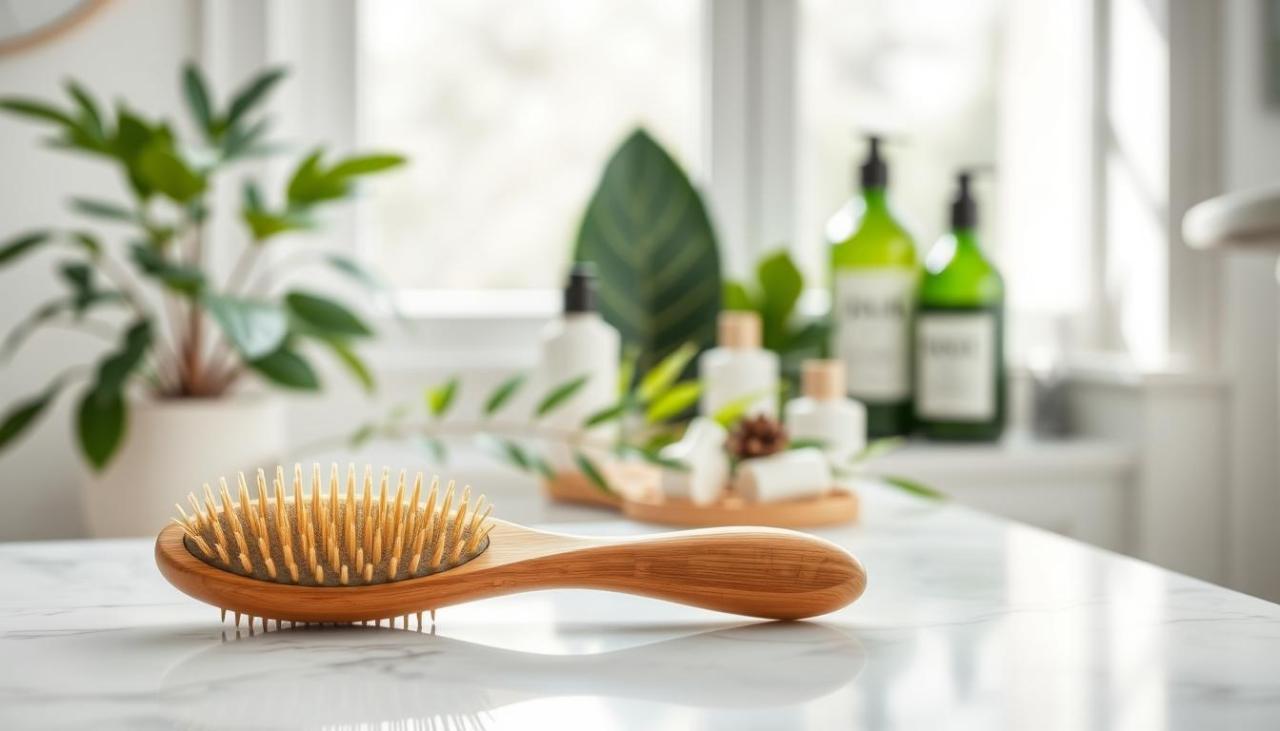
Today, many brushes use bamboo or FSC-certified wood for handles. These are renewable and light, unlike old plastics. Bamboo grows fast and needs little water, making it perfect for those who care about the planet.
The base of these brushes often has natural rubber cushions. These add comfort and flexibility. By choosing these materials, your tools can be biodegradable or recyclable.
Brands Making a Difference
Some companies are making big changes by adding cool features to their green products. They focus on ergonomic design so you stay comfortable while styling. These brushes fit well in your hand, making long sessions easier.
These brands also use anti-static technology to control frizz and flyaways. This gives you a polished look without harsh chemicals. They also use recycled packaging and soy-based inks to cut down on waste.
| Material Type | Primary Benefit | Sustainability Rating |
|---|---|---|
| Bamboo | Rapidly Renewable | High |
| FSC-Certified Wood | Responsibly Sourced | High |
| Natural Rubber | Biodegradable Base | Medium |
| Recycled Plastic | Waste Reduction | Medium |
Price Range: Understanding Value vs. Cost
Knowing the difference between cost and value is key to a good hair care kit. It’s tempting to pick the cheapest option, but understanding price and performance can save money. A smart choice balances your budget and hair health.
Budget Brushes: What to Expect
Budget brushes are for everyday use. They’re made of basic plastic and have standard bristles for simple detangling. They’re highly accessible, but might not have special features for complex styles.
These brushes often wear out faster than more expensive ones. They’re made of materials that show signs of wear after daily use. If you just need something for quick touch-ups, they’re a good choice.
Mid-Range vs. High-End Options
Mid-range and high-end brushes offer better quality and materials. They’re built to last, with materials like wood or reinforced polymers. A big plus is their heat resistance, letting you use them with blow dryers and other tools.
These brushes also focus on comfort, with ergonomic handles. This makes them a worthwhile investment for daily styling. They give you better control and protect your hair from damage.
| Feature | Budget Brushes | High-End Brushes |
|---|---|---|
| Material Quality | Standard Plastic | Premium Wood/Ceramic |
| Heat Resistance | Limited | Advanced/High |
| Ergonomics | Basic Grip | Professional Design |
| Durability | Short-term | Long-term |
Popular Hair Brush Brands to Consider
Choosing the right hair brush starts with knowing which brands are top-notch. There are many brands out there, making it hard to pick the best for your hair. It’s important to look at a brand’s reputation to find a brush that fits your size needs and style.
Top Industry Leaders
Top brands have been perfecting their hair brushes for decades. They are known for being reliable and offering a wide range of brushes. Whether you need a brush for detangling or a professional tool, these brands deliver quality every time.
These legacy brands invest in research to ensure their brushes meet high standards. By choosing a well-known brand, you get access to a wide range of brushes for every hair type. You might also find the best electric hair brush options from these trusted names.
Trailblazing Newcomers
New companies are bringing fresh ideas to the hair care industry. They focus on ergonomic designs and sustainable materials. These brands introduce unique features that make finding the perfect size for your hair easier than ever.
These newcomers focus on user experience and design. They listen to customer feedback to improve their products quickly. By supporting these brands, you can find innovative tools that might become the new standard.
| Brand Category | Primary Focus | Typical Size Range |
|---|---|---|
| Industry Leaders | Durability and Tradition | Comprehensive (Small to Large) |
| Trailblazing Newcomers | Innovation and Design | Specialized (Targeted size) |
| Budget-Friendly | Accessibility | Standardized |
Customer Reviews and Recommendations
Choosing the right grooming tool is more than just looking at labels. Real-world experiences show the true quality of a product. By seeing how others use these tools, you understand if the Hair Brush Specifications work well in daily use.
The Value of Shared Experiences
User feedback connects marketing claims to real performance. Look for patterns in reviews about durability and ease of use. When many users say the same thing, you can trust the Hair Brush Specifications meet your hair needs.
Finding Trustworthy Sources
Choose platforms that verify purchases for real feedback. Sites like Amazon or beauty retailers often have detailed reviews from verified buyers. Checking these sources helps confirm if the Hair Brush Specifications meet your expectations. Learning from others helps you choose a tool that will care for your hair for years.