
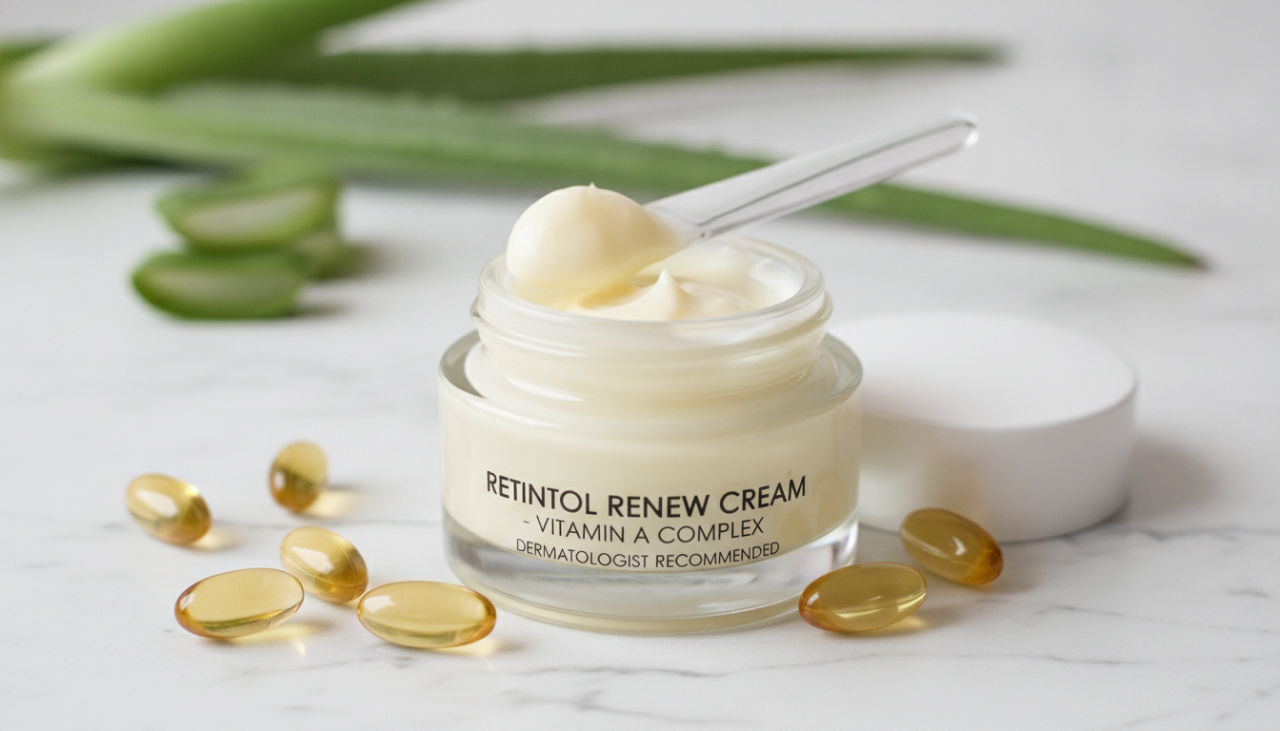
Did you know your skin replaces its outer layer about every 28 days? As we age, this process slows, which can cause dullness and uneven texture. We believe the right ingredients can help restore a youthful glow.
One effective option we often recommend is Retinyl palmitate, a gentle derivative of Vitamin A that can improve your complexion.
This powerhouse ingredient supports collagen production and helps refine your skin’s surface. By promoting cell turnover, it addresses clogged pores and dark spots. We find that these skincare benefits come from a consistent routine and daily sun protection.
Because this Vitamin A form is milder, it offers a steady path to smoother, brighter-looking skin without harsh irritation. Retinyl palmitate remains a staple for people seeking long-term results through a balanced beauty routine.
Key Takeaways
- Supports natural collagen production for firmer skin.
- Improves overall texture and promotes a brighter complexion.
- Helps clear clogged pores for a smoother appearance.
- Offers a gentler alternative to stronger Vitamin A derivatives.
- Requires consistent daily use and sun protection for best results.
What is Retinyl Palmitate?
If you have checked a lotion bottle, you have likely seen vitamin A palmitate among the ingredients. This compound supports many modern beauty routines. It appears in daily moisturizers and specialized anti-aging serums.
Definition and Chemical Composition
At its core, this substance is an esterified form of vitamin A. It forms by combining pure retinol with palmitic acid, a common fatty acid. This change makes the molecule more stable and less likely to oxidize in air or light.
Because it is stable, manufacturers favor it as a cosmetic ingredient. Products can keep their strength while sitting on store shelves. Unlike stronger retinoids, it offers a gentler skin experience, making it ideal for daily use.
Natural Sources of Retinyl Palmitate
This topical form differs from the vitamin A we consume in food. Our bodies process both forms, but they come from different biological pathways. These sources fall into two main groups:
- Animal-derived sources: These provide preformed vitamin A, which the body can use immediately. Common examples include liver, fish oils, and dairy products.
- Plant-derived sources: These contain carotenoids, such as beta-carotene, which the body must convert into active vitamin A.
As a cosmetic ingredient, skincare manufacturers often synthesize this form for purity and consistency. Although vitamin A palmitate occurs naturally in animal tissues, creams use a carefully formulated version. It balances safety and effectiveness for your complexion.
How Retinyl Palmitate Works on the Skin
The journey of topical vitamin A from skin’s surface to deeper layers follows a fascinating biological process. After application, skin transforms this ingredient into a form the body can use. This process matters for anyone improving their daily skin care routine.
Mechanism of Action
Retinyl palmitate is a precursor that follows a specific conversion pathway. Unlike stronger vitamin A forms, it needs three steps to become active retinoic acid.
- Step 1: The skin enzymes convert retinyl palmitate into retinol.
- Step 2: Retinol is then transformed into retinal.
- Step 3: Finally, retinal is converted into retinoic acid, which interacts directly with skin cells.
Because this pathway takes time, the ingredient works more gradually on the skin. This slow-release mechanism suits people who find other retinoids too harsh or irritating.
Absorption and Effectiveness
Once conversion begins, retinoids promote healthy skin-cell turnover. This clears dead cells, excess oil, and debris from pores, creating a clearer, smoother surface.
By supporting natural collagen production, this vitamin A form helps maintain elasticity and firmness over time. If you seek a daily vitamin for glowing skin, this ingredient can gently support your face. Consistent use helps skin stay smooth, balanced, and resilient against environmental stressors.
Key Benefits for Skin Health
A youthful complexion begins with understanding how key ingredients affect skin biology. Retinyl palmitate supports skin vitality and natural processes. It may help address concerns linked to environmental exposure and aging.
Anti-Aging Properties
We value this ingredient for its proven anti-aging potential. It helps skin maintain its structure for a firmer appearance. With regular use, it supports natural collagen production and skin resilience.
As we age, skin loses elasticity, which can cause fine lines. By promoting healthy cell turnover, Retinyl palmitate helps minimize these early signs of aging. This process keeps the skin surface smoother and more supple over time.
Enhancing Skin Texture and Tone
Beyond wrinkles, this ingredient can refine the skin’s overall surface. Regular use may create a more even complexion by fading uneven pigmentation. It also helps keep pores clear for a cleaner, more polished look.
This table shows the main improvements you might expect from adding this ingredient to your routine:
| Benefit Category | Primary Action | Expected Outcome |
|---|---|---|
| Anti-aging | Collagen support | Reduced fine lines |
| Skin Texture | Cell turnover | Smoother surface |
| Skin Tone | Pigment regulation | Even complexion |
| Pore Health | Exfoliation | Clearer appearance |
Retinyl Palmitate vs. Other Retinoids
Choosing a retinol alternative depends on how your skin handles different strengths. Many ingredients promise major results, but the best choice matches your skin’s tolerance.
Comparing Effectiveness
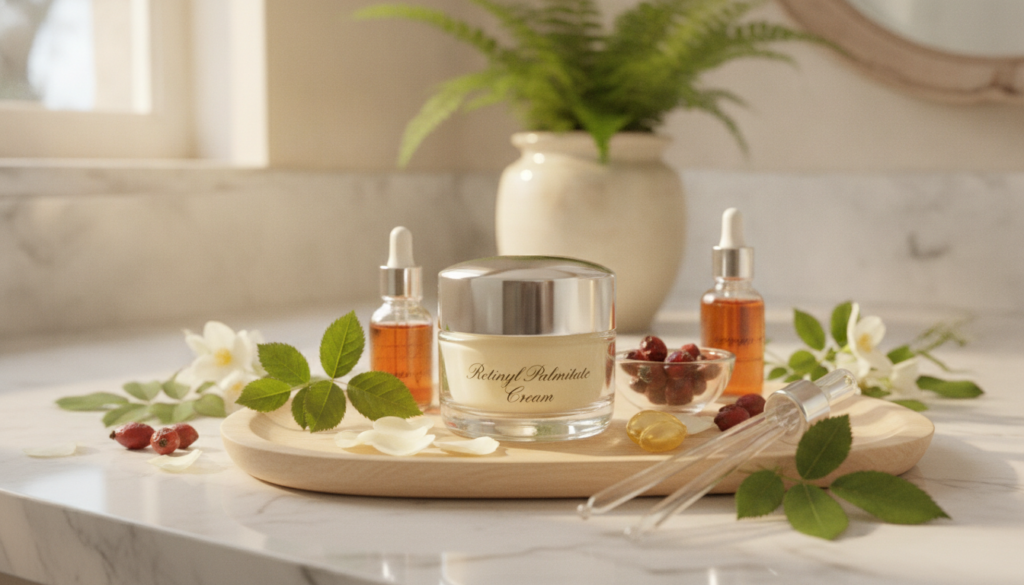
When we compare vitamin A ingredients, we consider how the skin activates them. Retinyl palmitate is an ester that needs several conversion steps before becoming active retinoic acid.
This slower process makes it a gentler option than pure retinol or prescription-strength tretinoin. As a retinol alternative, it offers vitamin A benefits without stronger compounds’ immediate intensity. Its greater stability also makes it appealing to many users.
Understanding Side Effects
Any retinol alternative may cause reactions when introduced too quickly. Common side effects include dryness, peeling, redness, and greater sun sensitivity.
Start slowly so your skin barrier can adjust. Apply a pea-sized amount a few times each week to reduce irritation. This approach supports your long-term skin health goals.
| Ingredient | Potency | Conversion Speed | Best For |
|---|---|---|---|
| Retinyl Palmitate | Low | Slow | Sensitive Skin |
| Retinol | Moderate | Medium | Most Skin Types |
| Retinoic Acid | High | Instant | Experienced Users |
Who Can Benefit from Retinyl Palmitate?
Knowing your skin needs helps you build an effective, lasting routine. People seeking a retinol alternative often choose this ingredient for a gentler start with vitamin A. It helps improve complexion without the irritation linked to stronger derivatives.
Age Groups and Skin Types
This ingredient suits many users and skin types. People in their twenties often use it as a preventative measure to maintain skin elasticity and brightness. For mature skin, it offers steady support for a refreshed, healthy complexion.
If you have sensitive skin, traditional retinoids may feel too harsh for daily use. Retinyl palmitate is a mild option that supports the skin barrier and offers noticeable skincare benefits. It suits people who value steady use over fast, aggressive results.
“The beauty of milder vitamin A esters lies in their ability to provide cumulative improvements without compromising the integrity of the skin barrier.”
Specific Skin Concerns
We recommend this ingredient for dull skin or reduced radiance. It smooths the skin’s surface and helps create a more even tone over time. It may also help with mild clogged pores, keeping the complexion clear and balanced.
The following table shows how different skin profiles can use this ingredient for strong results:
| Skin Profile | Primary Goal | Expected Outcome |
|---|---|---|
| Beginner | Introduction to Vitamin A | Improved tolerance and glow |
| Sensitive | Gentle resurfacing | Reduced redness and texture |
| Mature | Maintenance and support | Softened fine lines |
| Congested | Pore refinement | Clearer, smoother surface |
This ingredient can help, but always listen to your skin. If you have reactive conditions, consult a professional for guidance suited to your needs. With the right retinol alternative, you can enjoy significant skincare benefits and maintain a healthy, happy complexion.
Incorporating Retinyl Palmitate into Your Skincare Routine
Better skin care begins with learning how to use active ingredients, such as vitamin A palmitate. Start slowly so your complexion can adjust comfortably. This gradual plan can support anti-aging results while lowering the risk of irritation.
Recommended Products
When choosing a product, consider your skin type and preferred texture. You can find vitamin A palmitate in formats such as lightweight serums, hydrating creams, and nourishing facial oils. If you have dry skin, a cream-based formula can provide moisture and help maintain a healthy barrier.
People with oily or combination skin may prefer a serum because it absorbs quickly without heavy residue. Whatever the format, check the ingredient list for harsh additives. For a holistic approach, some people also explore a daily vitamin A supplement to support overall wellness goals.
Application Tips
Consistency matters when using vitamin A palmitate at night. Apply a pea-sized amount to clean, dry skin once a week, then watch your face for reactions. If your skin tolerates it, slowly increase use to every other night.
After applying it, use a gentle, hydrating moisturizer to seal in moisture and soothe your skin. Avoid strong exfoliants and acidic toners at the same time because they can cause sensitivity. Never skip daily sunscreen, because protecting your skin is the most important step in any effective anti-aging regimen.
Common Myths About Retinyl Palmitate
Let’s clear up confusion about this popular cosmetic ingredient. Many skincare fans feel overwhelmed by conflicting online claims about how vitamin A derivatives work.
Separating fact from fiction helps you make informed choices for your daily routine. Knowing how your products work is the first step toward reaching your skin goals.
Debunking Misconceptions
One common myth says retinyl palmitate and retinol are identical. Both belong to the retinoid family, but they have different structures and strengths.
Some people think related ingredients must work the same way on skin. In reality, this cosmetic ingredient needs one extra step to become active retinoic acid.
This extra step does not make the product ineffective. Instead, it often creates a gentler experience for people who find stronger retinoids harsh.
Facts You Should Know
Another myth says daily use suits everyone. Although this cosmetic ingredient is usually well tolerated, skin sensitivity differs from person to person.
Start slowly and watch how your skin reacts before using it daily. Consistent use helps improve texture and tone over time.
Results do not appear instantly. This cosmetic ingredient works slowly, so patience supports long-term success.
A consistent, well-tolerated routine gives your skin time to adjust and thrive. Protect your skin’s health by following its needs, not rigid advice.
Safety and Precautions
We believe informed use helps you enjoy the benefits of topical vitamin A. These products can transform skin, but careful use helps keep it healthy and balanced.
Possible Side Effects
When you first use topical vitamin A, your skin may need a short adjustment period. Mild redness, dryness, or slight flaking may occur as skin cells renew faster.
These products can also increase your skin’s sensitivity to ultraviolet light. Apply broad-spectrum sunscreen every morning to protect against possible sun damage.
Usage Guidelines for Sensitive Skin
If you have delicate skin, introduce topical vitamin A slowly to reduce irritation. Apply a small amount just two or three times per week, then increase use as your skin builds tolerance.
Avoid harsh exfoliants or aggressive chemical peels with your retinoid during the first weeks. A simple routine helps keep your skin barrier intact and healthy.
Always patch-test a small area of your inner arm before applying a new product to your face. Stop use immediately and consult a dermatologist if burning persists or severe irritation occurs.
| Action | Recommendation | Goal |
|---|---|---|
| Frequency | Start 2x weekly | Build tolerance |
| Sun Protection | Daily SPF 30+ | Prevent UV damage |
| Combination | Avoid harsh acids | Reduce irritation |
Remember that individual needs vary significantly. If you are pregnant, nursing, or managing chronic skin conditions, consult a healthcare professional before adding topical vitamin A to your daily regimen.
Conclusion: Achieving Radiant Skin with Retinyl Palmitate
A radiant complexion takes gentle, consistent habits. Retinyl palmitate can support smoother texture and a more even tone.
Patience is central to an effective skin care routine. This ingredient supports gradual cell turnover and collagen production, helping maintain a youthful glow over time.
Use a steady approach when adding new products to your regimen. Start with low concentrations and watch your skin’s response. This helps provide the best skincare benefits without irritation.
Pair treatment with a high-quality moisturizer to keep your barrier hydrated and resilient. Apply broad-spectrum sunscreen every morning to protect your progress from environmental damage.
Brands like CeraVe and La Roche-Posay offer excellent options for beginners. Adjust application frequency to your personal tolerance and keep your skin comfortable.
Consult a dermatologist if you are pregnant, nursing, or experiencing persistent sensitivity. Professional guidance helps you reach your goals safely and enjoy long-term rewards from a dedicated routine.