
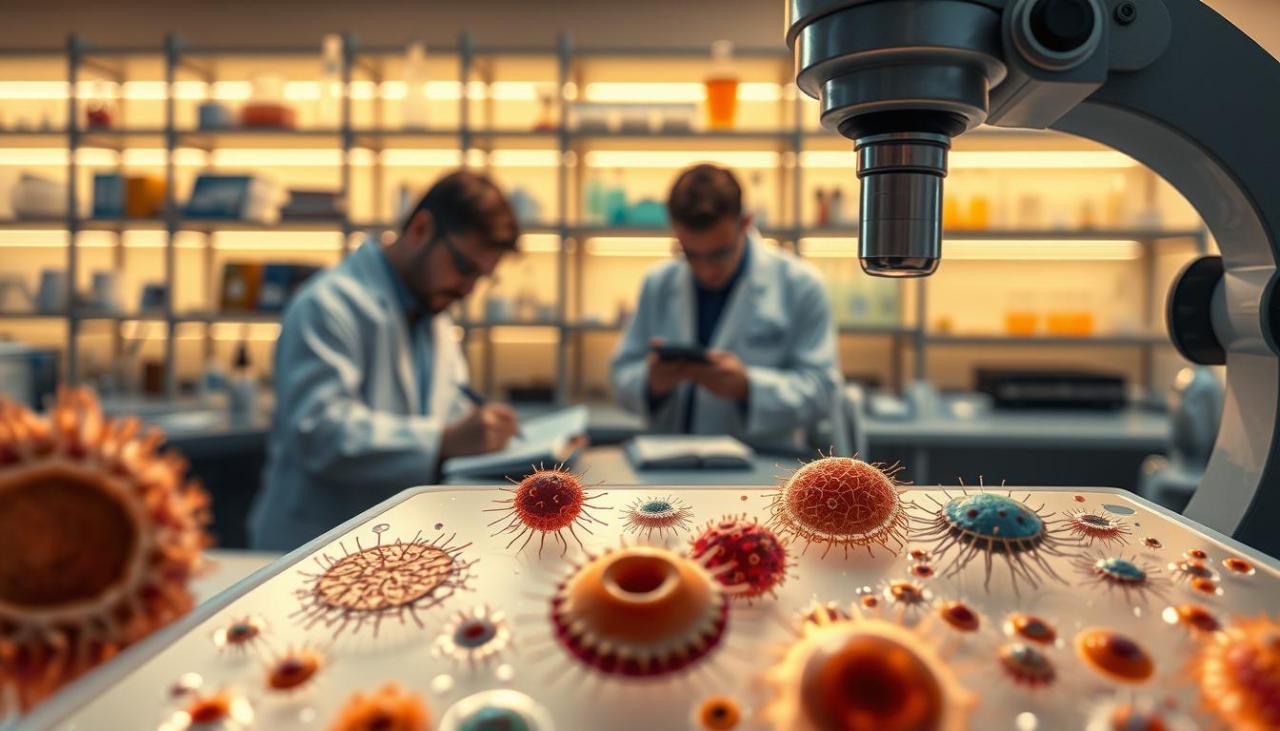
Did you know your body replaces nearly 300 billion of its smallest building blocks every day? Yet, we stay stable and complex. This is thanks to a key process called cell differentiation.
At the start of life, our cells are general. They then become specific through precise biological programming. This change is crucial for forming tissues, organs, and systems. It’s the heart of cell specialization.
Mastering these changes helps us survive and stay intact. We’ll dive into how these processes work at the most basic level. Knowing this helps us see the amazing complexity that keeps us going every second.
Key Takeaways
- Biological units undergo constant renewal to maintain structural stability.
- Generalized components transform into specific types to perform vital tasks.
- This process is essential for the growth of all complex living organisms.
- Specialization allows for the creation of diverse tissues and organs.
- Understanding these mechanisms reveals how life sustains itself at a microscopic level.
What is Cell Differentiation?
Since Robert Hooke first looked at cells in 1665, our knowledge has grown a lot. We now know that cells change from simple to complex forms. This change happens as cells get specific roles.
Definition and Overview
Cell differentiation is when a cell becomes more specialized. This happens through gene changes that shape the cell’s structure and function. These molecular mechanisms of cell differentiation guide cells to meet the body’s needs.
Through cell specialization, bodies can keep complex systems working. Without it, life would be impossible. This process is controlled to keep tissues in order.
Importance in Development
This process is crucial in life. In early development, cell differentiation builds the body’s organs and tissues. It makes sure everything works together.
The table below shows how undifferentiated and specialized cells differ. It explains their roles in the body:
| Feature | Undifferentiated Cells | Specialized Cells |
|---|---|---|
| Primary Function | Self-renewal and potency | Specific physiological tasks |
| Gene Expression | Broad, flexible potential | Restricted, task-oriented |
| Structural Form | Simple, unspecialized | Complex, adapted for function |
| Division Capacity | High, continuous | Limited or non-existent |
In the end, cell specialization is key to life’s complexity. Understanding these processes helps us see how life is structured and repaired.
The Process of Cell Differentiation
Our bodies constantly renew themselves through a complex process. This process lets a generic cell become a specific type, making sure our organs work right. By looking into cell differentiation, we learn about life’s blueprint.
Stages of Differentiation
Cells change from being versatile to specialized in different stages. First, they are pluripotent, able to become almost any cell type. Then, they commit to a specific lineage, narrowing their choices until they reach their final form.
This cycle of renewal is seen every day. For example, the gut lining is replaced every three to five days. This shows how cell differentiation keeps tissues healthy.
“Development is the process by which a single cell becomes a complex organism through the precise orchestration of genetic instructions.”
Factors Influencing Differentiation
Many internal and external signals guide this development. The molecular mechanisms of cell differentiation act like a control panel, turning genes on or off. These signals tell a cell when to divide and when to specialize.
External factors, like the chemical environment and contact with other cells, also matter. By combining these signals, the body keeps a balance of form and function. Knowing these molecular mechanisms of cell differentiation helps us understand how life adapts and thrives.
Stem Cells and Their Unique Role
Stem cells are at the core of life’s growth. They can self-renew and turn into different cell types. By studying them, we learn how cellular differentiation shapes our bodies from the start.
Types of Stem Cells
Stem cells are mainly divided by where they come from and what they can become. Embryonic stem cells are key in early development, creating organs and tissues. They can become almost any cell type in a grown-up body.
Adult stem cells, on the other hand, live in certain body parts. They help keep tissues healthy and fix them after damage. Even though they can’t become as many types of cells as embryonic ones, they’re vital for critical role in tissue homeostasis and repair.
Applications in Medicine
Stem cells are changing healthcare. They help create new treatments for long-term diseases and injuries. These treatments aim to replace sick cells with healthy ones, helping the body work right again.
Scientists are working to better control how stem cells turn into different cells. This could lead to big advances in regenerative medicine. Such progress could change how we heal and recover in the future.
Genetic Regulation of Cell Differentiation
At the heart of life, a complex system of molecular switches controls cell identity. The regulation of cell differentiation is not random but a carefully planned sequence. This ensures each cell becomes a functional part of a tissue or organ.
Role of Genes and Proteins
Transcription factors are the main drivers of this change. These proteins bind to DNA to act as master switches. They turn specific cellular programs on or off, controlling gene expression and cell differentiation.
When these factors bind to DNA, they bring other proteins to start or stop gene transcription. This dynamic interaction lets a cell change from a generic to a specialized state. Without this control, complex organisms could not develop.
Epigenetic Factors
Epigenetic factors also play a key role in keeping cell identity stable over time. These include DNA methylation and histone modification, acting as a molecular memory. They ensure a cell stays committed to its lineage throughout its life.
Epigenetic markers keep certain genes off while others are on. This stability is crucial for cellular differentiation to succeed. It helps our bodies keep different tissues separate, like muscle cells not becoming neurons.
Cell Differentiation in Plants
Plants grow differently than animals. They keep making new parts their whole lives. This helps us understand cellular differentiation in a stationary setting.
Unique Mechanisms in Plant Cells
Plant stem cells live in special areas called apical and root meristems. These spots are where cells divide and stay the same until they get a signal to change. Since plant cells can’t move like animal cells, their fate is decided by where they are.
Chemical gradients and hormones control how these cells are arranged. This ensures each cell knows its role based on its location. This spatial regulation is key for the plant’s structure as it grows.
Examples of Plant Differentiation
The creation of vascular tissues like xylem and phloem is a great example. These tissues form from cells that specialize to carry water and nutrients. This shows how cell fate determination is influenced by the environment.
Leaves also form from the shoot apical meristem. As cells move away, they become photosynthetic tissues. This shows plants’ ability to adapt over years.
The Impact of Environment on Differentiation
The journey of a cell is shaped by the world outside its nucleus. Genes give the blueprint, but the surrounding environment is the architect. It guides the final shape of a cell. The differentiation of cells is a dynamic response to external cues.
External Signals
Cells get chemical and physical signals from their neighbors and the fluid around them. These signals include growth factors, hormones, and mechanical forces. They tell a cell when to divide or specialize.
By understanding these messages, a cell can adjust its internal machinery. This ensures the body maintains balance. When these signals are disrupted, cell differentiation can become erratic, leading to developmental issues.
Role of Microenvironment
The Extracellular Matrix (ECM) is a critical signaling hub. It provides both structural support and biochemical instructions. It’s not just a scaffold; it actively influences cell fate determination by binding to cell surface receptors.
“The microenvironment is the stage upon which the drama of cellular life unfolds, dictating the script for every cell’s future.”
Understanding how the ECM and neighboring cells interact is key for modern science. By mapping these interactions, we gain insights into cell fate determination and tissue repair. The following table shows how different environmental factors affect this complex process.
| Environmental Factor | Primary Function | Impact on Cell |
|---|---|---|
| Extracellular Matrix | Structural Support | Regulates cell shape and signaling |
| Growth Factors | Chemical Signaling | Triggers specific gene expression |
| Mechanical Stress | Physical Cues | Influences lineage commitment |
| Cell-Cell Contact | Direct Communication | Coordinates tissue-level behavior |
Cell Differentiation in Disease
When cell development goes awry, it can severely impact our health. Our bodies have strict rules for cell growth and function. If these rules are broken, it can lead to serious health problems.
Cancer and Abnormal Differentiation
Cancer is a prime example of what happens when cell differentiation fails. In a healthy body, cells grow and specialize. But cancer cells lose their identity and start growing out of control.
This uncontrolled growth is a key sign of cancer. Instead of doing their jobs, these cells focus on growing and surviving. This can harm the surrounding tissue. The main reasons for this include:
- Mutations in genes that control cell growth.
- Cells becoming less responsive to signals that stop growth.
- Changes in genes that silence maturation signals.
Potential Therapeutic Approaches
Modern medicine is now focused on fixing cell problems rather than just treating symptoms. By studying how cells develop, scientists are finding new ways to help abnormal cells become normal. This method is called differentiation therapy.
The aim is to make cancer cells stop growing and mature into healthy cells. This approach has many benefits for future treatments:
- It’s less harmful than traditional chemotherapy.
- It targets cancer cells without harming healthy tissue.
- It may help treat cancers that don’t respond to usual treatments.
We think studying differentiation of cells will lead to even better treatments. By understanding these pathways, we can turn deadly diseases into manageable conditions.
Recent Research in Cell Differentiation
New lab tech is changing how we understand cell development. We’re moving from just looking at cells to creating 3D models that are like living things. These models let us see how cells change in ways that are close to human tissues.
Breakthrough Studies
One big change is using induced pluripotent stem cells (iPSCs). Scientists can grow these cells into 3D organoids. These organoids give us a unique window into how tissues form and work.
With these organoids, scientists can study human biology better than before. They can see how cells become specialized in a way that was hard to understand before.
| Feature | Traditional 2D Models | 3D Organoid Models |
|---|---|---|
| Structural Complexity | Low | High |
| Cell Interaction | Limited | Advanced |
| Biological Relevance | Basic | High |
| Research Potential | Screening | Developmental Mapping |
Implications for Future Studies
The new models mean we’re just starting to understand cell development. We expect future studies to look at how environment and genes work together. This will help us learn more about how cells change in medical settings.
As we keep using these new tools, we’ll discover even more. We’re getting closer to understanding life’s complex paths. This could change the future of biology and medicine.
Practical Applications of Understanding Differentiation
Researchers today aim to apply our knowledge of cell development in medical treatments. By understanding how cells specialize, we can now intervene in health issues. This progress lets us use stem cell differentiation to tackle previously untreatable health problems.
Tissue Engineering
Tissue engineering is a big step in fixing the human body. We use our knowledge of differentiation pathways to make cells into the right tissue types for patients. This involves creating scaffolds for cell growth in labs.
The aim is to make living tissues for transplanting to fix damaged areas. This method has many benefits:
- Lower rejection rates because it uses the patient’s cells.
- It allows for custom-fit implants for complex injuries.
- It reduces the need for donor organs, which are often scarce.
Regenerative Medicine
Regenerative medicine helps the body heal itself with the right biological cues. By guiding stem cell differentiation, we help the body fix damaged organs or tissues. This field is moving fast from lab experiments to real treatments for chronic conditions.
We’re working on controlling differentiation pathways for degenerative diseases. This means fine-tuning the cell environment for proper development. As these methods improve, we’ll see more treatments that fix problems rather than just manage symptoms.
The table below shows how these technologies are moving from the lab to the clinic:
| Application | Current Status | Primary Goal |
|---|---|---|
| Skin Grafts | Clinical Use | Wound Healing |
| Cartilage Repair | Clinical Trials | Joint Restoration |
| Organ Bio-printing | Research Phase | Full Organ Replacement |
Conclusion: The Future of Cell Differentiation Research
Life depends on how cells grow and specialize. Understanding stem cell differentiation is key for new medical discoveries.
New Horizons in Scientific Discovery
Scientists are now better at tracing how cells change. Tools from companies like Illumina and Thermo Fisher help us see these changes live. This lets us understand how cells turn into different tissues.
The Necessity of Persistent Inquiry
Our drive to learn about these processes leads to better patient care. We need to keep studying hard to tackle health problems. This effort helps us create treatments that save lives. We’re excited for a future where we fully understand how cells work, leading to big advances in regenerative medicine.