

Did you know Americans spend about $60 billion a year on health products? This huge amount shows how much we care about staying healthy. But, many of us question if these products really work or are just expensive tricks.
We think a daily nutritional supplement should be a helping hand, not the main thing. It helps fill in the gaps in our diet from our busy lives. But, it can’t replace the full benefits of eating real, unprocessed foods.
We aim to guide you through the crowded market with confidence. We’ll look into how to check if a product is safe, good quality, and right for you. By seeing a daily nutritional supplement as extra help, not a fix-all for aging or tiredness, we can make better choices for our health.
Key Takeaways
- Supplements are meant to fill in the gaps, not replace whole foods.
- U.S. consumers invest $60 billion annually in these health products.
- Evidence for many products remains uneven, requiring careful research.
- Prioritize a food-first approach to ensure optimal health outcomes.
- Focus on safety, quality, and personal relevance when choosing products.
Understanding Daily Nutritional Supplements
Modern wellness starts with understanding our tools for vitality. Daily nutritional supplements help fill gaps in our diet with essential nutrients.
These supplements mix vitamins, minerals, herbs, amino acids, and more. Since they’re not as strictly regulated as drugs, we need to be careful. Careful interpretation of labels and marketing claims is key to safe choices for our health.
What Are Daily Nutritional Supplements?
At their core, these supplements bridge our diet and body needs. The best daily vitamins vary by person. Individual health goals and needs should guide our choices.
Types of Nutritional Supplements Available
The market has many options for our wellness journey. Common types include:
- Multivitamins: These cover basic daily needs with a wide range of nutrients.
- Mineral Products: Targeted for specific deficiencies like magnesium or iron.
- Protein Powders: For those who are active, to help with muscle recovery and hunger.
- Probiotics: Support digestive health and immune function with beneficial bacteria.
- Herbal Extracts: Plant-based compounds for wellness goals like stress relief or better sleep.
To find the best daily vitamins, look beyond trends. Focus on quality and your personal nutritional needs for true well-being.
Key Benefits of Daily Nutritional Supplements
We often look for ways to improve our health. It’s important to know the difference between marketing claims and real needs. Many people look for top daily supplements to boost their energy. But the best approach is to fill in the gaps in your diet.
Enhancing Overall Health and Well-Being
Some think everyone needs a multivitamin to live longer. But research shows that for those eating well, these supplements might not add much to longevity. Yet, fixing a specific nutrient gap can help keep your body running smoothly.
Supporting Immune Function
Our immune systems need vitamins and minerals to work well. For example, vitamin D and calcium are key for strong bones. By picking top daily supplements that meet these needs, we help our bodies fight off stress.
Boosting Energy Levels
Many hope a supplement will give them instant energy. But it’s more complex than that. Supplements work best when they fix a real nutrient shortage, like iron or B12. Always choose top daily supplements based on a real need, not just for energy.
| Nutrient | Primary Benefit | Targeted Need |
|---|---|---|
| Vitamin D | Bone Density | Low Sun Exposure |
| Calcium | Structural Support | Bone Health Maintenance |
| Iron | Oxygen Transport | Addressing Fatigue |
| Vitamin B12 | Energy Metabolism | Dietary Restrictions |
Who Should Consider Taking Supplements?
Figuring out if you need a daily nutrient boost starts with knowing your body’s needs. A good diet is key, but some life stages or situations might leave gaps. It’s crucial to understand what your body needs before deciding on supplements.
Individuals with Specific Nutritional Needs
Some groups are at higher risk for nutrient deficiencies. Pregnant women need more folic acid for the baby, and older adults might not get enough vitamin B12. Vegans and vegetarians also need to watch their intake, as these nutrients are often found in animal products.
People with conditions like celiac disease or inflammatory bowel disease might not absorb nutrients well. Before starting supplements, it’s wise to learn about their safety. Talking to a healthcare professional can help figure out if supplements are right for you.
Active Lifestyles and Fitness Enthusiasts
If you’re always on the move, your body needs more to recover and perform well. Fitness buffs often need more protein due to their intense workouts. While food is best, supplements can help meet these increased needs.
But remember, supplements are meant to add to your diet, not replace it. A daily nutrient boost should support your gym efforts, not be a quick fix. Eating whole foods first ensures your body gets all the nutrients it needs for top performance and recovery.
Common Ingredients Found in Supplements
Looking into what’s in supplements helps us pick better for our health. When we choose a daily wellness supplement, we’re picking a mix of nutrients to fill diet gaps.
Vitamins and Minerals
Micronutrients are key in many health products. Calcium and magnesium are crucial for bones and muscles. Iron, vitamin D, and vitamin B12 boost energy and help with metabolism.
These nutrients keep our bodies working right. By picking a top-notch daily wellness supplement, we help our bodies perform at their peak every day.
Herbal Extracts
Herbal ingredients are getting more popular. Ashwagandha, for instance, is known for stress relief and calmness.
But, it’s key to know that not all herbs work the same for everyone. The scientific evidence on different extracts can be quite different.
Amino Acids and Protein
Protein powders are great for those with tight schedules. They’re useful, but should not replace whole foods.
Whole foods like beans, fish, eggs, tofu, dairy, and lean meats offer more nutrients than powders. Relying only on a daily wellness supplement for protein is not as good as eating a variety of foods.
How to Choose the Right Daily Nutritional Supplement
Finding the perfect supplement starts with knowing your body. Everyone’s needs are different. So, picking essential daily vitamins needs to be tailored to you. This ensures you support your health well.
Assessing Individual Health Goals
Think about your lifestyle, age, and diet before buying a supplement. If you eat very little, a daily multi-vitamin can fill in the gaps. Also, check your lab results with a doctor to find any missing nutrients.
Remember any medicines you take. Some supplements can react with them. Match your supplements to your health data for the best results. Personalization is the key to success.
Reading Labels and Understanding Dosages
After setting your goals, learn to read labels well. Notice the serving size to know how much you get. Also, watch for allergens, artificial sweeteners, or extra stuff you don’t need.
For quality, look for NSF or USP certifications. These mean the product has been tested for purity and accuracy. These seals mean you can trust the essential daily vitamins in your supplement.
- Check the expiration date to ensure potency.
- Verify the dosage instructions to avoid accidental over-consumption.
- Look for third-party testing seals for added safety.
- Review the list of inactive ingredients for common allergens.
By following these steps, you can pick essential daily vitamins that fit your life. Making smart choices now means better health later.
Potential Risks of Over-Supplementation
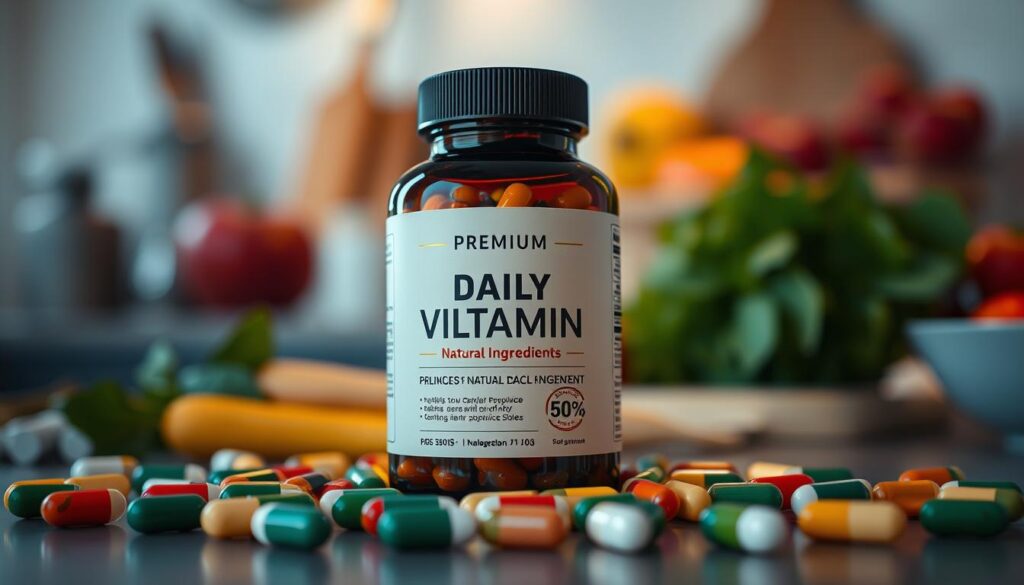
Even a premium daily multivitamin can be harmful if taken too much or without advice. We think more nutrients mean better health, but our bodies can only handle so much. Taking too many supplements can actually harm us instead of helping.
Recognizing Signs of Overuse
It’s important to watch how your body reacts to new foods. Too much magnesium can cause gastrointestinal distress, like cramps or diarrhea. Iron supplements can also be too much, putting a strain on your organs.
Also, many foods today are full of extra nutrients. This means you might already get too much before taking your premium daily multivitamin. Always check food labels to avoid getting too much of certain nutrients from other sources.
“The dose makes the poison,” a fundamental principle of toxicology, reminds us that even essential nutrients can be harmful when consumed in excessive quantities.
Consultation with Healthcare Professionals
Always talk to a healthcare provider before starting new supplements. This is very important if you have ongoing health issues, are getting ready for surgery, or are on medications. A doctor can help avoid harmful interactions.
People who are pregnant or have autoimmune diseases need special advice. A premium daily multivitamin is great, but it’s not a substitute for a doctor’s check-up. Working with a doctor makes sure your health journey is safe and effective.
Incorporating Supplements into Your Daily Routine
Creating a consistent habit is key to getting the most from your daily health supplement. A regular routine ensures your body gets the nutrients it needs. This makes supplements a reliable part of your wellness plan.
Tips for Consistency
Use visual reminders like placing bottles near your coffee or toothbrush. A recurring alarm on your phone can also help during busy days. Keeping a journal to track how your body reacts to new supplements is also helpful.
Start with a small amount of fiber products like psyllium. Gradually increase your intake to let your body adjust. Remember to drink plenty of water to help fiber work well.
Pairing Supplements with Healthy Eating
A daily health supplement should complement a balanced diet, not replace it. Taking vitamins with a meal can improve absorption and prevent stomach upset. Linking your supplement intake to meals makes it easier to stick to the habit.
Protein powder is great for those with busy lives. It’s perfect for older adults who need more protein. Using these products wisely helps keep muscle and energy up.
| Supplement Type | Best Time to Take | Integration Tip |
|---|---|---|
| Multivitamins | With Breakfast | Pair with a meal containing healthy fats. |
| Fiber Supplements | Morning or Evening | Start with a half-dose and drink extra water. |
| Protein Powder | Post-Workout or Snack | Mix into smoothies or oatmeal for convenience. |
| Omega-3 Oils | With Main Meal | Take with food to avoid a fishy aftertaste. |
The Role of Diet in Nutritional Balance
We often focus on pills and powders, but wellness starts in the kitchen. We see daily nutritional support as a way to fill gaps in our eating habits, not replace real food.
Whole Foods vs. Supplements
Whole foods offer a mix of vitamins, minerals, fiber, and phytonutrients hard to match in a lab. Eating legumes, nuts, seeds, and whole grains gives us a blend of nutrients that boost health. Unfortunately, about 90% of adults in the U.S. don’t eat the five cups of fruits and vegetables they should every day.
daily nutritional support is a helpful tool for many. Supplements help cover common nutrient gaps, ensuring our bodies have what they need. But, they should never replace a diet rich in nutrients.
Importance of a Balanced Diet
We should not rely too much on processed foods like green powders. These powders often lack fiber and the variety found in fresh veggies. Eating a wide range of foods is the best way to stay healthy and full of energy.
The table below shows the main differences between getting nutrients from whole foods and supplements:
| Feature | Whole Foods | Supplements |
|---|---|---|
| Nutrient Synergy | High (Natural combinations) | Low (Isolated compounds) |
| Fiber Content | Naturally high | Usually absent |
| Primary Role | Foundational nutrition | Gap-filling support |
| Bioavailability | Generally superior | Varies by formulation |
Our goal is to eat whole, unprocessed foods at every meal. This way, we give our bodies the best daily nutritional support naturally.
Research and Scientific Background
It’s key to understand the science behind a daily nutritional supplement for good health choices. We often see mixed messages, so it’s crucial to look at the facts, not just what’s advertised. By learning to read scientific studies, we can figure out which supplements really help us stay healthy.

Studies Supporting Supplement Efficacy
Not all studies are equal when it comes to proving a daily nutritional supplement works. Some nutrients, like omega-3s in fish oil, have strong evidence. These studies are often big and well-controlled, showing clear results.
But, other research is not as clear. For example, while many take supplements for heart health, the proof for certain vitamins and cholesterol is mixed. We need to be careful of findings that don’t hold up across different groups.
Understanding the Limitations
When we hear about health breakthroughs, we must think about the study’s limitations. Small samples, short study times, and funding issues can affect results. A study backed by a maker might not be fully unbiased.
Also, results don’t always apply everywhere. For example, probiotics work differently for each strain. We can’t assume a good result for one strain means it works for all daily nutritional supplements or health issues.
- Peer Review: Always look for studies published in reputable, peer-reviewed journals.
- Sample Size: Larger groups generally provide more reliable data than small, isolated studies.
- Context: Consider whether the study was conducted on humans or in a laboratory setting.
The Future of Nutritional Supplements
The world of wellness is changing fast. We’re moving from basic vitamins to a new era where science and nature work together. Now, when picking the top daily supplements, people want them to be effective and good for the planet.
Innovations in Supplement Formulations
Today, makers focus on how well our bodies can use what they make. For example, algae-based DHA is a big hit. It’s a strong, fish-free option for those who don’t eat meat or fish.
Also, there’s a big push for products that help our gut health. Green powders are popular because they pack a lot of plant nutrients into one easy-to-use product. We think the best future products will be judged by:
- Ingredient Quality: Using the best, purest stuff.
- Clinically Relevant Evidence: Having solid science to back up claims.
- Clear Labeling: Being open about what’s in the product.
Trends in Consumer Preferences
Today, people want health products that are made just for them. Vegan and clean-label options are now the norm. Folks want to know what they’re putting in their bodies, so transparency is key.
“The future of nutrition lies in the intersection of personalized data and high-quality, sustainable ingredients that empower the individual to take control of their long-term health.”
As we improve our health habits, we’re looking for the top daily supplements that are safe for the long haul. By keeping up with new trends, we can pick products that really boost our energy. Look for brands that care about science as much as you care about your health.
Making Informed Decisions
When searching for the best daily vitamins, don’t get caught up in flashy ads. Many products focus more on marketing than science. Always keep your health first by being cautious and informed.
Evaluating Quality and Brand Reputation
Not all supplements are the same. The length of an ingredient list doesn’t always mean quality. Look for brands that are open about where they get their ingredients and how they make their products. Check for third-party certifications that prove the product’s purity and strength.
To find the best daily vitamins for you, consider these key points:
- Third-Party Testing: Look for seals from groups like USP, NSF, or Informed Choice.
- Ingredient Transparency: Make sure the label clearly lists all ingredients.
- Manufacturing Standards: Check if the company follows Current Good Manufacturing Practices (CGMP).
- Independent Evidence: Find brands that back their products with scientific research.
Seeking Advice from Nutrition Experts
Getting advice from a pro is key to avoiding bad supplements. Before starting any new supplements, talk to a healthcare provider or a registered dietitian. They can spot real nutrient gaps and guide you to the right supplements.
When you talk to a professional, bring a list of your meds and what you usually eat. This helps them check for any bad interactions and make sure the supplements fit your life. Getting expert advice is crucial for finding the best daily vitamins that really help your health.
Conclusion: Enhancing Your Wellness Journey
Getting to optimal health takes time and effort, not quick fixes. We see daily nutritional supplements as helpful tools. They fill gaps in our modern diet.
Prioritizing a Holistic Approach
Whole foods are key to our health. We should eat lots of fresh veggies, lean proteins, and healthy fats first. Supplements should add to our diet, not replace it.
Final Thoughts on Daily Nutritional Supplements
Some people need specific nutrients like vitamin D or iron. It’s important to check our health needs carefully. Brands like Thorne or Nature Made offer good choices for extra support.
Always talk to a doctor or dietitian before starting supplements. Making smart, consistent choices helps us control our health. Supplements can be a great help when used wisely and with professional advice.