
Did you know your body can store certain nutrients for months? This creates a biological reserve that helps you even when your diet changes. These nutrients act differently than water-based ones.
We need these essential nutrients for optimal health and function. They build up in our tissues, not flushing out like water-based ones. So, we must balance our intake to avoid too little or too much. Knowing how fat soluble vitamins work helps us make better choices at the grocery store.
Learning about these nutrients helps us manage our long-term health. This guide gives a detailed look at what our bodies need to stay healthy.
Key Takeaways
- These nutrients are stored in the liver and fatty tissues for long-term use.
- Unlike water-based options, they do not need to be consumed every single day.
- Proper absorption requires a small amount of dietary lipids in your meal.
- Excessive intake can lead to accumulation, so balance is vital for safety.
- These compounds are essential for vision, bone health, and immune function.
What Are Fat Soluble Vitamins?
Vitamins are important, but fat soluble vitamins are special. They include vitamins A, D, E, and K. These are key for our health.
Definition and Importance
These vitamins need fat to be absorbed by our bodies. Without enough fat, we can’t use them well.
They need lipids to move through us. So, they’re vital for our health and growth. Eating healthy fats helps us get the most from them.
Key Characteristics
Fat soluble vitamins can be stored in our tissues. Unlike water-soluble vitamins, they build up in the liver and fatty tissues.
This storage helps us keep functions going for a long time. Consistency is key. We don’t need to eat them in huge amounts every day.
But, we must balance them to avoid too much. Knowing how they work in us is the first step to better nutrition.
The Four Essential Fat Soluble Vitamins
Nature gives us four key fat soluble vitamins for health. These vitamins need fat to be absorbed and stored in our bodies. Knowing about these wellness vitamins helps us stay healthy.
Vitamin A
Vitamin A is a group of compounds called retinoids. They are essential for good vision and a strong immune system. You can find them in animal products and plant-based carotenoids.
Vitamin D
Vitamin D is known as the sunshine vitamin. It helps our bodies absorb calcium and keep bones strong. Our skin makes it when exposed to sunlight, but we also need to eat it. Learn more in this scientific resource.
Vitamin E
Vitamin E is a group of eight antioxidants. It includes four tocopherols and four tocotrienols. These protect our cells and keep our skin healthy.
Vitamin K
Vitamin K helps our blood clot and keeps bones strong. It’s important for healthy circulation and bones. Having enough of this vitamin is key to a balanced diet.
| Vitamin | Primary Function | Key Source |
|---|---|---|
| Vitamin A | Vision & Immunity | Carrots & Liver |
| Vitamin D | Bone Health | Sunlight & Fish |
| Vitamin E | Antioxidant | Nuts & Seeds |
| Vitamin K | Blood Clotting | Leafy Greens |
Health Benefits of Fat Soluble Vitamins
The benefits of fat soluble vitamins are vast, affecting our sight and bones. These four nutrients—A, D, E, and K—keep us healthy. They play key roles in our body’s functions.
Vision and Eye Health
Vitamin A is crucial for good vision. It helps our eyes adjust to dark places. Without enough, we might get night blindness and eye problems.
Bone Strength and Density
Vitamins D and K are vital for strong bones. Vitamin D helps our body use calcium. Vitamin K makes sure calcium goes into our bones. Together, they prevent fractures and keep bones dense as we get older.
Antioxidant Properties
Vitamin E is a strong antioxidant. It protects our cells from damage. It fights off harmful free radicals, keeping our tissues safe. This is why it’s important for staying healthy.
Blood Clotting
Vitamin K is key for blood to clot. It helps our blood stop bleeding after an injury. This is crucial for healing and preventing too much blood loss.
| Vitamin | Primary Health Benefit | Key Function |
|---|---|---|
| Vitamin A | Vision Support | Maintains light-sensing cells |
| Vitamin D | Bone Health | Regulates calcium absorption |
| Vitamin E | Cell Protection | Acts as an antioxidant |
| Vitamin K | Blood Clotting | Supports coagulation proteins |
In summary, fat soluble vitamins are crucial for our health. Eating a balanced diet gives our bodies what they need to stay healthy and fight off diseases.
Dietary Sources of Fat Soluble Vitamins
Finding the best foods for these important nutrients makes shopping easier. Adding a variety of these foods to our meals helps us get what we need naturally. Knowing the top sources of fat soluble vitamins helps us choose wisely at the store.
Foods Rich in Vitamin A
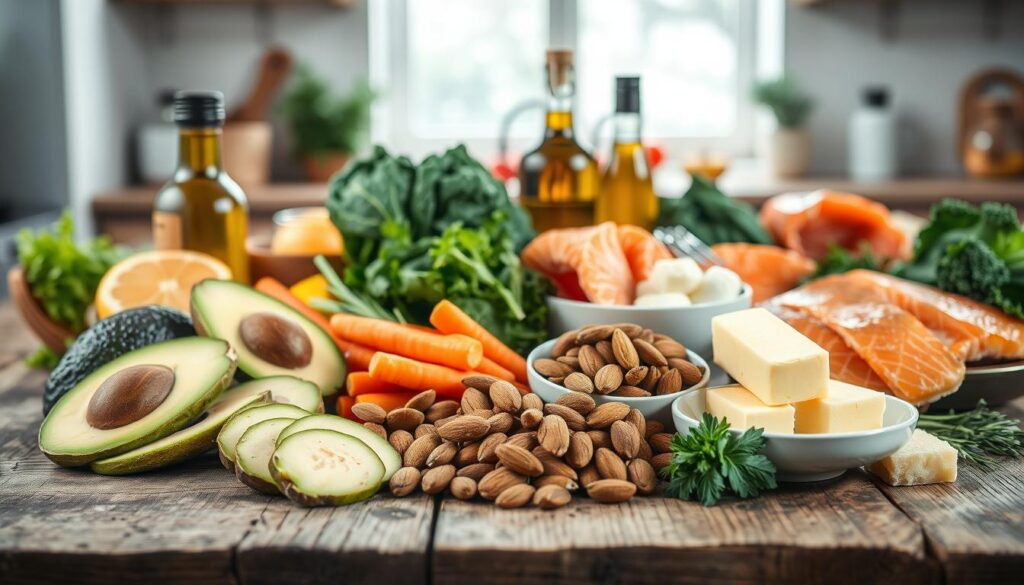
Vitamin A comes in two forms: preformed and provitamin A carotenoids. Animal products like beef liver, fish oil, and high-quality butter are great sources. For plant-based options, try colorful veggies like carrots, sweet potatoes, and spinach. They have beta-carotene, which our bodies turn into Vitamin A.
Foods Rich in Vitamin D
Getting enough Vitamin D from food alone can be tough. But, fatty fish like salmon, mackerel, and sardines are excellent choices. Fortified foods like milk, orange juice, and cereals also help keep levels up all year.
Foods Rich in Vitamin E
To boost Vitamin E intake, focus on healthy fats and plants. Nuts and seeds, like almonds and sunflower seeds, are full of this antioxidant. Vegetable oils like wheat germ, sunflower, and safflower oil are also great for adding Vitamin E to our cooking.
Foods Rich in Vitamin K
Dark leafy greens are the top choice for Vitamin K. Adding kale, spinach, collard greens, and Swiss chard to salads or sides boosts our levels. These greens are not just packed with nutrients but also help our digestion.
| Vitamin | Primary Animal Source | Primary Plant Source |
|---|---|---|
| Vitamin A | Beef Liver | Sweet Potatoes |
| Vitamin D | Salmon | Fortified Soy Milk |
| Vitamin E | Eggs | Sunflower Seeds |
| Vitamin K | Cheese | Kale |
How to Improve Absorption of Fat Soluble Vitamins
To get the most from our meals, we need to do more than pick healthy foods. We must think about how our body breaks down these nutrients. Knowing how our body absorbs fat soluble vitamins is key for better health.
The Role of Dietary Fats
Our bodies process nutrients in special ways. Vitamins A, D, E, and K need dietary fats to dissolve and move into our blood. Without enough fat, our bodies might not use these important vitamins well.
To better absorb fat soluble vitamins, eat them with healthy fats. Add these to your meals:
- Avocados, which offer monounsaturated fats.
- Nuts and seeds, like almonds or chia seeds.
- Olive oil, great for heart-healthy cooking.
- Fatty fish, such as salmon, with natural oils.
“The synergy between healthy fats and fat-soluble nutrients is a cornerstone of effective human nutrition.”
Cooking Techniques
How we cook our food affects vitamin availability. Some nutrients are sensitive to heat, but others are easier to absorb when lightly cooked with healthy fats. Changing our cooking habits can boost absorption of fat soluble vitamins.
Here’s how to enhance your veggies:
- Light Sautéing: Briefly cooking greens like kale or spinach in olive oil helps break down cell walls.
- Roasting: Roasting root vegetables with a drizzle of oil improves the release of beta-carotene.
- Avoid Over-boiling: Boiling can leach nutrients into the water, so steaming or stir-frying is often preferred.
By paying attention to these cooking methods, we make sure our bodies get the most from our food. This consistent effort supports long-term health and metabolic efficiency.
Recommended Daily Allowances
Setting clear nutritional goals helps us navigate the complex world of vitamins with confidence. Health authorities give us these guidelines to meet our needs and avoid too much. It is important to remember that these values are just a starting point. Our needs can change based on age, gender, and lifestyle.
Vitamin A
For most healthy adults, the daily need for Vitamin A is 900 mcg for men and 700 mcg for women. It’s key for healthy vision and our immune system. We should try to get these amounts from a diet full of colorful veggies and healthy fats.
Vitamin D
The needs for Vitamin D can vary because our bodies make it from sunlight. Most say adults need 600 to 800 IU daily for bone health. If we don’t get enough sunlight, we should check our levels with a doctor.
Vitamin E
Vitamin E is a strong antioxidant that protects our cells. Adults should aim for about 15 mg daily. Eating nuts, seeds, and vegetable oils regularly helps us meet this goal easily.
Vitamin K
Vitamin K is vital for blood clotting and bone health. While our bodies recycle some, we still need a steady supply. The daily need is usually 120 mcg for men and 90 mcg for women to keep our bodies working well.
“Nutrition is not a one-size-fits-all approach; understanding your personal baseline is the first step toward achieving long-term health and vitality.”
| Vitamin | Target Audience | Recommended Daily Amount |
|---|---|---|
| Vitamin A | Adult Men / Women | 900 mcg / 700 mcg |
| Vitamin D | Adults (General) | 600 – 800 IU |
| Vitamin E | Adults (General) | 15 mg |
| Vitamin K | Adult Men / Women | 120 mcg / 90 mcg |
Signs of Deficiency
Our bodies often send subtle signals when they are not receiving enough essential nutrients. Understanding these warning signs is key to monitoring the health implications of fat soluble vitamins in our daily lives. By staying alert to physical changes, we can take proactive steps to address potential gaps before they lead to more serious issues.
Common Symptoms
Deficiencies in fat-soluble nutrients often manifest in specific ways that affect our vision, skin, and immune function. For instance, a lack of Vitamin A is frequently linked to night blindness, persistent dry eyes, and a noticeably increased susceptibility to common infections.
Other deficiencies may present as brittle bones, slow wound healing, or unexplained fatigue. Because these nutrients are stored in our body tissues, symptoms might not appear immediately. This makes it important to maintain a consistent intake of nutritional vitamins to support overall well-being.
At-Risk Populations
Certain groups face a higher risk of developing deficiencies due to how their bodies process or absorb nutrients. Individuals with fat-absorption disorders, such as Crohn’s disease or celiac disease, often struggle to utilize these vitamins effectively even when they are present in the diet.
Those with highly restrictive eating patterns or limited access to diverse food sources may find it difficult to meet their daily requirements. Early recognition of these risks is critical for preventing long-term health complications. If we notice persistent symptoms, consulting a healthcare professional is the best way to ensure we are managing the health implications of fat soluble vitamins correctly.
The Importance of Balance
Understanding the health implications of fat soluble vitamins means looking at both too little and too much. These nutrients are key for our health, but we need them in just the right amounts. Finding this balance is crucial for staying healthy over time.
Too Much vs. Too Little
More isn’t always better when it comes to food. Too much of certain vitamins can cause big problems. Our bodies store these vitamins, not get rid of them fast.
For example, too much Vitamin A can harm your liver and bones. On the other hand, not getting enough can weaken your immune system and hurt your eyesight.
“Moderation is the golden rule of nutrition; the body thrives on balance, not on extremes.”
Synergistic Effects
The health implications of fat soluble vitamins also depend on how they work together. These vitamins often help each other out, making their effects stronger. For instance, Vitamin D helps your body use calcium, which is good for your bones.
Vitamin E also helps protect Vitamin A from damage. Eating a variety of foods helps these vitamins work well together. Whole foods are often better than supplements for this reason.
| Nutrient | Deficiency Risk | Excess Risk | Key Function |
|---|---|---|---|
| Vitamin A | Vision loss | Liver damage | Immune support |
| Vitamin D | Bone weakness | Kidney stones | Calcium absorption |
| Vitamin E | Nerve damage | Bleeding issues | Antioxidant |
| Vitamin K | Excessive bleeding | Blood clotting issues | Bone health |
Managing how much we eat needs careful thought. Always talk to a doctor before taking a lot of supplements. Keeping a delicate balance helps us get the most from these nutrients while avoiding risks.
Frequently Asked Questions
Understanding how your body uses nutrients is key. We get many questions about how to boost your health with good food choices.
Can You Take Fat Soluble Vitamins Together?
It’s usually okay to mix these nutrients if you get them from food. Your body needs fats to absorb these vitamins well. Eating them with foods high in healthy fats helps your body use them right.
Are Supplements Necessary?
Most people get enough fat soluble vitamins from food. If you need more, look at brands like Nature Made or Garden of Life. But remember, supplements should not replace eating a variety of foods.
What About Fat Soluble Vitamins in Children?
Kids need different amounts of nutrients than adults. Doctors watch their intake to help with growth and vision. Eating foods rich in these vitamins is best for your child’s health.
This guide aims to help you make better food choices. Eating a wide variety of foods is the best way to stay healthy. Start by picking nutrient-rich foods for every meal.