
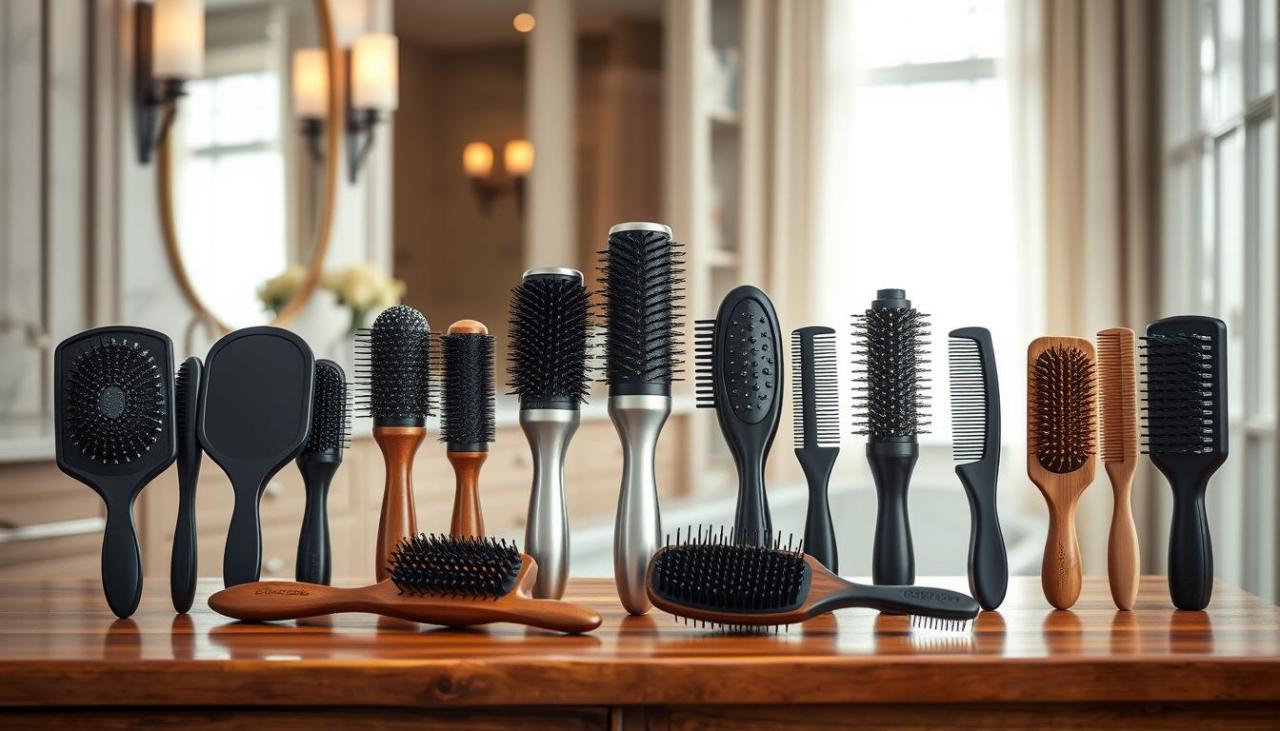
Did you know nearly 70% of people damage their hair every morning with the wrong tool? We often overlook the importance of our daily grooming. Yet, the tool we use is the unsung hero of our beauty routine.
Choosing the right tool is more than just looks. It’s about keeping your scalp healthy and getting salon-quality hair at home. Choosing wisely can prevent hair damage and make your hair shine.
The market is full of choices, making it hard to decide. We aim to make it easier by helping you find the perfect brush for your hair type. By improving your routine, you can stop damaging your hair and get healthier, brighter locks.
Key Takeaways
- Identify your specific texture to select the ideal material.
- Prioritize scalp health to encourage natural oil distribution.
- Understand the difference between detangling and styling tools.
- Avoid common mistakes that lead to split ends and breakage.
- Invest in quality materials for a longer-lasting grooming experience.
Understanding Different Hair Types
Knowing what your hair needs can change your daily routine. Choosing the best hair brush types is key for healthy hair. The right brush can prevent damage and breakage.
Straight Hair
Straight hair needs tools that spread scalp oils to the ends. If you have straight hair, you want to add shine and reduce frizz. A soft-bristled hair brush for fine hair is best to avoid breakage.
Wavy Hair
Wavy hair needs a balance. It should be brushed enough to smooth but not too hard to lose its wave. A paddle brush is great for hair brush for thick hair with waves, as it covers more area.
Curly Hair
Curly hair is fragile, so be gentle, espcially when it’s wet. Use a wide-tooth comb instead of a brush to detangle. This keeps curls intact and prevents frizz from over-brushing.
Coily Hair
Coily hair needs the most care to keep its beauty and moisture. Use tools that spread conditioners well. Work in small parts to avoid stressing the hair.
| Hair Type | Recommended Tool | Primary Benefit |
|---|---|---|
| Straight | Boar Bristle Brush | Oil Distribution |
| Wavy | Paddle Brush | Smoothing |
| Curly | Wide-Tooth Comb | Detangling |
| Coily | Detangling Rake | Moisture Retention |
Key Features of Hair Brushes
Understanding your hair brush’s technical details can change your daily grooming. Knowing how different parts work together helps you find the best hair brush types for you. Each brush is made with special materials and shapes to help you get the look you want.
Bristle Types
The bristle material is key in how a brush works with your hair. You’ll find hair brush bristle types like natural boar, synthetic nylon, or a mix of both. Boar bristles spread natural oils, adding natural shine to your hair.
Nylon pins are stiffer and great for detangling thick hair. Many experts like a mix of boar and nylon for smooth styling and detangling. This mix also reduces static and keeps your hair in control.
| Bristle Material | Primary Benefit | Best For |
|---|---|---|
| Boar Bristle | Oil Distribution | Fine to Medium Hair |
| Nylon Pins | Detangling | Thick or Coarse Hair |
| Hybrid Mix | Versatility | All Hair Types |
Brush Shapes
The brush head’s shape affects how much tension you can apply. A round brush is great for volume and curls. A flat or paddle brush smooths hair and covers more area quickly.
Ventilated brushes let air through, speeding up drying with a blow dryer. The right shape prevents pulling and breakage while styling.
Size Matters
The brush size should match your hair length and density. A smaller round brush is good for short hair or tight curls. For long hair, a bigger brush gives a smoother finish with less effort.
Look for a brush with a wide head for long, thick hair. This size manages more strands at once. Matching the brush size to your hair makes styling easier and more comfortable every day.
Choosing the Right Brush for Your Hair Goals
Finding the right brush for your hair needs is key to looking professional. Learning how to choose hair brush options that fit your daily routine saves time and prevents damage. The right tool helps you go from a quick morning style to a polished evening look easily.
Everyday Use
For daily care, pick a brush that spreads scalp oils to your hair ends. A quality paddle brush is great for this. It covers a lot of area, keeping your hair smooth and healthy all day.
When picking a brush for daily grooming, think about your hair type. Fine hair needs soft, flexible bristles, while thicker hair does better with sturdier ones. Brushing daily keeps your hair vibrant and prevents tangles.
Styling
Styling needs precision and the right brush pressure. For a salon-like blowout, a round brush is essential. It adds volume at the roots and smooths out waves for a sleek look.
For extra lift, use a teasing brush at the crown. Proper tension is crucial with these tools to keep your hair smooth. Always brush in the hair cuticle direction for shine and less frizz.
Detangling
Detangling should be easy, not painful. Use a wide-tooth comb or a detangling brush with flexible bristles. These are great for hair brush for thick hair, as they gently go through knots without breaking your hair.
Start detangling from the bottom up to avoid tightening knots. The right hair brush for thick hair makes detangling gentle and effective.
| Goal | Recommended Brush | Primary Benefit |
|---|---|---|
| Everyday Grooming | Paddle Brush | Distributes natural oils |
| Blowouts & Volume | Round Brush | Adds lift and smoothness |
| Detangling Knots | Wide-Tooth/Detangler | Prevents breakage |
| Teasing & Styling | Teasing Brush | Creates root volume |
Popular Hair Brush Materials
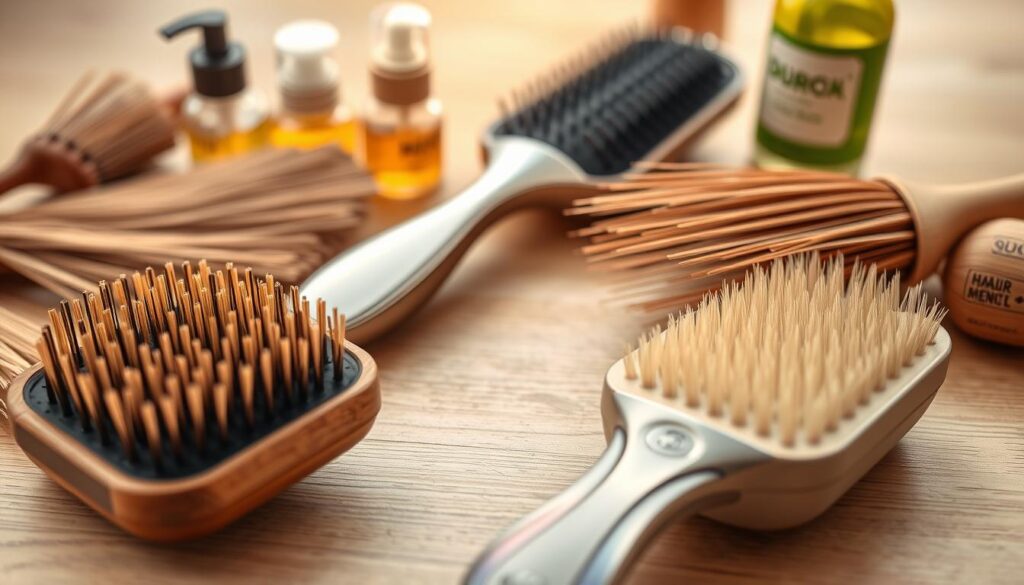
Understanding the science behind hair brush materials is key to getting salon-quality hair at home. The type of material in your brush affects how it moves through your hair and touches your scalp. Choosing the right material ensures your brush lasts long and is safe for your hair.
Plastic
Plastic is a common material in grooming tools today. These brushes are versatile and affordable, making them popular. They’re great for detangling wet hair because they don’t absorb water or harbor bacteria like porous materials do.
But not all plastic brushes are the same. High-quality synthetic bristles are molded to prevent snagging and breakage. Plastic is the top choice for a lightweight, easy-to-clean brush.
Wood
Wooden brushes are favored by many professionals. They naturally spread scalp oils to the hair ends. This material is anti-static, helping to control flyaways in dry winter months. Wooden brushes also gently massage the scalp, improving blood flow to hair follicles.
Wood is a natural, sustainable choice. These brushes are durable and have a classic look. They’re great for thick or coarse hair, as they’re sturdy and won’t break easily.
Metal
Metal brushes, like those with aluminum or ceramic barrels, are for high-performance styling. They conduct heat well, speeding up drying with your blow dryer. This makes them perfect for adding volume and achieving sleek styles.
But, metal tools can get very hot. Be careful not to hold the dryer too close for too long, as this can damage your hair. Always move the dryer to ensure even heat and protect your hair.
| Material | Best For | Key Benefit |
|---|---|---|
| Plastic | Detangling | Water-resistant |
| Wood | Daily Grooming | Anti-static |
| Metal | Blow-drying | Heat conduction |
How to Maintain Your Hair Brush
Getting a good brush is just the start. Keeping it clean is just as crucial. Over time, your brush picks up hair, dead skin, and stubborn product bits. Regular care keeps your brush working well and stops dirt from getting back on your hair.
Cleaning Techniques
Begin by removing hair from the bristles with a brush cleaner or a rat-tail comb. Gently pull the hair off from the base until it’s all gone. Consistency is key to avoid oil buildup that dulls your hair.
For a deeper clean, mix mild clarifying shampoo with warm water. Dip the bristles into it, but don’t soak the handle. Rinse well with cool water and let it air dry with the bristles down to keep the base safe.
Storage Tips
Where you store your brush is as important as how you clean it. Don’t just throw your tools in a crowded drawer. This can bend or crush the bristles. Instead, store them upright or in a special organizer to keep them in shape.
Store your brushes in a cool, dry spot, away from sunlight and moisture. Moisture can harm wooden handles and let bacteria grow. By following these tips, you’ll keep your brushes in great condition and your hair healthy and shiny.
| Maintenance Task | Frequency | Recommended Tool |
|---|---|---|
| Remove loose hair | After every use | Rat-tail comb |
| Deep wash | Once a month | Clarifying shampoo |
| Air drying | After washing | Clean towel |
| Inspection | Every six months | Visual check |
Brushes for Specific Hair Needs
Our hair faces unique challenges like heat and static. The right tools can greatly impact our hair’s health and style. Choosing the right brush protects our hair and helps us achieve salon-quality looks at home.
Heat Resistance
Using a blow-dryer or flat iron often? You need a heat-resistant brush. Heat-resistant brushes are made from materials like ceramic or heat-treated nylon. These materials keep the brush from melting or warping under heat.
Vented brushes are great for blow-drying. They have holes in the base that let hot air flow through the bristles. This cuts down drying time and reduces heat damage to your hair.
Anti-Static Options
Static can cause frizz and flyaways, more so in dry winter months. Modern brushes with ionic technology help. These brushes release negative ions that smooth your hair’s cuticle and reduce static.
For an anti-static brush, choose ones with natural boar bristles or special synthetic coatings. These help spread your hair’s natural oils, keeping it smooth and easy to manage. The right brush keeps your hair looking polished all day.
| Brush Feature | Primary Benefit | Best For |
|---|---|---|
| Ceramic Vented | Fast Drying | Blow-drying |
| Ionic Bristles | Frizz Reduction | Static Control |
| Boar Bristle | Oil Distribution | Smoothing Hair |
| Metal Core | Heat Retention | Creating Curls |
Eco-Friendly Hair Brush Options
We’re moving towards sustainable beauty tools that care for our hair and the planet. Many of us now choose products that reduce waste. Switching to an eco-friendly brush is a simple yet impactful way to support green beauty.
Sustainable Materials
The materials in your hair brush matter a lot for the environment. Traditional plastic brushes often end up in landfills. But, modern options are biodegradable or renewable.
Look for brushes made from FSC-certified wood. This ensures the wood is harvested responsibly. Cellulose acetate, a plant-based material, is also great. It’s durable, high-quality, and sustainable.
Bamboo is another excellent choice. It grows fast and needs little water. This makes it a top choice for eco-friendly beauty tools.
Brands to Consider
Many companies focus on both quality and the environment. They show you can be eco-friendly without losing performance. Here are some brands to check out:
- Bass Brushes: They use natural bamboo and high-quality wood.
- Tek: An Italian brand making handmade wooden brushes, all plastic-free.
- Aveda: They use recycled materials and sustainable packaging for their tools.
Choosing these brands means you’re getting long-lasting quality. You’re also supporting companies that care about our planet. These tools are gentle on your scalp and hair, offering a better experience than synthetic brushes.
Understanding Brush Costs
When you look for hair care tools, the price shows the quality and design. There’s a wide range of choices, from cheap to expensive. Knowing these differences helps you find the top rated hair brushes that fit your budget and hair needs.
Budget-Friendly Brushes
Affordable brushes are great for those who want basic functions without spending a lot. They use synthetic materials like nylon or plastic. These are made in large numbers to keep costs down. Even though they might not last as long as pricier options, many do well for daily use.
Looking for value? Here’s what budget-friendly tools often have:
- Durable plastic handles that resist water damage.
- Synthetic bristles for gentle detangling.
- Lightweight for easy use.
High-End Luxuries
Luxury brushes cost more because they’re made with better materials and craftsmanship. They might use natural boar bristles or wooden handles. These offer special benefits for your scalp and hair shine. Check out top rated hair brushes to see how they spread natural oils better.
Buying a high-end brush is a long-term investment. With proper care, they can last for years. This makes the cost over time much lower. Here’s a comparison of different price levels.
| Feature | Budget Options | Luxury Options |
|---|---|---|
| Material | Plastic/Synthetic | Wood/Boar Bristle |
| Durability | Moderate | High |
| Scalp Benefit | Basic | Oil Distribution |
The right choice depends on your hair type and styling goals. Whether you pick something affordable or a luxury item, focus on quality. This will keep your hair healthy and shiny.
Identifying Quality Hair Brushes
Understanding a brush’s anatomy is key to good hair care. It’s easy to get caught up in fancy packaging or low prices. But, focusing on the construction saves money and avoids frustration later.
Top products are made with superior craftsmanship and quality materials. You might prefer natural wood or heat-resistant polymers. The materials should feel solid and well-made. A good brush should never feel flimsy or break easily.
Visual Signs of Quality
To see if a brush is worth it, do a quick check. Look at the cushion and how the bristles are attached. A premium brush has a cushion that bends with your scalp, not against it.
Here are signs of a well-made brush:
- Secure Bristles: Bristles should be tightly attached and show no loose glue or uneven spacing.
- Sturdy Handles: The handle should be comfortable and balanced in your hand.
- Smooth Finish: It should have no sharp edges that could damage your hair.
If you need a hair brush for fine hair, check the bristle flexibility. Fine hair needs soft bristles that won’t break it.
Brand Reputation
The brand’s reputation is also important. Known brands invest in research and development. They make sure their tools last a long time.
Choosing a reputable brand means you get a product made with care. These brands offer better support and warranties. This shows they trust their products. By choosing quality and reputation, your hair care stays safe and effective.
When to Replace Your Hair Brush
Did you know your favorite brush has an expiration date? Even top-quality tools need to be replaced. Knowing when to switch helps keep your hair healthy and shiny.
Signs of Wear
Look out for bent, melted, or missing bristles. When bristles lose shape, they can’t move through your hair smoothly. This leads to painful snagging and breakage.
Also, check the cushion for cracks or tears. These can hide bacteria. A cracked handle or loose head means the tool is broken. It’s time to find top rated hair brushes that last longer.
Lifespan Based on Use
How often you style your hair affects your brush’s lifespan. Daily use with heat tools wears out bristles and cushion faster. Check your tools every few months to keep them in top shape.
Consistency is key in hair care. By reading hair brush reviews, you can find the right replacement. Replacing your brush on time keeps your hair healthy and vibrant.
Final Tips for Buying Hair Brushes
Choosing the right hair brush is important for your daily routine. Our guide is a good start, but your own experience is key. It’s the best way to know if a brush is right for you.
Test Before You Buy
Stores let you try out hair brushes before buying. Hold a Mason Pearson or Denman brush to see if it feels right in your hand. A brush that feels good in your hand won’t make your hands tired during styling.
Reading Reviews
Online reviews are very helpful when choosing a hair brush. Look for reviews from people with hair like yours. Their experiences can tell you more than any ad.
We want you to feel confident when you shop for hair brushes. The right one will keep your hair healthy for a long time. Start looking today and find the perfect brush for you.